GRP Profiles & Structural Sections:
The High-Performance Alternative
What are GRP Sections?
Glass Reinforced Plastic (GRP) profiles, sometimes referred to as Glass Fibre Profiles, offer a versatile, high-strength, and low-maintenance alternative to traditional materials like steel, aluminium, and timber. Manufactured through a pultrusion process, these structural sections provide exceptional durability in the most demanding environments.
Our comprehensive range of GRP profiles are designed for ease of installation and long-term performance. Whether you are constructing a lightweight walkway, a chemical-resistant support structure, or non-conductive handrailing, our pultruded sections deliver superior long-term value.
Why Choose GRP Profiles?
Choosing GRP over metal or wood provides several distinct operational and safety advantages:
• Ultimate Corrosion Resistance: Completely resistant to rust, rot, and most industrial chemicals, making it ideal for marine, wastewater, chemical plant and similar industrial environments.
• High Strength-to-Weight Ratio: GRP is up to 75% lighter than steel while maintaining comparable structural integrity. This reduces the need for heavy lifting equipment and lowers transport costs.
• Non-Conductive & Non-Magnetic: As an electrical and thermal insulator, GRP is the safest choice for rail trackside, electrical substations, and power plants.
• Zero Maintenance: With a service life of over 50 years, GRP requires no painting, galvanising, or ongoing treatment, even when exposed to harsh UV rays and extreme weather.
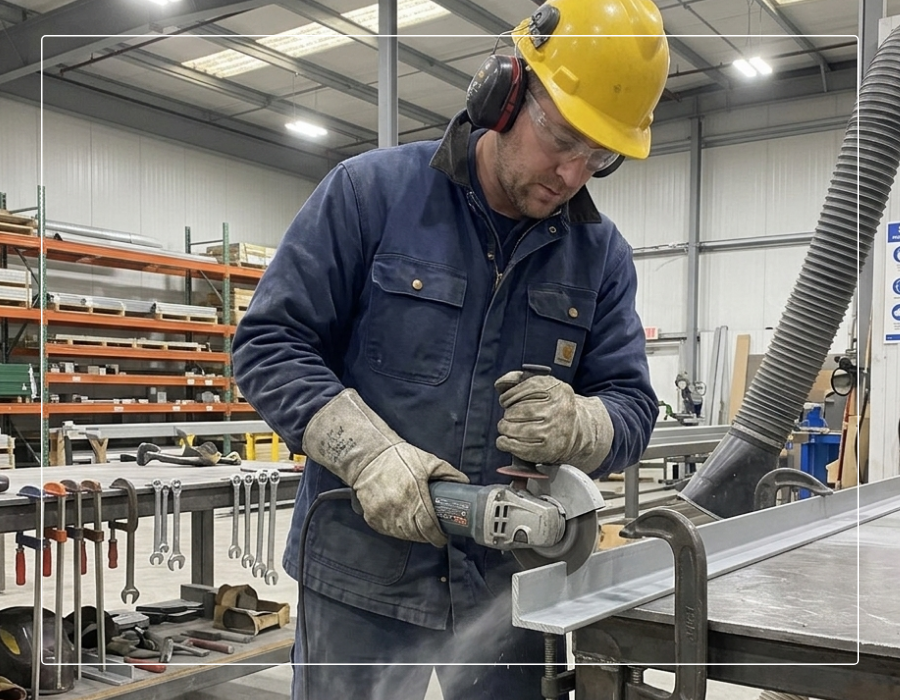
• Easy Fabrication: Can be cut and drilled on-site using standard hand tools—no welding or hot works permits required.
Our Range of GRP Pultruded Sections
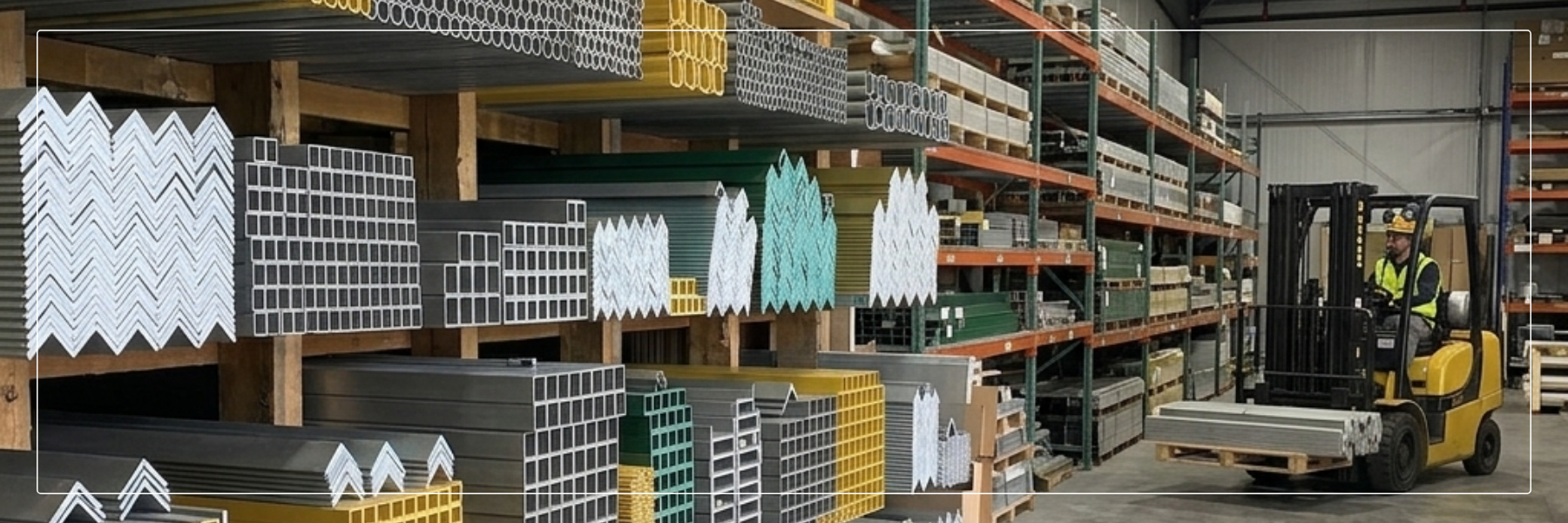
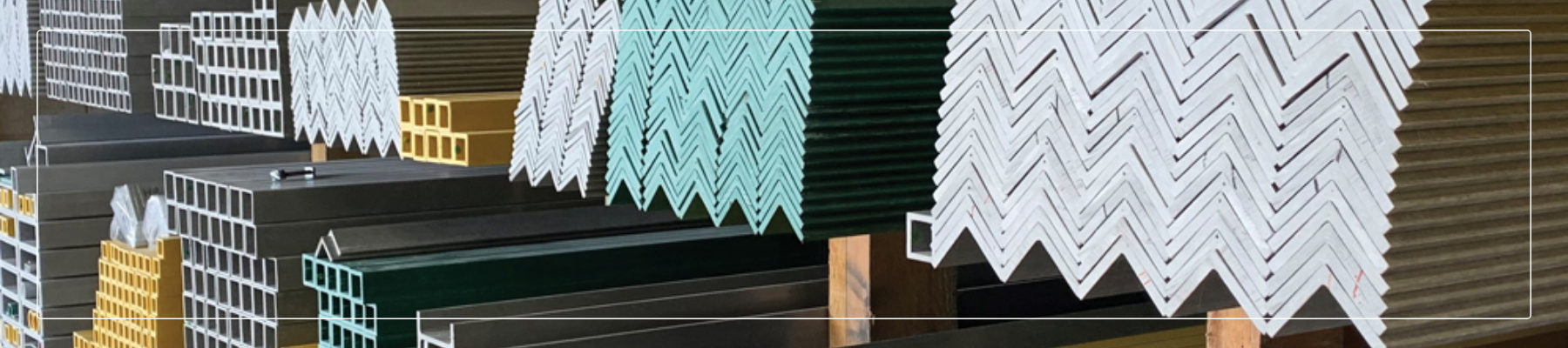
We stock a wide variety of shapes and sizes to suit any structural requirement. Our profiles are available in standard Grey (RAL 7001), Green and Safety Yellow, typically supplied in 6-metre lengths.
GRP Box Sections
Ideal for structural frames and support posts, offering high torsional stiffness and strength.
• Sizes: From 25 x 25mm up to 101 x 101mm.
• Wall Thickness: Available in 3 to 6.35mm.
GRP Angle and Channel
Perfect for trimming gratings, creating stair nosing supports, or building lightweight frames.
• Equal Angle: Excellent for edge protection and structural bracing.
• U-Channel: Often used as a base track or for capping.
GRP I-Beams
Designed for heavy-duty load-bearing applications where maximum span and minimal deflection are required.
• I-Beams: Available in 120 x 70mm up to 200 x 200mm.
GRP Round Tube
Specifically designed for handrail systems, available from 19 – 50mm diameters. These are compatible with our range of GRP connectors to create completely non-conductive safety barriers.
GRP Reinforcing Bar (Rebar)
A GRP (Glass Reinforced Plastic) also known as FRP (Fiberglass Reinforced Polymer) reinforcement bar, is an excellent alternative to traditional steel reinforcement in construction. Compared to steel, the GRP reinforcement bar eliminates the risk of corrosion, a significant advantage in environments prone to chemical exposure.
• Available in 5000mm lengths from 6 to 32mm diameter.

Flat Bar

Circular Hollow Section

Square Hollow Section

Angle

Channel

I-Beam
Why use GRP over other materials?
| Feature | GRP Profiles | Mild Steel Profiles | Stainless Steel Profiles |
|---|---|---|---|
| Corrosion Resistance | Excellent (Total) | Poor (Requires Coating) | High |
| Weight | Ultralight (approx. 1/4 of Steel) | Heavy | Heavy |
| Electrical Conductivity | Non-Conductive | Conductive | Conductive |
| Maintenance | Zero / Maintenance Free | High (Repainting/Risk of rust) | Low |
| Workability | Easy (standard tools) | Difficult (specialist welding tools) | Difficult (specialist welding tools) |
| Life Cycle Cost | Lowest (Long Term) | High (Ongoing Upkeep) | High (Material Cost) |
Typical Applications of GRP
The versatility of GRP makes it suitable for a vast array of industries:
Industrial; Mezzanine floors, walkways, and gantry structures.
Water Treatment; Odour control covers, baffles, and tank supports.
Rail & Infrastructure; Trackside walkways, cable trays, and fencing.
Marine & Offshore; Pontoons, boat decking, and oil rig platforms.
Public Access; Pedestrian bridge decks, ramps, and non-slip stairs.
Technical Standards & Compliance
At F.H.Brundle, quality and safety are paramount. Our GRP profiles are manufactured to the highest industry standards to ensure your project meets the required levels of compliance:
• EN 13706: Complies with European standards for pultruded structural profiles.
• Grade E23: High-performance grade for load-bearing applications (wall thickness >5mm).
• Grade E17: Standard performance grade (wall thickness 3-5mm).
• Fire Retardancy: Available in grades that meet BS 476 Part 7 Class 1 or 2 (flame retardant) and low-smoke toxicity requirements.
GRP in Challenging Environments
Glass Reinforced Plastic (GRP) is valued for its strength, low weight and corrosion resistance, but its real advantages become clear in environments where traditional materials struggle. Whether exposed to seawater, chemicals, harsh weather or demanding industrial conditions, GRP provides long-term performance with minimal maintenance.
Marine & Coastal Environments
Saltwater is one of the harshest environments for construction materials. Steel structures require protective coatings and regular maintenance to prevent corrosion, particularly in splash zones where constant wetting and drying accelerate deterioration.
GRP is naturally resistant to corrosion because it contains no metal. It won’t rust, even in coastal or offshore applications, making it an ideal choice for harbour infrastructure, marinas, offshore platforms, coastal walkways and other marine installations. With the correct resin system, GRP can deliver an exceptionally long service life without the need for ongoing protective treatments.
Water & Wastewater Treatment
Water treatment facilities present a demanding combination of moisture, chlorine, hydrogen sulphide and other aggressive chemicals that quickly attack conventional steelwork.
GRP is unaffected by these conditions, making it well suited to walkways, platforms, handrails, ladders and access systems throughout water and wastewater treatment plants. Unlike painted steel, GRP requires no repainting programme and significantly reduces long-term maintenance costs.
Chemical Processing
Many industrial environments expose materials to acids, alkalis and other corrosive substances. By selecting the appropriate resin formulation, GRP can be specified for a wide variety of chemical applications where coated steel would require regular inspection and maintenance.
GRP is widely used within chemical processing plants, pharmaceutical facilities, battery manufacturing and laboratories, providing reliable performance in demanding operating conditions.
Outdoor & UV Exposure
Constant exposure to sunlight can affect many materials over time. While the surface of GRP may naturally weather, its structural integrity remains unaffected throughout its design life.
Where appearance is important, UV-stabilised resin systems and colour-integrated finishes maintain their appearance for many years without peeling, flaking or requiring repainting, making GRP ideal for fencing, handrails and external infrastructure.
Electrical Safety
Unlike steel or aluminium, GRP is non-conductive, making it an excellent choice wherever electrical safety is critical. It is frequently specified around substations, power generation facilities, rail infrastructure and industrial sites where reducing the risk of electrical conductivity is essential.
Strength Where It Matters
GRP offers an excellent strength-to-weight ratio, making it easier to transport, handle and install than traditional steel components. While steel remains the preferred choice for applications involving extremely high point loads, GRP provides more than sufficient structural performance for the vast majority of access structures, including walkways, platforms, handrails, grating and fencing systems.
Products are independently tested and designed to meet recognised industry standards, giving engineers and contractors confidence in their long-term performance.
Fire Performance Options
GRP can be manufactured with different resin systems to suit specific fire performance requirements. Fire-retardant grades are available for applications such as transport infrastructure, public buildings, offshore installations and data centres, while specialist phenolic resin systems offer exceptionally low smoke generation and flame spread for the most demanding environments.
Selecting the correct specification ensures GRP meets both structural and fire safety requirements for the intended application.
Built for Long-Term Performance
No material is suitable for every application, but where corrosion, chemical exposure, electrical insulation and low maintenance are key design priorities, GRP consistently delivers outstanding whole-life value.
Its combination of durability, lightweight construction and resistance to harsh environments makes GRP an increasingly popular alternative to traditional steel across industrial, commercial and infrastructure projects.
FAQs
Yes. Our standard structural profiles are manufactured using fire-retardant resins that meet BS 476 Part 7 (Class 1 or 2). This makes them suitable for industrial environments where fire safety is a priority. If your project has specific low-smoke or toxicity requirements (such as underground rail), we can provide specialist grades to meet those standards.
Our GRP profiles are manufactured with a high-quality “surface veil” and UV inhibitors integrated into the resin. This prevents “fiber-blooming” (where the glass fibers become exposed) and ensures the sections don’t become brittle in the sun. Unlike steel, which becomes dangerously hot, or timber, which warps and rots, GRP remains stable and safe to touch from -100°C up to +150°C.
Not at all. One of the biggest advantages of GRP is that it can be worked just like hardwood. You can use standard circular saws, jigsaws, and drills. For the best finish and longevity of your tools, we recommend using diamond-tipped or tungsten-carbide blades. Because no welding is required, you also eliminate the need for “hot works” permits on site.
While the initial purchase price of GRP is typically higher than mild or galvanized steel, it is almost always the more cost-effective choice. When you factor in the 75% reduction in weight (saving you money on cranes and labor) and the fact that you will never have to paint, treat, or replace it due to rust, GRP usually pays for itself within the first 5–10 years.
Pound-for-pound, GRP can actually be stronger than steel. However, it is important to note that GRP is more flexible. For structural projects, we supply profiles to EN 13706 (Grade E23), which ensures they meet strict performance standards for load-bearing. While a GRP beam might deflect (bend) more than a steel one, under the same weight, it will not permanently deform or fail until it reaches much higher stress levels.