Why choose Stainless Steel Profiles?
What are stainless steel profiles?
Stainless steel profiles are structural steel sections – including angles, hollow sections, square and round bar and more – manufactured from a steel alloy that contains a minimum of 10.5% chromium by mass. This chromium content causes the steel to form a thin, stable chromium oxide layer on its surface that acts as a passive barrier against corrosion, and which self-repairs when damaged in the presence of oxygen – giving stainless steel its defining characteristic of corrosion resistance without surface coating.
The two grades most commonly specified for structural and fabrication use are Grade 304 (containing approximately 18% chromium and 8% nickel, also referred to as 18/8 stainless) and Grade 316 (which adds 2–3% molybdenum to the alloy to provide enhanced resistance to chloride attack). Stainless steel profiles are used across architectural metalwork, construction, marine, food production, chemical processing and maintenance applications, wherever a combination of structural performance, corrosion resistance and visual appearance is required.
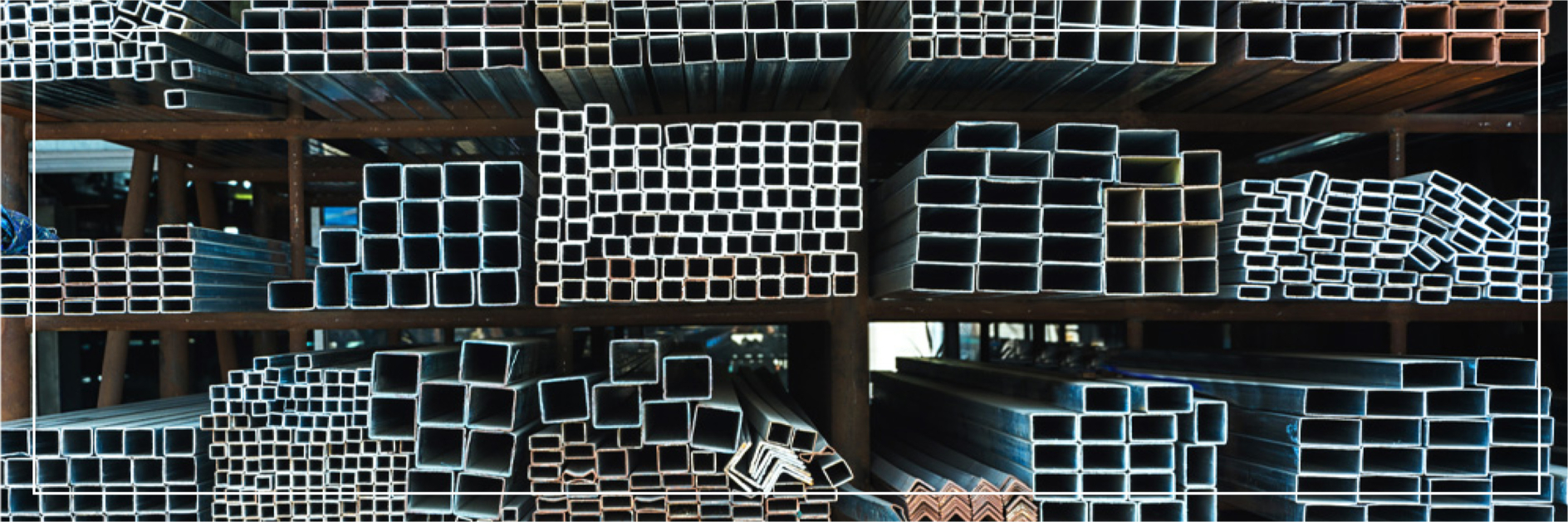
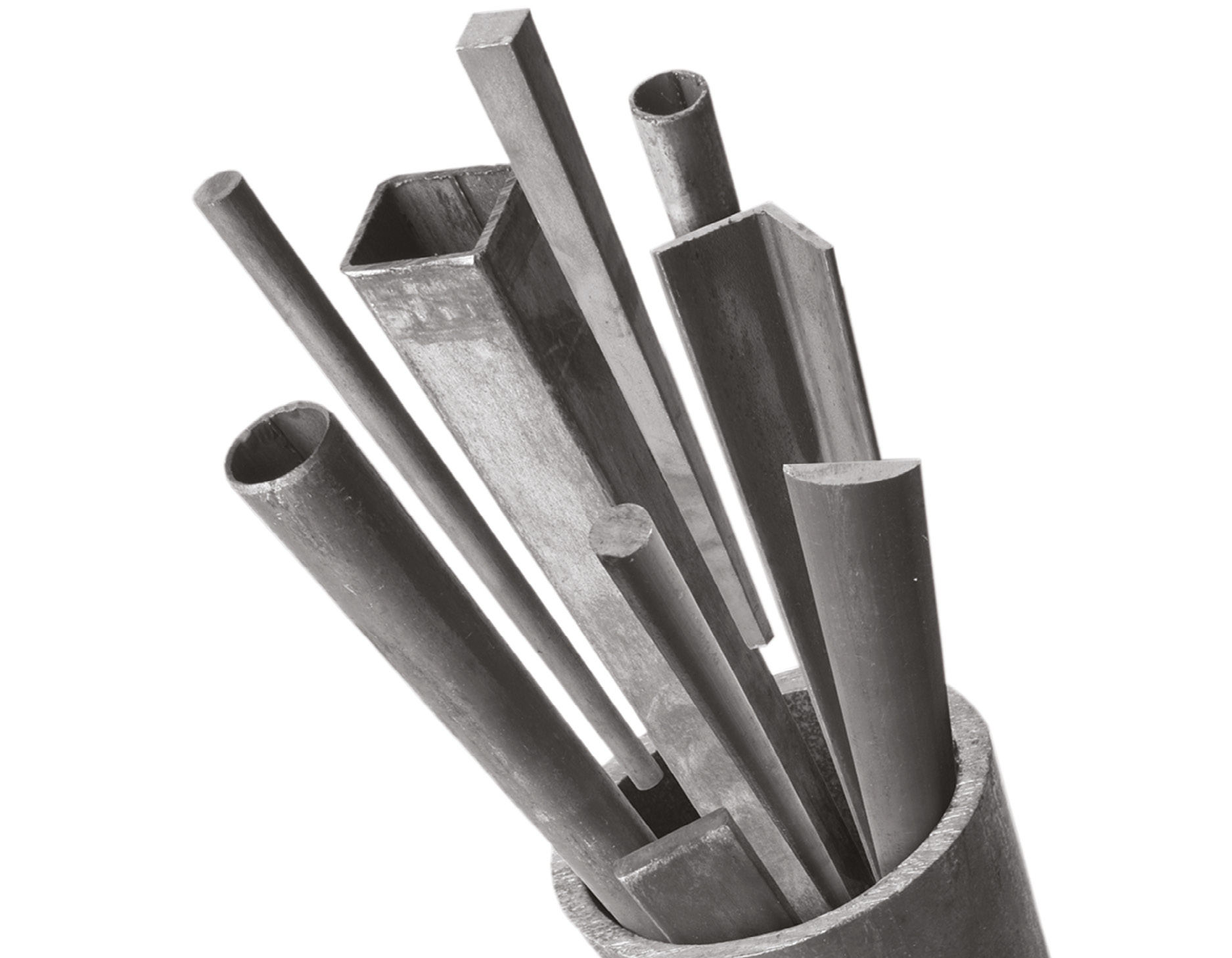
The full range – from stainless steel angles to rectangular hollow sections (RHS), square hollow sections (SHS), circular hollow sections (CHS), round bar and sheets – is available from stock from F.H.Brundle.
What stainless steel profile sections are available?
At F.H.Brundle, we supply a comprehensive selection of stainless steel sections in both Grade 304 and Grade 316. Common profiles available include equal and unequal angles, round bar, square hollow section, rectangular hollow section, circular hollow section and steel sheets. Sections are available in a range of standard metric sizes and lengths to suit structural, architectural and fabrication applications.
| Feature Category | Key Benefit | Detail |
|---|---|---|
| Corrosion Resistance | Self-Passivating Protection | Stainless steel forms a chromium oxide passive layer that self-repairs in the presence of oxygen – providing continuous corrosion protection without surface coatings or maintenance treatments. |
| Longevity | 50+ Year Service Life | Correctly specified stainless steel profiles in outdoor or architectural applications routinely provide a service life exceeding 50 years with only basic periodic cleaning. |
| Strength & Structural Integrity | Full Load-Bearing Capability | Stainless steel retains excellent tensile strength, yield strength and impact resistance. Grade 316 in particular is well suited to structural applications in demanding environments. |
| Maintenance | Low Whole-Life Cost | Unlike galvanised or painted steel, stainless steel requires no protective surface treatment. Periodic cleaning is all that is needed to maintain both appearance and performance. |
| Sustainability | Fully Recyclable | Stainless steel is 100% recyclable and has a high recycled content in its production. It supports circular economy principles and is consistent with low-embodied-carbon design specifications. |
| Hygiene | Non-Porous Surface | The smooth, non-porous surface of stainless steel resists bacterial contamination – making it the preferred material for food production, pharmaceutical and medical fabrication applications. |
| Grade Options | 304 and 316 Available | Grade 304 covers the majority of general structural, architectural and fabrication applications. Grade 316 (with added molybdenum) is the correct specification for coastal, marine and chemical environments. |
| Availability | Stock & Cut-to-Length | Standard lengths are available from stock for next-day or 48-hour delivery. Cut-to-length options are available on selected products to reduce on-site waste and labour. |
Where are stainless steel profiles used?
Stainless steel profiles are specified across an exceptionally wide range of applications. In construction and architectural metalwork, they are routinely used for balustrade and handrailing systems, structural frames for glazing and canopies, cladding support frameworks, balcony edge protection and feature metalwork. The combination of structural performance and visual finish makes stainless steel the preferred material wherever the metal will be visible in the finished building.
In industrial and process environments, stainless RHS and SHS are used in equipment frames, hygienic processing line structures, chemical plant walkways and support platforms. Stainless angles are widely used as edge protectors, shelf supports, bespoke brackets and liner plate retainers in tanks and vessels.
Coastal and marine applications – including pontoon frameworks, sea-front railings, marina structures and offshore support – require Grade 316 stainless steel to resist the elevated chloride levels present in salt-laden air and seawater. In these environments, standard galvanised or mild steel solutions have significantly reduced service lives, making stainless the most cost-effective long-term choice.
Why are stainless steel profiles growing in popularity?
There are three core reasons why stainless steel profiles continue to grow in specification and use:
(1) Maintenance-free performance; unlike painted or galvanised steel, stainless steel requires no periodic recoating, re-painting or surface treatment. The passive chromium oxide layer is self-maintaining – meaning the material protects itself continuously throughout its service life. In applications where access for maintenance is difficult or costly, this characteristic is particularly valuable.
(2) Aesthetic quality; stainless steel profiles in 2B or satin (No. 4 brushed) finish have become a defining feature of contemporary architectural metalwork. The clean, reflective surface quality is consistent, durable and retains its appearance over decades of use. The increasing prevalence of stainless steel in balustrades, feature staircases, street furniture, shopfitting and architectural cladding reflects its position as the premium choice for exposed metalwork.
(3) Grade versatility; the availability of Grade 304 for general applications and Grade 316 for demanding environments means that stainless steel can be correctly specified for almost any project. Both grades are available across the full range of section types – angles, hollow sections, square and round bar – enabling consistent specification throughout a project with a single material family.
How to buy
Once you’ve identified that stainless steel profiles are the right choice for your application, there are a few key decisions to work through before placing your order.
(1) Choose your grade – select Grade 304 for general structural, architectural and fabrication applications in sheltered or inland environments. Specify Grade 316 for coastal, marine, chemical processing, food production or any environment with elevated chloride exposure. When in doubt, 316 provides a greater margin of safety.
(2) Choose your section type – select the profile shape best suited to your structural or fabrication requirement. Angles are ideal for bracketing, edge protection, framing and structural reinforcement. Hollow sections (RHS, SHS, CHS) are widely used where a clean, closed-face finish is required for gates, handrails, frames and furniture. Square and round bar are used for ties, shelf supports, balusters, bespoke brackets and decorative elements.
(3) Specify the size – stainless steel profiles are available in a range of standard metric sizes. Consult load tables or your structural engineer to confirm the correct section size for your application. Standard stock sizes are listed on each product page at fhbrundle.co.uk.
(4) Select the length – standard stock lengths (typically 3m and 6m) are available for immediate despatch. If you require cut-to-length sections to minimise waste, this option is available on selected products.
(5) Consider the finish – the standard mill finish (2B) is suitable for most structural and industrial applications. Where a more refined appearance is required – for balustrade, handrailing or architectural metalwork – consider specifying a satin (No. 4 brushed) finish, which provides a consistent directional grain and is more resistant to visible scratching in service.
FAQs
Stainless steel profiles are available in several standard mill finishes. The most common for structural and fabrication use is the 2B finish — a smooth, matte-bright finish produced by cold rolling and suitable for most structural, industrial and general fabrication applications. Where a decorative appearance is required, No. 4 (brushed/satin) finish is widely specified for architectural applications, including handrailing, balustrade and cladding — it provides a consistent directional grain that is more resistant to visible surface scratches in service.
F.H.Brundle supply stainless steel sections primarily in 2B finish — please refer to individual product pages for finish availability.
Yes. Standard stainless steel profiles are stocked in 3m and 6m lengths and can be cut using angle grinders with stainless-specific abrasive discs, plasma cutters, or cold saws with bi-metal blades. It is important to use tooling dedicated to stainless steel — using discs or blades previously used on mild steel can introduce iron particles into the stainless surface and cause rust staining.
Cut edges should be deburred and, where required, passivated to maintain corrosion resistance.
F.H.Brundle offer cut-to-length options on selected products — please refer to individual product pages for availability.
Yes, stainless steel sections can be welded using TIG (GTAW), MIG (GMAW) or MMA processes, but the correct filler material must be used to match the parent metal grade — using a standard mild steel filler will compromise corrosion resistance at the weld zone. Post-weld passivation or pickling is recommended for critical applications to restore the chromium oxide passive layer disturbed during welding.
Heat input should be controlled to minimise sensitisation (carbide precipitation at grain boundaries), particularly with 304 grade in high-temperature applications. For fabrications requiring maximum corrosion resistance, consider specifying low-carbon grades (304L or 316L), which are specifically formulated to resist sensitisation during welding.
Correctly specified stainless steel profiles will provide a very long service life in outdoor environments with minimal maintenance — in many cases exceeding 50 years. Grade 316 is the preferred specification for coastal or marine environments, where the additional molybdenum content resists chloride attack. In inland and urban environments, Grade 304 will typically provide a service life of 50 years or more with only basic periodic cleaning.
The key to longevity is correct initial grade specification and avoiding prolonged contact with dissimilar metals, which can cause galvanic corrosion. Regular washing with fresh water to remove surface deposits will maximise service life in all environments.
Grade 304 is the most widely used stainless steel and contains approximately 18% chromium and 8% nickel. It offers excellent corrosion resistance in most environments and is suitable for a broad range of architectural, structural and fabrication applications. Grade 316 contains an additional 2–3% molybdenum, which significantly improves resistance to chloride-induced corrosion — making it the correct specification for coastal, marine, chemical processing and food production environments where 304 may be susceptible to pitting.
As a general rule of thumb: specify 304 for inland and urban environments; specify 316 within approximately 5km of the coast or wherever the material will be in contact with salt water, chlorinated water, de-icing salts or corrosive chemicals.


Registered in England No: 7168270 VAT No: GB 232242310