Why Choose Decorative Wrought Iron Components?
Decorative Wrought Iron Components for Gates, Railings and Architectural Metalwork
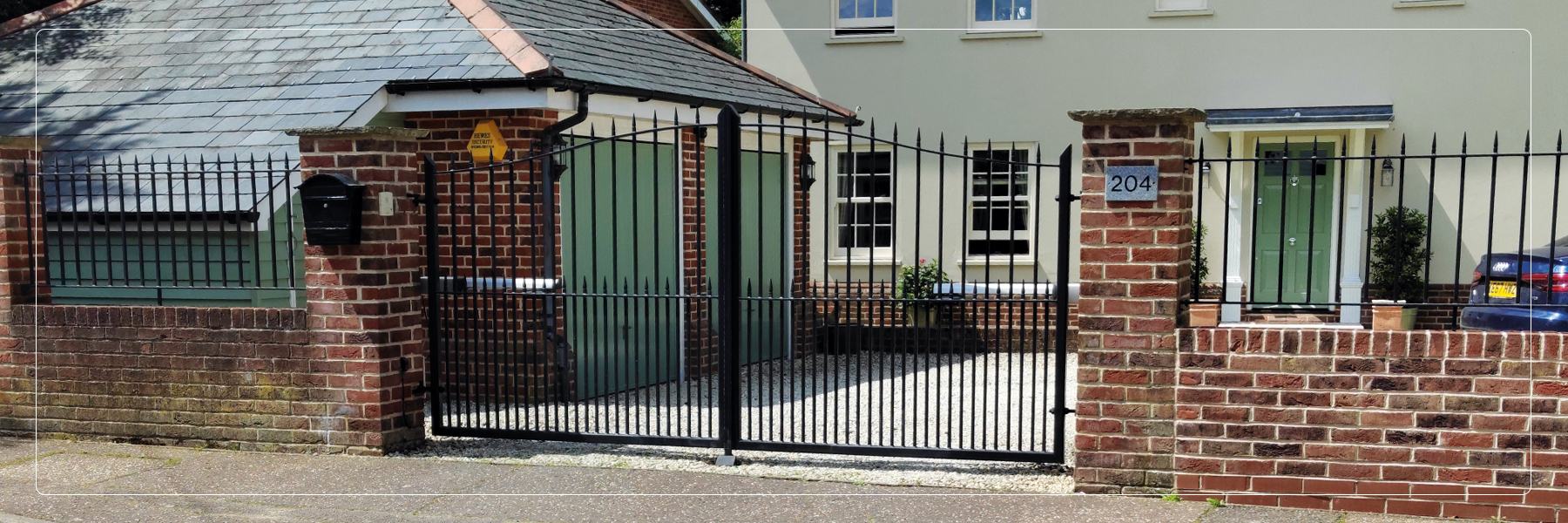
Create distinctive gates, railings, balustrades and other metalwork with decorative wrought iron components from F.H.Brundle.
From decorative bars, railheads, scrolls and baskets to leaves, flowers, grapes, rosettes, collars, bushes and decorative panels, F.H.Brundle provides a broad range of components for fabricators, installers, architects, designers and homeowners. The range is designed to help you create anything from traditional wrought iron-inspired designs to more contemporary decorative metalwork.
Whether you’re restoring an existing gate, building a bespoke driveway gate, designing decorative railings or specifying architectural metalwork, individual components can be combined to create a finished design tailored to the project.
What are Decorative Wrought Iron Components?
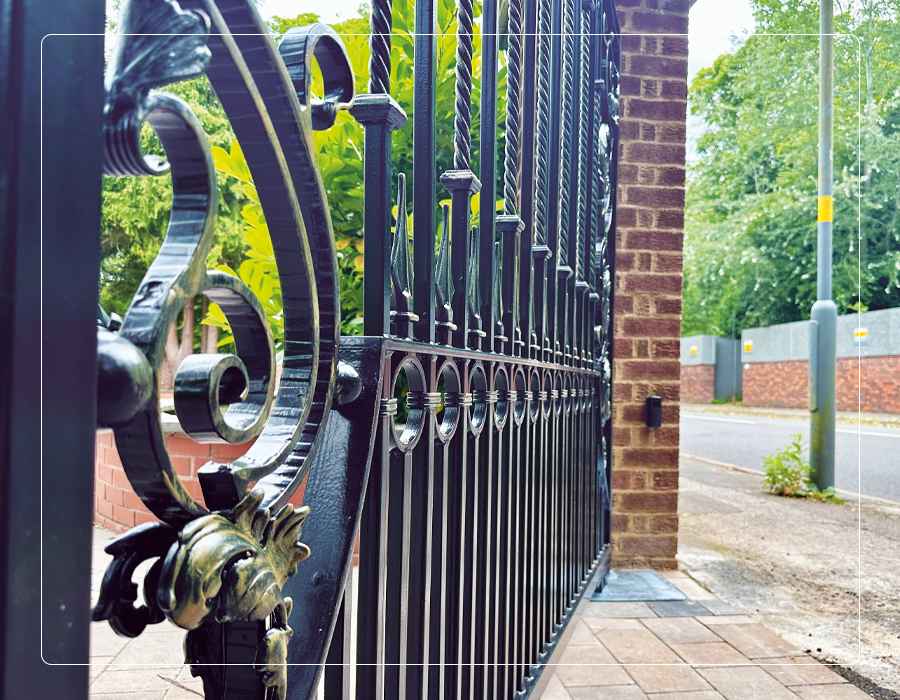
Decorative wrought iron components are individual metal elements used to add structure, detail and visual character to gates, railings, balustrades, fencing and architectural metalwork.
Rather than relying on a standard pre-made design, components can be selected and assembled to create a bespoke appearance.
Typical decorative components include:
• Decorative and forged bars
• Railheads
• Scrolls
• Baskets
• Rings and infills
• Leaves, flowers and grapes
• Rosettes and floral panels
• Gate and railing tops
• Gate and railing arches
• Bushes and shoes
• Collars
• Steel balls and hemispheres
• Dished discs
• Posts and post tops
• Panel units
• Punched bars
• Cleats and lugs
F.H.Brundle’s wider wrought iron components category includes these and other component groups for creating gates, railings, balustrades and decorative metalwork.
Decorative Wrought Iron Components by Application
| Application | Common components | Design possibilities |
|---|---|---|
| Driveway gates | Bars, railheads, scrolls, baskets, collars, decorative panels | Traditional, ornate or contemporary gate designs |
| Pedestrian gates | Decorative bars, infills, railheads and scrolls | Smaller-scale decorative detailing |
| Railings | Bars, railheads, rings, infills, posts and tops | Coordinated decorative railing systems |
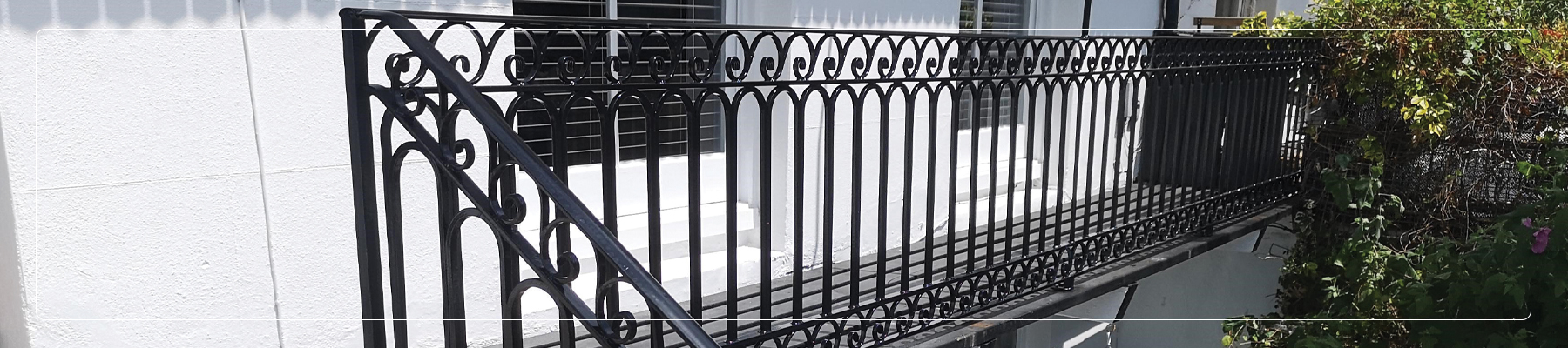
| Balustrades | Balusters, bars, baskets, scrolls and decorative panels | Decorative internal or external balustrades |
| Fencing | Bars, panels, railheads and post tops | Decorative boundary treatments |
| Balconies | Bowed bars, balusters and decorative components | Bespoke balcony and balustrade designs |
| Architectural metalwork | Scrolls, floral components, discs, spheres and shaped bars | Feature metalwork and bespoke detailing |
| Restoration projects | Matching bars, decorative details and replacement components | Repair or sympathetic reproduction of existing designs |
| Commercial projects | Decorative panels, bars, railheads and posts | Consistent designs across larger installations |
| Residential projects | Scrolls, baskets, railheads, finials and decorative bars | Bespoke garden and property metalwork |
Types of Decorative Wrought Iron Components
Decorative bars
Decorative bars provide the basic framework or infill for many traditional metalwork designs.
F.H.Brundle stocks bars in a wide variety of lengths, shapes, sizes and finishes, including plain, hammered, knotted, twisted, bowed and textured options. The current range includes hundreds of bar products, with square, round and flat profiles available.
Ideal for: gate infill, railing panels, balustrades, fencing and bespoke fabrication.
Railheads and gate tops
Railheads and decorative tops can be used to add detail to the upper edge of gates, railings and fencing.
They can provide anything from a simple traditional finish to a more elaborate decorative feature.
Ideal for: driveway gates, pedestrian gates, railings and decorative fencing.
Scrolls
Scrolls are among the most recognisable decorative elements in traditional wrought ironwork.
They can be incorporated individually or combined with other components to create symmetrical or repeating patterns.
Ideal for: decorative gates, railings, balustrades and feature metalwork.
Baskets and twisted components
Baskets, twists and knotted elements add depth and texture to metalwork.
They can be used to break up otherwise straight sections of bar and create a more traditional forged-metal appearance.
Ideal for: gates, railings, balustrades and decorative infill.
Leaves, flowers and grapes
Floral components introduce organic shapes into metalwork designs.
These components can be used as standalone features or combined with scrolls, baskets and other decorative elements.
Ideal for: heritage-style gates, decorative railings, architectural metalwork and feature panels.
Rosettes and floral panels
Rosettes and floral panels can create a more substantial decorative feature than an individual component.
They can be positioned centrally within gates, railings or panels to create a focal point.
Ideal for: feature gates, estate railings, architectural metalwork and bespoke projects.
Rings and infills
Rings and decorative infill components can be used to create repeating patterns within a gate or railing.
They can be combined with bars and other components to achieve different levels of openness and decoration.
Ideal for: railings, gates, fencing and balustrades.
Bushes, collars and shoes
Bushes, collars and shoes provide both practical and decorative connection points within fabricated metalwork.
Depending on the design, they can help create transitions between bars, posts and other components while adding additional visual detail.
Ideal for: fabricated gates, railings, balustrades and bespoke metalwork.
Decorative wrought iron components: choose by design style
| Design style | Components to consider | Typical result |
|---|---|---|
| Traditional | Components to consider | Ornate, classic wrought iron appearance |
| Heritage | Scrolls, baskets, railheads, floral components and collars | Period-inspired appearance |
| Contemporary | Forged bars, railheads, leaves, flowers and traditional infills | Minimal and understated |
| Ornate | Plain bars, geometric infills, simple tops and clean profiles | Highly detailed feature metalwork |
| Estate | Scrolls, baskets, rosettes, floral panels and decorative tops | Formal boundary appearance |
| Garden | Railheads, substantial bars, decorative panels and posts | Decorative residential landscaping |
| Architectural | Scrolls, leaves, flowers and smaller decorative elements | Bespoke design integrated with the building |
Decorative wrought iron components for homeowners
For homeowners, decorative components provide a way to personalise a gate or railing without designing every element from scratch.
You can combine relatively simple components to create a distinctive finished design.
Consider:
The overall style: Decide whether you want traditional, heritage, contemporary or ornate detailing.
The level of decoration: A few carefully chosen components can create a subtle feature, while scrolls, baskets and floral elements can produce a more elaborate design.
The scale: Components should be proportionate to the gate, railing or balustrade they are being used on.
The surrounding property: Consider the architectural style of the house, garden or building so the finished metalwork complements its surroundings.
The finish: Consider how the component finish will work with the rest of the gate or railing and whether painting or another protective finish is required.
Decorative wrought iron components for installers
For installers and metal fabricators, individual components provide flexibility when creating bespoke gates, railings and balustrades.
Before ordering, consider:
| Installation consideration | What to check |
|---|---|
| Component dimensions | Confirm height, width, diameter and section sizes |
| Bar compatibility | Check that decorative components suit the selected bar |
| Gate/railing dimensions | Establish the available space for each decorative element |
| Spacing | Maintain consistent spacing between repeating components |
| Fixing method | Determine whether components are welded, mechanically fixed or installed using the specified method |
| Component orientation | Check how each decorative element should be positioned |
| Weight | Consider the effect of the completed design on the supporting structure and gate hardware |
| Finish | Specify the appropriate coating or paint system |
| Environment | Consider internal, external and corrosive environments |
| Gate hardware | Ensure hinges, locks and closers are suitable for the completed gate |
| Regulations | Check applicable requirements for the finished installation |
For specialist projects, the complete fabricated assembly should be designed and assessed according to its intended application.
Decorative wrought iron components for architects and specifiers
For architects and specifiers, decorative components can provide a route to bespoke architectural metalwork without specifying an entirely bespoke manufactured system.
Consider specifying:
• Component type
• Material
• Profile and dimensions
• Decorative pattern
• Component spacing
• Overall panel or gate dimensions
• Finish and colour
• Fixing / fabrication method
• Supporting structure
• Environmental exposure
• Applicable project requirements
F.H.Brundle’s range covers individual components as well as broader wrought iron systems, making it possible to coordinate decorative details across gates, railings, fencing and balustrades.
Build bespoke designs with individual components
One of the advantages of decorative wrought iron components is the ability to combine different elements rather than being restricted to a fixed design.
For example:
Bar + basket + scroll + railhead
can create a traditional decorative gate panel, while:
Plain bar + simple infill + minimalist top
can create a more contemporary railing.
Example design combinations
| Desired appearance | Suggested combination |
|---|---|
| Traditional gate | Forged/decorative bars + scrolls + baskets + railheads |
| Estate railing | Substantial bars + railheads + decorative tops + posts |
| Ornate gate | Scrolls + baskets + floral components + rosettes |
| Garden gate | Decorative bars + leaves + flowers + simple railhead |
| Contemporary railing | Plain/smooth bars + restrained decorative elements |
| Feature panel | Floral panel + surrounding bars + decorative border |
| Heritage-style metalwork | Forged bars + traditional railheads + scrollwork |
Design Your Gate or Railing with F.H.Brundle
F.H. Brundle provides a free Design Studio that allows users to create gates, railings and balustrades using standard templates and its library of wrought iron components.
The tool includes more than 3,000 designs in its library and allows users to save designs, share them with customers and create brochures. F.H.Brundle also provides a calculator for railing lengths and bar centres.
This can be particularly useful for installers and fabricators who need to visualise a design before ordering components.
How to Choose Decorative Wrought Iron Components
1. Start with the finished design
Decide what the completed gate, railing or balustrade should look like before selecting individual components.
2. Choose the main structural elements
Select the appropriate bars, posts, rails and framework.
3. Add decorative components
Choose scrolls, baskets, railheads, floral elements, rings or other components that complement the main structure.
4. Check dimensions
Make sure each component is correctly scaled to the gate, railing or panel.
5. Plan the pattern
Consider symmetry, repetition and spacing, particularly when using decorative elements across multiple panels.
6. Select the finish
Choose a suitable finish for the intended environment and desired appearance.
7. Check the complete assembly
Consider the completed gate or railing as a system, including structural support, fixings and associated gate hardware.
Decorative wrought iron components: quick comparison
| Component | Main purpose | Typical applications | Design style |
|---|---|---|---|
| Decorative bars | Structural/infill element with decorative detail | Gates, railings, fencing | Traditional to contemporary |
| Railheads | Decorative top detail | Gates, railings, fencing | Traditional/estate |
| Scrolls | Ornamental curved detail | Gates, railings, balustrades | Traditional/ornate |
| Baskets | Textured decorative detail | Gates and railings | Traditional |
| Rings | Repeating decorative infill | Gates, railings, fencing | Traditional/decorative |
| Leaves & flowers | Organic decorative detail | Gates and feature panels | Ornate/garden |
| Rosettes | Central decorative feature | Gates, panels, railings | Ornate/heritage |
| Floral panels | Larger decorative feature | Gates and architectural metalwork | Ornate |
| Collars | Connection and decorative detail | Gates, railings and balustrades | Traditional |
| Bushes & shoes | Connection/support detail | Fabricated metalwork | Functional/decorative |
| Steel balls & hemispheres | Finishing/detail element | Gates, railings and posts | Traditional/contemporary |
Why Choose F.H.Brundle Decorative Wrought Iron Components?
F.H.Brundle states that it has the largest stockholding of wrought iron components in the UK, with a broad range covering everything from bars and railheads to bushes, collars and scrolls.
The range is suitable for both trade and domestic customers, supporting projects from individual home gates to commercial gates, railings, balustrades and architectural metalwork.
F.H.Brundle also offers design resources such as Design Studio, technical information and its wider product catalogue, helping professionals move from concept through to component selection.
FAQs
Both. Many components are used purely for appearance, but scrolls and panel units are also incorporated into railing and gate designs that need to meet anti-climb requirements, using appropriate bar spacing.
Generally yes. Bar sizes and fixing centres are kept consistent across the wrought iron range, so scrolls, collars and panel units from different families can be combined in one design.
Yes. Components are supplied as raw mild steel and can be hot-dip galvanised or painted after fabrication, in line with the finish specified for the rest of the scheme.
Individually. Scrolls, leaves, rosettes and other components can be ordered piece by piece, so a fabricator can specify exactly the pattern a project needs.