Welded Wire Mesh: A Complete Guide to Gauges, Apertures and Choosing the Right Specification
Welded wire mesh is one of the most widely specified metal products in the UK, used across fencing, construction, animal enclosures, security, and architectural applications. Yet the range is broad enough that ordering the wrong gauge or aperture can mean a mesh that bends under pressure, lets animals through, or corrodes within months.
This guide cuts through the variables. It covers how welded wire mesh is made, what the key specifications mean, how to choose the right material finish, and which combinations of gauge and aperture suit specific applications, from rodent-proofing to heavy-duty security fencing.
Key decisions when specifying welded wire mesh:
• Wire gauge (thickness): determines strength and rigidity
• Aperture size (hole size): determines what the mesh contains or excludes
• Material and finish: determines corrosion resistance and lifespan
• Format (roll or panel): determines how the mesh is installed and cut
What is Welded Wire Mesh?
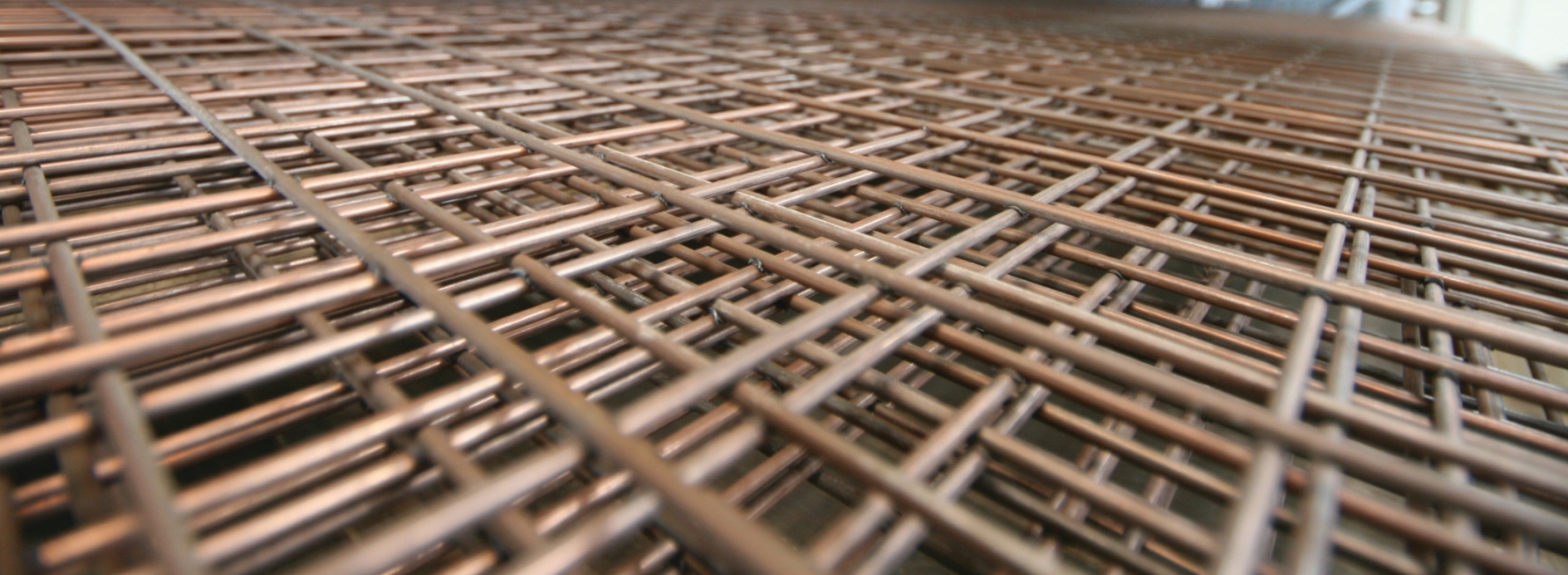
Welded wire mesh is a rigid grid of steel wires joined at every intersection by electrical resistance welding. The process passes an electrical current through the wires at each crossing point, fusing them permanently without additional fasteners or adhesives. The result is a dimensionally stable mesh that holds its shape under load, unlike woven mesh where unwelded intersections can shift.
This dimensional stability is what makes welded mesh the default choice for structural and containment applications. A woven mesh can deform when pushed; a welded mesh distributes force across the entire grid.
Welded vs Woven Wire Mesh
These two products are often confused. The distinction matters for specification:
| Feature | Welded Wire Mesh | Woven Wire Mesh |
|---|---|---|
| Intersections | Permanently fused by welding | Wires interlaced not fused |
| Rigidity | High – maintains fixed aperture under load | Lower – intersections can shift |
| Typical uses | Fencing, enclosures, reinforcement, guarding | Filtration, screening, fine aperture applications |
| Available apertures | 6mm to 100mm+ | Sub-millimetre to 50mm |
| Cut edge behaviour | Clean, holds shape | Can unravel at cut edges |
The practical rule: if you need a physical barrier, enclosure, or structural reinforcement, welded mesh is almost always the correct choice. Woven mesh is the answer when you need very fine or precise apertures, filtration, or flexibility.
Welded wire mesh is manufactured to BS 4483 for concrete reinforcement applications, and general-purpose welded mesh is commonly produced from wire drawn to BS 1052.
Understanding Wire Gauge
Wire gauge is the single most important factor in determining how strong and rigid a welded wire mesh will be. In the UK, gauge is specified using the Standard Wire Gauge (SWG) system, and it works counterintuitively: a higher gauge number means thinner wire.
This catches out buyers regularly. A 19g mesh is light and flexible; a 6g mesh is heavy, rigid, and extremely strong. Getting this wrong is the most common cause of mesh failing in service.
SWG Gauge Reference Table
| SWG Gauge | Wire Diameter (approx) | Character | Typical Applications |
|---|---|---|---|
| 6g | 4.69mm | Very heavy, rigid | Heavy security fencing, industrial enclosures |
| 8g | 3.94mm | Heavy, rigid | Security cages, large animal enclosures, dog runs |
| 10g | 3.00mm | Strong, semi-rigid | General security fencing, deer fencing |
| 12g | 2.44mm | Medium-heavy | Dog fencing, perimeter fencing, agricultural |
| 14g | 1.93mm | Medium | Chicken runs (fox-proof), garden fencing, cat enclosures |
| 16g | 1.50mm | Medium-light | Rabbit runs, bird enclosures, garden borders |
| 19g | 1.00mm | Light, flexible | Rodent proofing, bird netting, lightweight garden use |
The Practical Dividing Lines
10g and heavier (3.00mm+): Mesh in this range is genuinely rigid. It resists bending under hand pressure and will not deform when animals push against it. This is the minimum specification for security fencing or enclosures containing large or determined animals.
12g to 14g (2.44mm to 1.93mm): The most common range for fencing contractors. Strong enough for dog runs, poultry enclosures, and perimeter fencing, but light enough to cut and handle on site without specialist tools.
16g to 19g (1.50mm to 1.00mm): Suitable for lightweight applications where containment pressure is low. A 19g mesh can be cut with tin snips and bent by hand. It will not resist a determined fox, dog, or intruder, but it is entirely appropriate for bird proofing, rabbit exclusion, and garden borders.
Key point: Wire gauge determines resistance to deformation, not just to corrosion. Specifying too light a gauge for an animal enclosure is a safety risk, not just a performance issue.
Understanding Aperture Size
Aperture is the size of the individual holes in the mesh, measured centre-to-centre between wires. It determines what the mesh will and will not allow to pass through. Choosing the wrong aperture is the second most common specification error, particularly in animal enclosures and pest exclusion applications.
Apertures are available in square configurations (e.g. 25mm x 25mm) and rectangular configurations (e.g. 75mm x 25mm). The rectangular format provides more coverage per metre of wire while maintaining containment in one dimension.
Aperture Selection by Application
| Aperture | Metric | Common Uses |
|---|---|---|
| 6mm x 6mm | 1/4″ x 1/4″ | Rodent exclusion (mice and rats), pest-proofing vents and air bricks |
| 13mm x 13mm | 1/2″ x 1/2″ | Rat exclusion, bird exclusion from larger openings |
| 19mm x 19mm | 3/4″ x 3/4″ | Squirrel and rat exclusion, smaller bird species |
| 25mm x 25mm | 1″ x 1″ | Cat enclosures, rabbit runs, chicken coops, garden borders |
| 50mm x 50mm | 2″ x 2″ | Dog fencing, general garden fencing, security (with heavy gauge) |
| 75mm x 25mm | 3″ x 1″ | Agricultural fencing, general perimeter, support structures |
| 100mm x 100mm | 4″ x 4″ | Deer fencing, large animal containment, construction reinforcement |
The Critical Rule for Animal Containment
The aperture must be smaller than the smallest part of the animal that could push through it. For fox-proofing chicken runs, a 50mm aperture is the maximum, and only at 14g or heavier. A fox can push through a 50mm aperture in lighter gauge mesh by deforming the wires.
For rodent exclusion specifically: the British Pest Control Association specifies 6mm aperture mesh for sealing air bricks, pipe entries, and vent covers against mice. Rats require either a 6mm aperture or a 13mm aperture combined with a minimum 16g wire.
Square vs Rectangular Apertures
Square apertures provide equal containment in both directions and are the standard choice for most fencing and enclosure applications. Rectangular apertures (such as 75mm x 25mm) are often used in agricultural and horticultural settings where vertical containment matters more than horizontal, or where the mesh serves as a support structure for climbing plants or crops.
Material Finishes: Which Should You Choose?
The base wire and its finish determine how long the mesh will last in a given environment. Getting this wrong is expensive: a mild steel mesh installed outdoors will begin rusting within weeks of the first rain. Specifying stainless steel for an indoor cage is unnecessary cost. The decision comes down to three factors: environment, expected lifespan, and budget.
The Four Main Finishes Compared
| Finish | Corrosion Resistance | Typical Lifespan Outdoors | Best For | Relative Cost |
|---|---|---|---|---|
| Mild steel (self-colour) | None without coating | Weeks to months | Internal fabrication, welded frames | Lowest |
| Pre-galvanised | Moderate | 5-10 years in most UK conditions | General outdoor fencing, garden use | Low |
| Hot-dip galvanised | Good | 15-25 years in most UK conditions | Agricultural, infrastructure, security | Medium |
| PVC-coated (over galvanised) | Good, with aesthetic benefit | 10-20 years | Garden, residential, public-facing | Medium |
| Stainless Steel 304 | Excellent | 25+ years in most conditions | Food, pharmaceutical, architectural | High |
| Stainless Steel 316 | Superior (marine grade) | 25+ years including coastal | Marine, coastal, chemical environments | Highest |
Mild Steel (Self-Colour)
Mild steel mesh has no protective coating. It will rust as soon as it is exposed to moisture. This makes it appropriate only for internal applications or as a base for further fabrication, such as welding into a powder-coated frame. It is the correct choice when the mesh will be incorporated into a structure that receives its own surface treatment.
Never specify mild steel for outdoor use without a subsequent coating.
Galvanised Mesh: Pre-Galvanised vs Hot-Dip
Both processes apply a zinc coating to protect the steel, but they differ in coverage and durability.
Pre-galvanised (also called galvanised before welding): the wire is coated with zinc before the mesh is manufactured. The welding process burns through the zinc at each intersection, leaving small unprotected areas at every joint. This reduces long-term corrosion resistance compared to hot-dip, but the mesh is still suitable for most general outdoor applications.
Hot-dip galvanised (galvanised after welding): the completed mesh is submerged in molten zinc, coating the entire surface including the weld points. This provides significantly better corrosion resistance and is the preferred specification for agricultural, infrastructure, and security applications where long service life matters. The British Standard BS 443 governs hot-dip galvanising specifications for wire.
PVC-Coated Mesh
PVC coating is applied over a galvanised steel core, providing two layers of protection and a clean visual finish. Available in green (for garden settings) and black (for contemporary or commercial installations). The coating eliminates sharp cut edges, which is important for public-facing installations, playgrounds, and school grounds.
Two limitations are worth noting:
• The PVC coating can crack or peel over time, particularly in UV-exposed locations, which exposes the underlying wire to moisture
• The coating makes it harder to inspect the condition of the wire beneath
PVC-coated mesh typically carries a 20 to 30% cost premium over plain galvanised. It is the right choice when appearance matters alongside durability.
Stainless Steel Mesh: Grade 304 vs Grade 316
Stainless steel mesh is specified where galvanised steel is insufficient: marine environments, food production, pharmaceutical facilities, chemical processing, and architectural applications requiring long-term appearance.
Grade 304 is the standard specification. It contains approximately 18% chromium and 8% nickel, providing excellent corrosion resistance in most UK environments. It is the default choice for food processing, clean rooms, and general architectural use.
Grade 316 adds 2 to 3% molybdenum, which significantly improves resistance to chlorides and salt. It is the correct specification for coastal locations, marine environments, and any application involving salt water or chloride exposure. The cost premium over Grade 304 is approximately 30%, and over hot-dip galvanised it is roughly two to three times the price.
Coastal specification rule: within approximately 5km of the coastline, or in any environment with salt air exposure, Grade 316 stainless steel is the minimum recommended specification. Standard galvanised mesh in a salt air environment can show signs of corrosion within months.
Rolls vs Panels: Which Format Do You Need?
Welded wire mesh is available in two formats: rolls and rigid panels. The right choice depends on the scale of the project, the installation method, and whether dimensional precision or flexibility matters more.
Mesh Rolls
Rolls are supplied in continuous lengths, typically from 10m to 30m, in a range of widths. They are the most cost-effective format for covering large areas and can be cut to length on site.
Choose rolls when:
• The project covers a large area and cutting to size is acceptable
• The mesh will be fixed to posts or a frame along its length
• Flexibility during installation is useful (rolls can follow contours)
• Applications: perimeter fencing, animal enclosures, agricultural mesh, reinforcement, garden projects
Rigid Mesh Panels
Panels are pre-cut to fixed dimensions, typically in sheet sizes from 6ft x 3ft up to 8ft x 4ft or larger. They are self-supporting and maintain their shape without a continuous fixing frame.
Choose panels when:
• Dimensional precision and a clean edge finish are required
• The mesh will be used as a freestanding element: security cages, machine guards, architectural infill
• The installation requires panels to be joined rather than rolled out
• Applications: security enclosures, machine guarding, storage cages, architectural infill panels, industrial partitions
Format Comparison
| Rolls | Rigid Panels | |
|---|---|---|
| Coverage | Large areas, cut to length | Fixed dimensions |
| Edge finish | Cut edges require protection | Factory edges, flush or wired |
| Self-supporting | No – requires fixing frame | Yes |
| Cost per m² | Generally lower | Generally higher |
| On-site flexibility | High | Lower |
| Best for | Fencing, enclosures, reinforcement | Guarding, security, architectural |
One practical note on rolls: exposed cut ends on galvanised mesh should be treated with a zinc-rich cold galvanising compound to prevent rust initiating at the cut point. This is particularly important in exposed or damp environments.
Which Welded Wire Mesh Do I Need? By Application
This section gives specific gauge, aperture, finish, and format recommendations for the most common applications. Each recommendation is based on the containment requirement, environment, and expected service life.
Rodent Exclusion (Mice and Rats)
Specification: 6mm x 6mm aperture, minimum 19g (mice), 16g (rats), stainless steel 304 or hot-dip galvanised
Mice can squeeze through any gap larger than approximately 6mm. Rats require a slightly larger gap but can chew through lightweight wire. For permanent pest exclusion around buildings, HSE guidance on pest control recommends stainless steel mesh for air brick covers and pipe entries, as galvanised mesh can be compromised by gnawing over time.
Chicken Runs and Poultry Enclosures
Specification: 50mm x 50mm aperture, minimum 14g, hot-dip galvanised
The 50mm aperture is the maximum for fox exclusion, and only at 14g or heavier. At 16g or lighter, a fox can deform the wires and push through a 50mm opening. For the run floor (to prevent digging), an apron of 25mm x 25mm mesh at 16g buried 300mm underground is standard practice.
Rabbit Runs and Small Animal Enclosures
Specification: 25mm x 25mm aperture, 16g, galvanised or PVC-coated
A 25mm aperture prevents adult rabbits from passing through. For enclosures containing young animals or kits, 13mm x 13mm is safer. PVC-coated mesh is popular for domestic rabbit runs where appearance matters.
Dog Runs and Kennels
Specification: 50mm x 50mm aperture, minimum 12g for medium dogs, 10g or 8g for large or powerful breeds, hot-dip galvanised
The gauge is the critical variable here. A 12g mesh is adequate for most dogs, but large breeds can push against the mesh with significant force. For kennels housing working dogs, security dogs, or large breeds, 10g is the safer specification. The 50mm aperture is standard; smaller apertures are unnecessary and reduce airflow.
Garden and Boundary Fencing
Specification: 50mm x 50mm aperture, 12g to 16g depending on aesthetic requirements, PVC-coated (green or black) or hot-dip galvanised
For general garden boundaries without containment requirements, 16g at 50mm aperture is adequate. Where the fence also serves to keep children or pets in, step up to 14g minimum. PVC-coated mesh in green blends into planting; black suits contemporary garden schemes.
Security Fencing
Specification: 50mm x 50mm aperture, minimum 10g, hot-dip galvanised or stainless steel 304 for high-value sites
Security fencing requires mesh that cannot be deformed by hand pressure or simple tools. 10g (3.00mm wire) is the practical minimum for perimeter security. For higher-security applications, 8g or 6g panels are specified. The mesh should be fixed to robust steel posts at close intervals (typically no more than 2m) to prevent the panel from being lifted or pushed out of shape.
Construction Reinforcement
Specification: Fabric mesh to BS 4483, typically A142 to A393 depending on structural load
Concrete reinforcement mesh is a specialist product governed by BS 4483. The designation refers to the cross-sectional area of steel per metre: A142 (142mm²/m) is used in light slabs and paths; A393 (393mm²/m) is used in heavily loaded ground slabs and structural applications. This is a structurally critical specification and should be confirmed by a structural engineer for any load-bearing application.
Machine Guards and Industrial Enclosures
Specification: 25mm x 25mm or 50mm x 50mm aperture, 12g to 8g, mild steel (self-colour) for powder-coated fabrication or hot-dip galvanised for exposed environments
Machine guards must comply with BS EN ISO 13857, which sets minimum mesh aperture sizes based on the distance between the guard and the hazard. At a guard-to-hazard distance of 120mm, a 12mm aperture is the maximum. At 850mm distance, a 40mm aperture is permitted. Always confirm guard specifications against the relevant machinery safety standard.
Architectural and Decorative Applications
Specification: Variable aperture, stainless steel 304 or 316, panel format
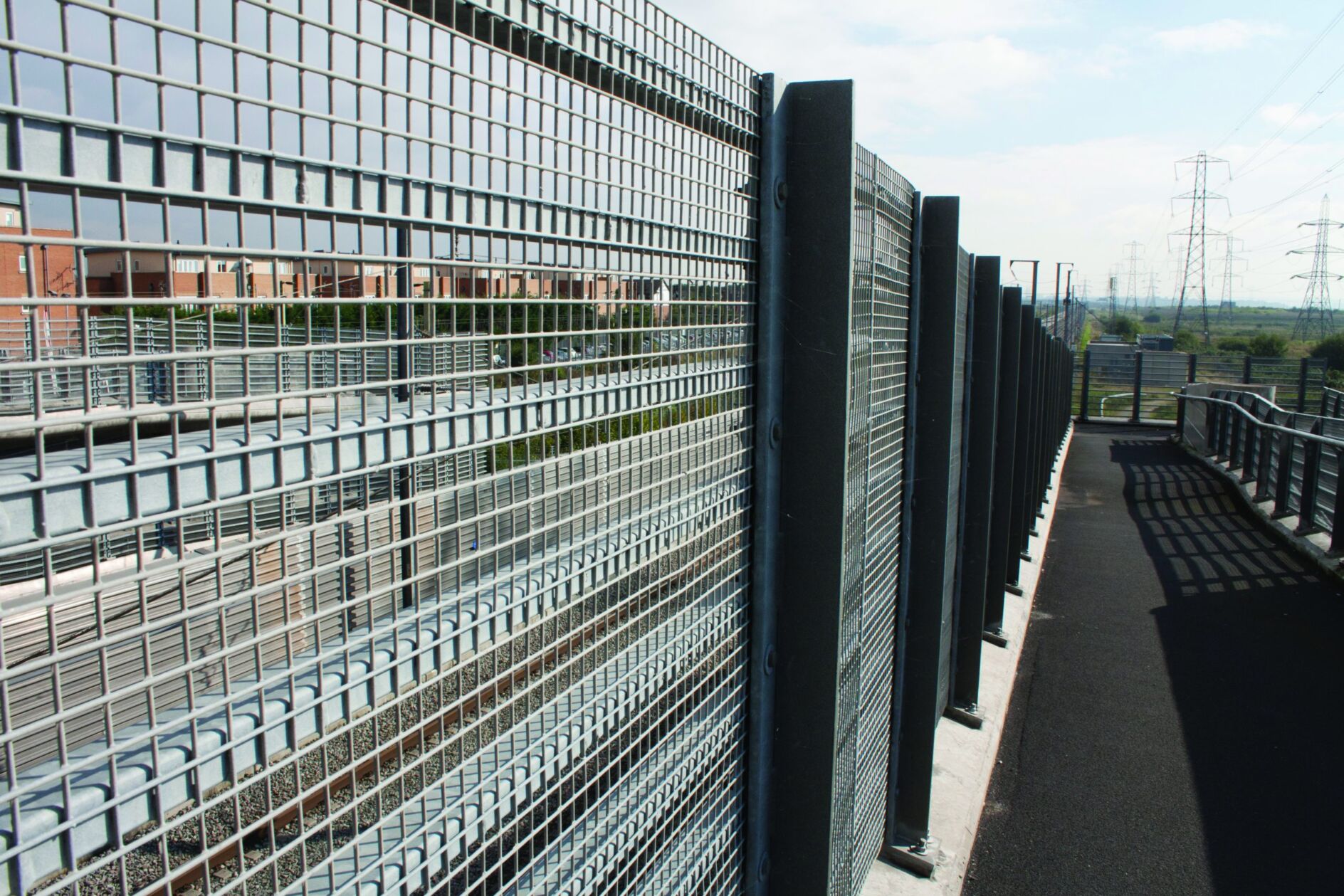
Architectural welded mesh used in balustrade infill panels, feature walls, facade screening, and retail fit-outs is typically specified in stainless steel for appearance and longevity. The British Stainless Steel Association (BSSA) publishes guidance on stainless steel selection for architectural applications, including advice on grade selection for different exposure environments.
How to Specify Welded Wire Mesh: A Buying Checklist
When ordering welded wire mesh, a complete specification prevents errors and ensures you receive the correct product. Suppliers need the following information to fulfil an order accurately.
The Six Specification Points
1. Wire gauge (SWG): specify as a number, e.g. 12g or 1.93mm diameter. Both are acceptable; metric diameter is unambiguous.
2. Aperture size: specify as width x height in mm, e.g. 50mm x 50mm. State whether square or rectangular.
3. Material and finish: mild steel / pre-galvanised / hot-dip galvanised / PVC-coated (state colour) / stainless steel 304 / stainless steel 316.
4. Format: roll or panel. For rolls, specify width and length. For panels, specify width, length, and whether flush edges are required.
5. Quantity: for rolls, specify total linear metres or number of rolls. For panels, specify number of sheets.
6. Edge treatment (panels only): flush edges (wires cut flush) or wired edges (cut wires folded back). Flush edges give a cleaner finish; wired edges are safer to handle without gloves.
Common Specification Errors to Avoid
• Confusing gauge numbers: ordering 19g when 10g was intended is a common error. Double-check that higher gauge = thinner wire.
• Specifying aperture in inches when ordering in metric: 2″ x 2″ is 50mm x 50mm, but 1″ x 2″ is 25mm x 50mm. Confirm the metric equivalent.
• Under-specifying for the environment: pre-galvanised mesh in a coastal or agricultural setting will corrode significantly faster than hot-dip. Match the finish to the environment, not the budget.
• Ordering rolls when panels are needed: rolls cannot be used as self-supporting panels without a frame. If the application requires a rigid, freestanding element, order panels.
F.H. Brundle’s welded wire mesh range covers mild steel, galvanised, stainless steel 304 and 316, and PVC-coated options in both roll and panel formats, with bespoke panel sizes available to order.