Why choose Armco Crash Barriers?
What are Crash Barriers?
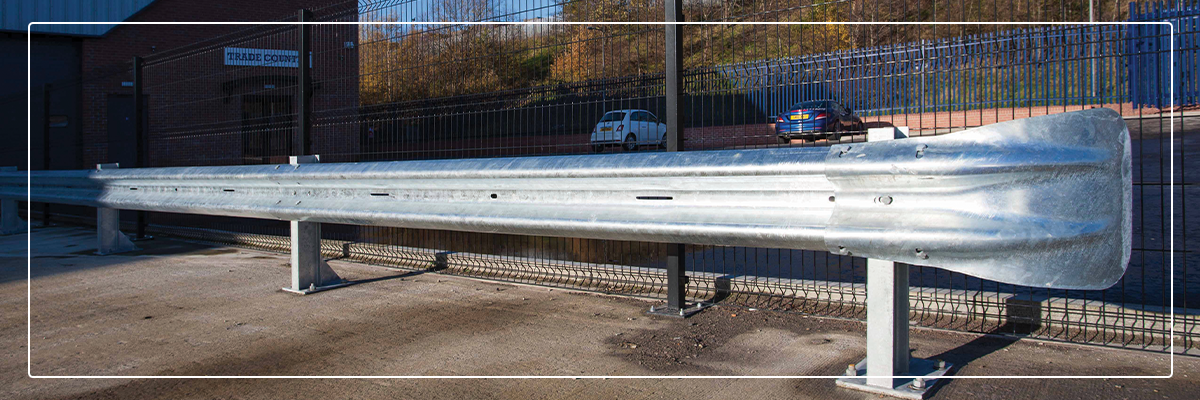
Crash Barriers (or more commonly called Armco Barriers) are protective galvanised steel systems used primarily in off-road environments – such as vehicle carparks, factories, warehousing and industrial premises to safeguard people, property, and plant installations from the dangers of moving vehicles and forklift trucks.
These barriers minimise expensive repairs and consequential losses by shielding valuable stock and buildings from accidental impact. Built for durability, their components are fully replaceable and offer a virtually maintenance-free lifespan of up to 30 years, or more, in applications ranging from vehicle restraint and boundary delineation to pedestrian guardrails and race track safety.
What are the choices when it comes to Crash Barriers?
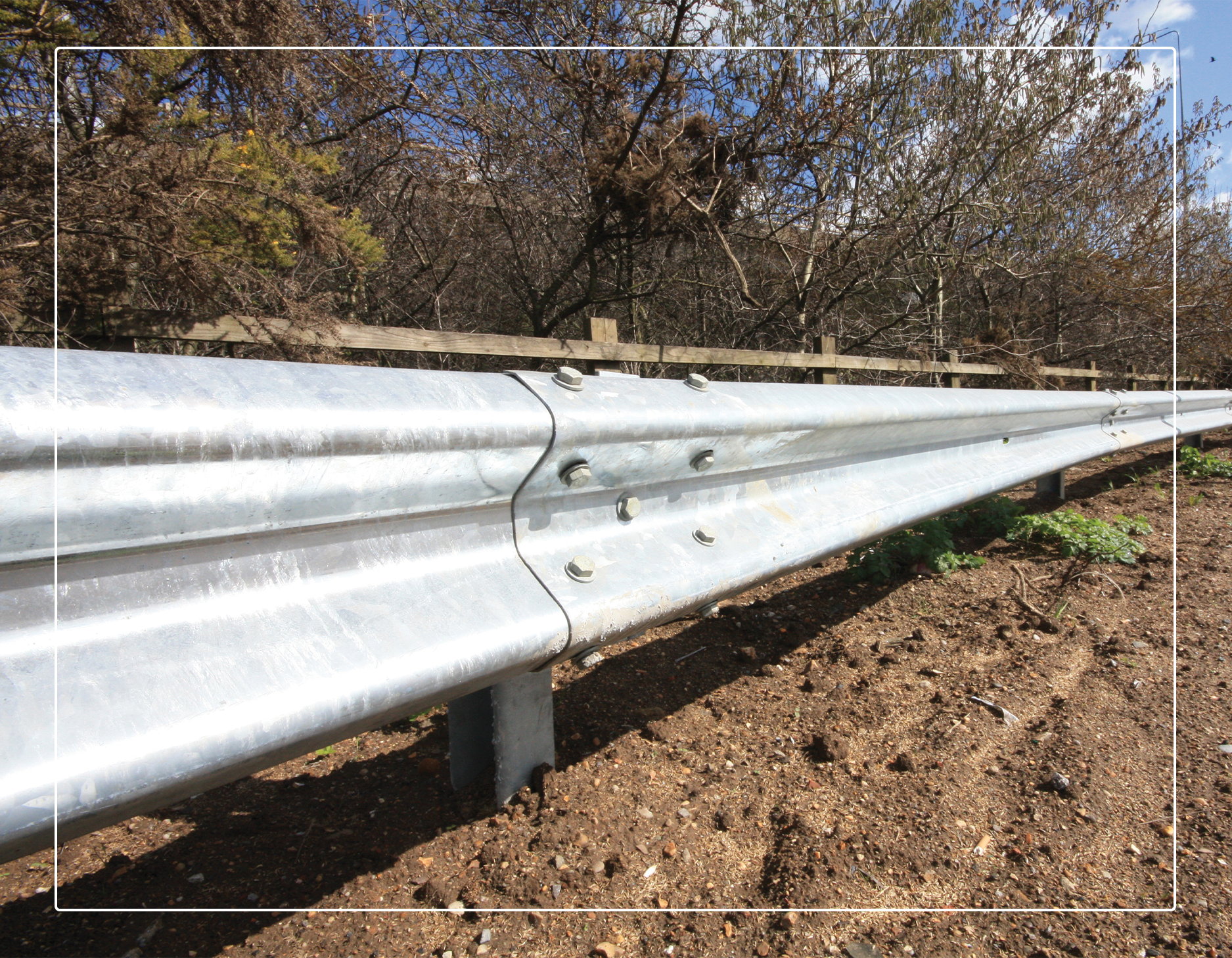
At F.H.Brundle, we offer the options between concrete-in or bolt-down posts to match your Crash Barrier ground installation needs. Additionally, configurations can be customised by choosing the required number of beams for the layout’s length, alongside specialised corner and end components. Our barriers are supplied as 3mm thick, galvanised (to BS EN 10 025) S275 mild steel full beams, 3.5m lengths (for 3.2m nominal lengths once installed).
| Feature Category | Key Benefit | Detail |
|---|---|---|
| Material & Build | Longevity and cost-efficiency | Durable hot-dip galvanised steel components that provide a maintenance-free operational life of up to 30 years. |
| Asset Protection | Minimises industrial damage and losses | Gives valuable stock, plant installations, and buildings the best possible protection from moving vehicles and forklift trucks. |
| Safety Application | Versatile hazard prevention | Protects people and property across diverse uses, including vehicle restraint, boundary delineation, pedestrian guardrails, rockfall protection, and race track safety. |
| Component System | Easy repairability and sustainability | Components are completely replaceable, ensuring individual parts can be substituted without replacing the entire run after an accident. |
| Post Installation Choices | Adaptability to different surfaces | Offers a choice between bolt-down posts (for existing concrete/hard surfaces) or concrete-in posts (for setting directly into the ground). |
| Layout Flexibility | Customisable structural configurations | Can be tailored to specific site layouts by calculating custom beam lengths and integrating dedicated corner or end pieces. |
Note: Our Armco crash barrier system (beams, brackets and posts) have not been tested to N2 / BS EN 1317 standards for use on British Highways.
Where can Crash Barriers be used?
Crash Barriers can be used in the following locations and applications:
Primary Environments:
• Car parks – Full beam installed between 560mm and 610mm standard height
• Factories – Full beam installed between 560mm and 610mm standard height
• Industrial premises – Full beam installed between at 760mm standard height
• Warehousing – Full beam installed between at 760mm standard height
• Loading bays – Double-stack two full beams to 1100mm height
Specific Functional Applications:
• Vehicle restraint
• Protection barriers against rockfall
• Pedestrian guardrails / protection
• Delineating boundaries
• Barrier control
• Race track safety barriers
• Protecting valuable stock, plant installations, and buildings from moving vehicles and forklift trucks
Why are Armco Crash Barriers so ubiquitous?
Crash Barriers are highly popular because they offer a combination of long-term asset protection, exceptional durability, and versatile safety applications.
(1) Superior Asset and Cost Protection: They provide the best possible protection for valuable stock, plant installations, and buildings from damage caused by moving vehicles and forklift trucks, which effectively minimises expensive repairs and consequential financial losses from accidents.
(2) Exceptional Durability and Low Maintenance: They feature a maintenance-free operational lifespan of up to 30 years, making them a highly cost-effective and reliable long-term investment.
(3) Sustainable and Replaceable Design: If an impact does occur, the barrier components are fully replaceable, meaning individual damaged parts can be swapped out easily without needing to replace the entire system.
(4) High Versatility: They can be adapted to a wide variety of off-road safety needs, including vehicle restraint, pedestrian guardrails, boundary delineation, barrier control, racetrack safety, and even protection against rockfall.
How to order.
Now you have more insight into the benefits and use cases of crash barrier, you’ll need to know how to buy this product.
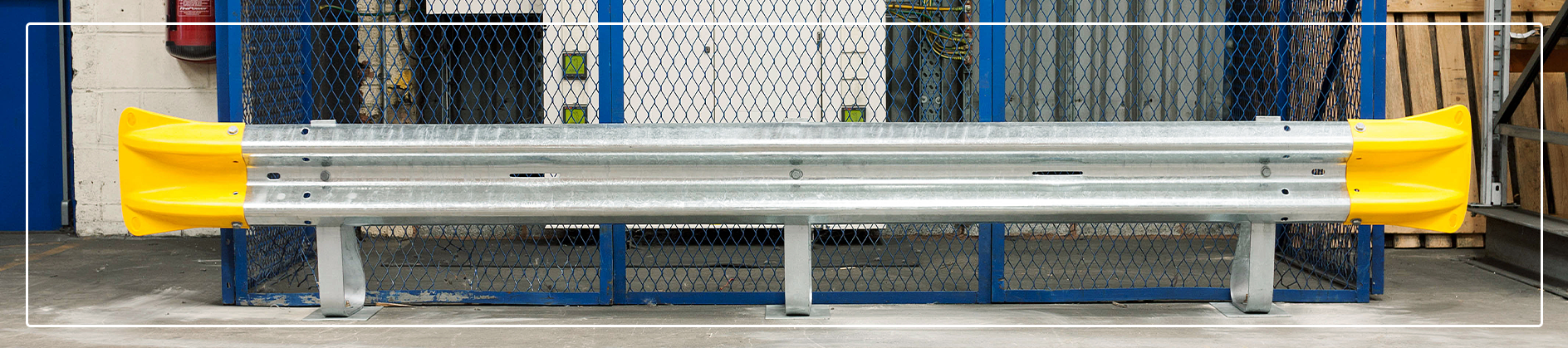
(1) Overall length of each run = Number of beams required
(2) Bolt-down or concrete-in posts = Number of posts
(3) Any corner or ends = Number required
(4) Number of lap bolts = 8 per beam
(5) Number of post bolts = 1 per post