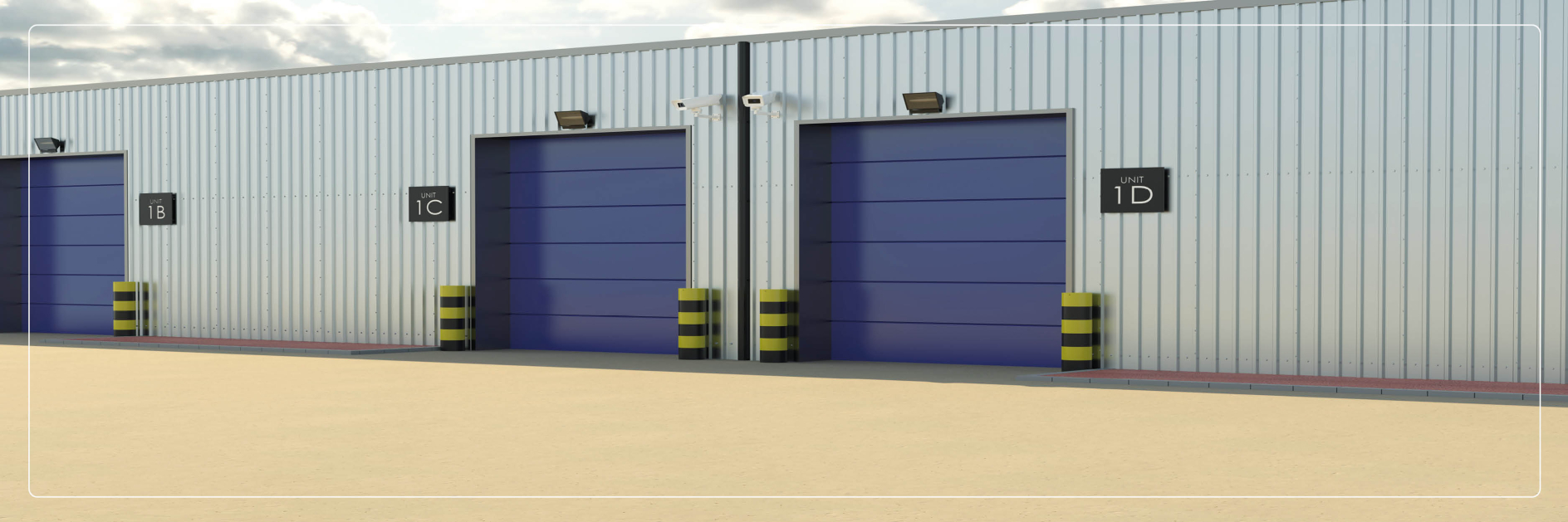
Why choose F.H.Brundle Bollards?
In short, bollards protect buildings, people, gates and equipment from vehicle impact, and control where vehicles can and cannot go. F.H.Brundle stocks galvanised, powder-coated and impact-absorbing steel bollards in bolt-down, concrete-in, removable, telescopic and fold-down formats, with the fixings, padlocks and visibility covers to match.
Whether you are fitting bollards on site or specifying them for a new build, you need clear dimensions, fixing details and honest guidance on what each type is designed to do. This page gives you all three.
What is a Bollard?
A bollard is a short, sturdy post used to protect, guide or restrict. In commercial and industrial settings, steel safety bollards shield doors, shutters, gates, pipework, fencing, EV chargers and building corners from accidental vehicle impact. In car parks and on driveways, parking bollards reserve spaces, while removable and telescopic bollards control access without blocking it permanently.
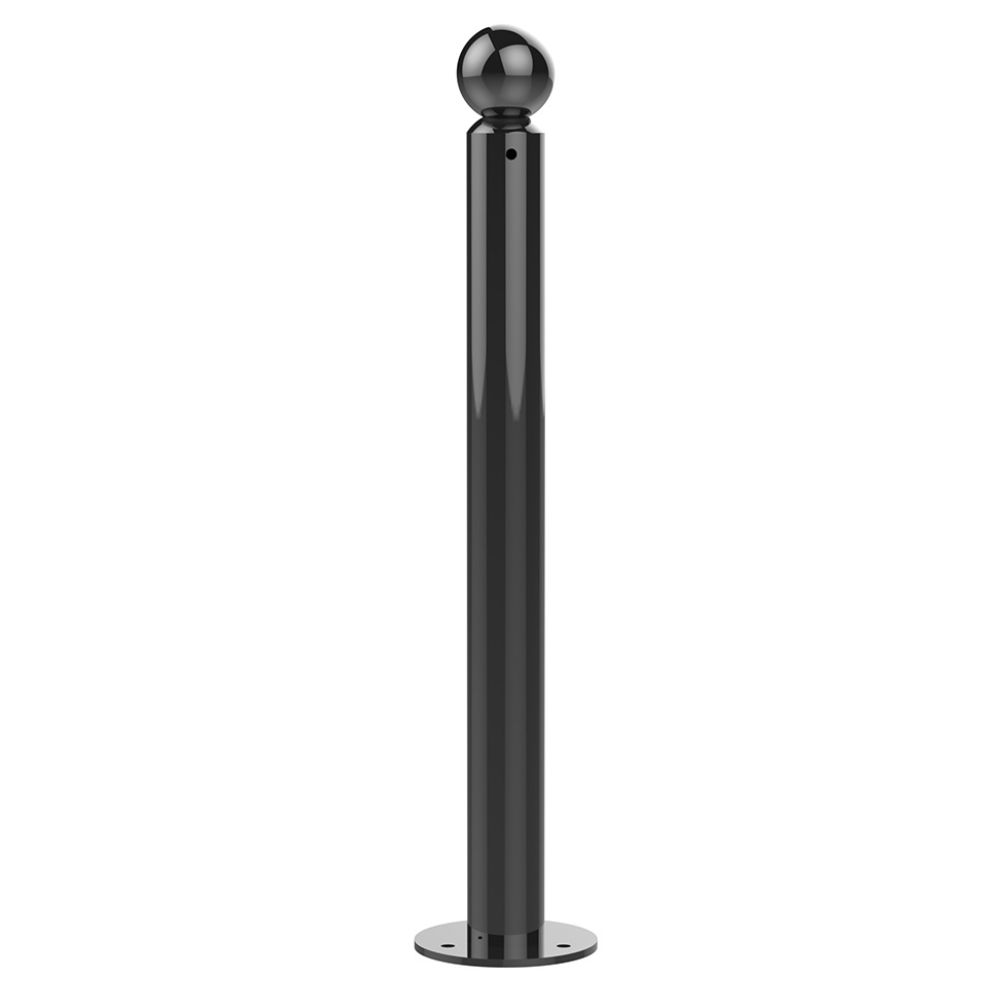
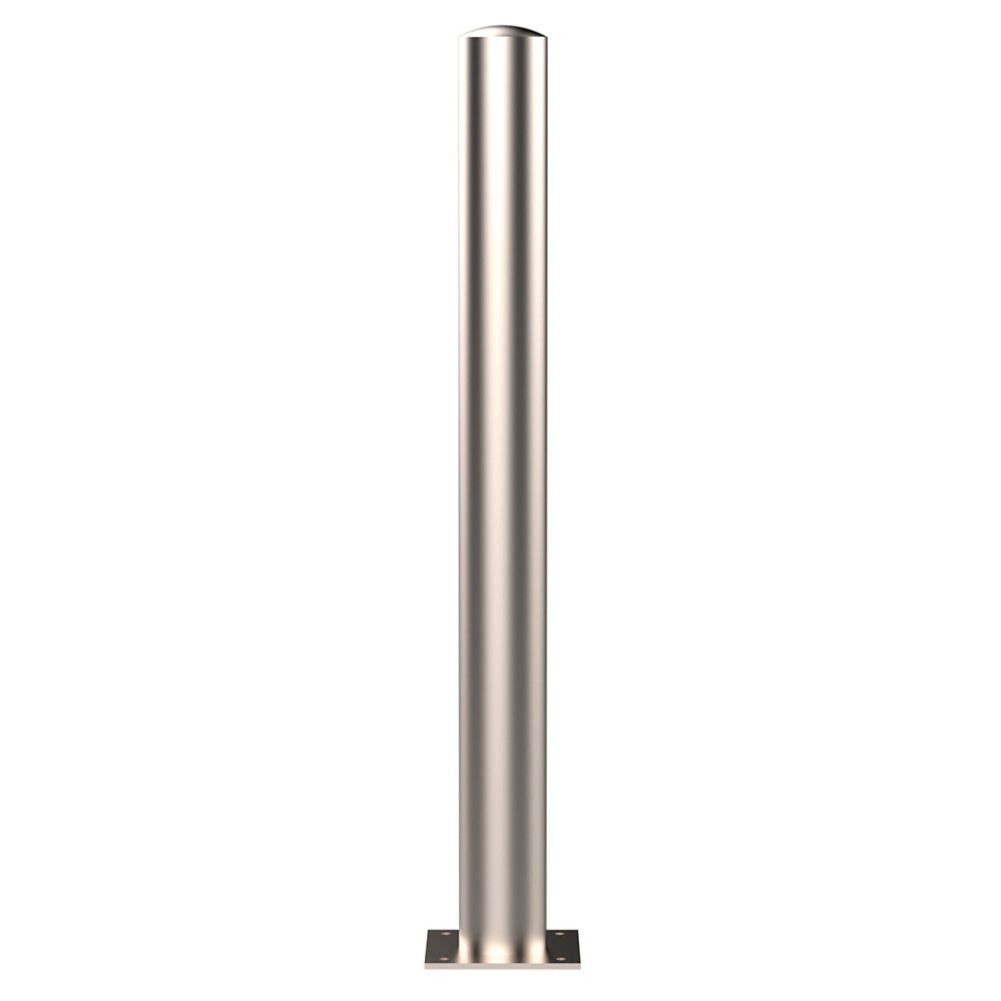
F.H.Brundle’s range covers hot-dip galvanised and powder-coated mild steel bollards, heavy-duty and impact-absorbing posts, removable, telescopic and fold-down options, and the accessories that go with them, including padlocks, D shackles, concrete screws, polymer visibility covers and corner guards. Diameters run from 76mm to 219mm, with heights from 900mm to 1,600mm, and top styles include ball or sphere, round, and open tops.
What are the choices when it comes to Bollards?
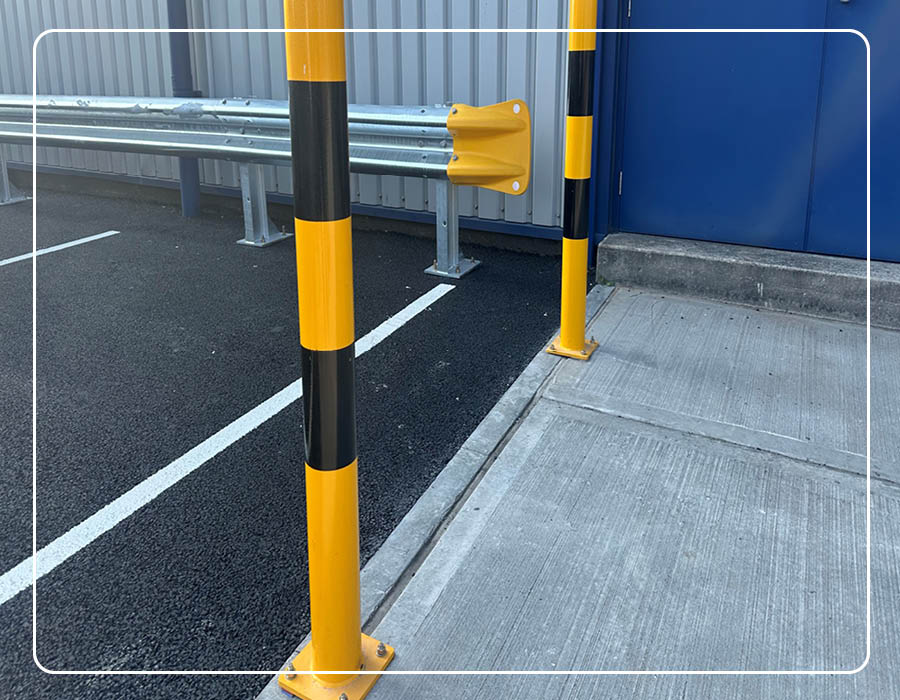
Choosing a bollard comes down to four decisions: how it is fixed, how much impact it must withstand, whether it needs to move, and how visible it must be. At F.H.Brundle you can choose from galvanised, mild steel and cast steel bollards, in round and square profiles, finished in hot-dip galvanising, primer paint or powder coat. The tables below set out the differences so you can narrow the options quickly.
Key features across the range
| Feature Category | Key Benefit | Detail |
|---|---|---|
| Durability & longevity | Built for outdoor use |
Hot-dip galvanised mild steel resists corrosion in wet, exposed and industrial environments. Powder-coated options add colour and a further protective layer. |
| Fixing options | Fits the site |
Bolt-down for existing concrete, concrete-in for new foundations, plus removable, telescopic and fold-down for managed access. |
| Visability & safety | Seen from the cab |
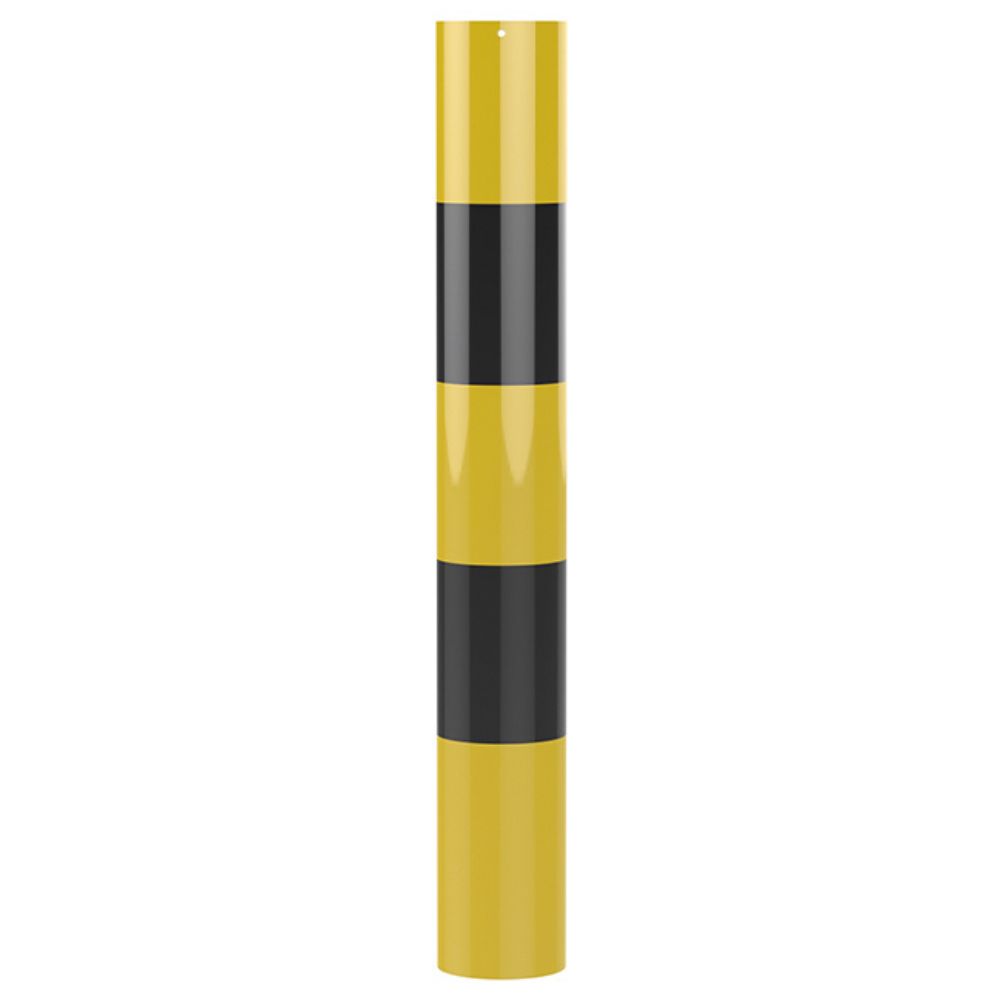
Polymer covers in black and yellow, yellow and black, or red and white make bollards easy to spot. Red and white suits high-warning areas such as rising-arm barrier protection. |
| Impact absorption | Protects floors and anchors | ImpactSAFE bollards cushion impact to reduce stress on floor anchors and help prevent cracking in concrete under heavy material handling equipment (MHE) impact. |
| Size range | Right-sized protection |
76mm to 219mm diameter, with heights from 900mm to 1,600mm. |
| Access control | Open when you need it |
Removable and telescopic bollards are supplied with a padlock, so access stays under your control. |
| Accessories | One-stop supply |
Padlocks, D shackles, concrete screws and bolts, polymer covers and corner guards are available alongside the bollards. |
Bollard types compared
| Bollard type | How it is fixed | Best suited to | Points to consider |
|---|---|---|---|
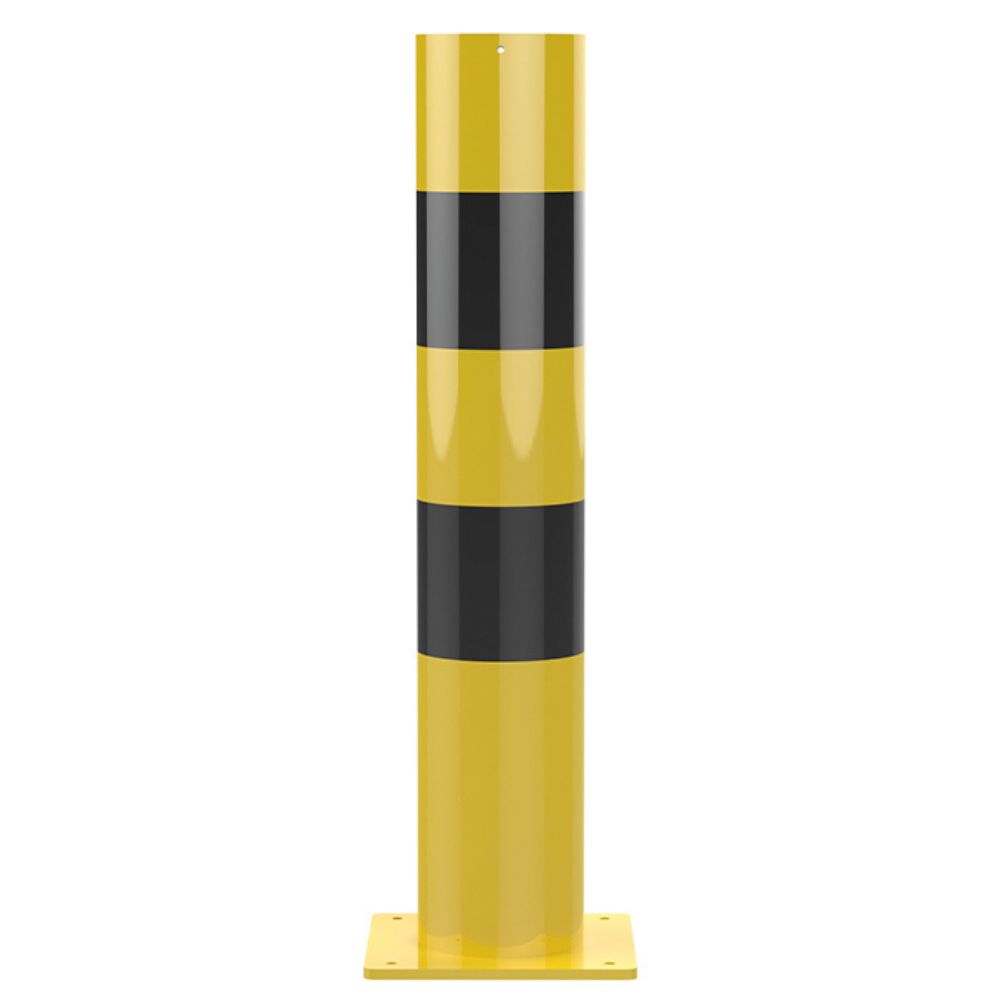
| Bolt-down |
Base plate anchored to existing concrete |
Shutter doors, loading bays and building protection where digging is impractical |
Needs a sound, level concrete base and suitable anchors. No excavation required. |
| Concrete-in |
Embedded in a concrete-filled hole |
New builds, car parks and open ground |
Excavation needed. As a general guideline, at least a quarter of the bollard’s length should be concreted in. Allow the concrete to cure before exposing it to impact. |
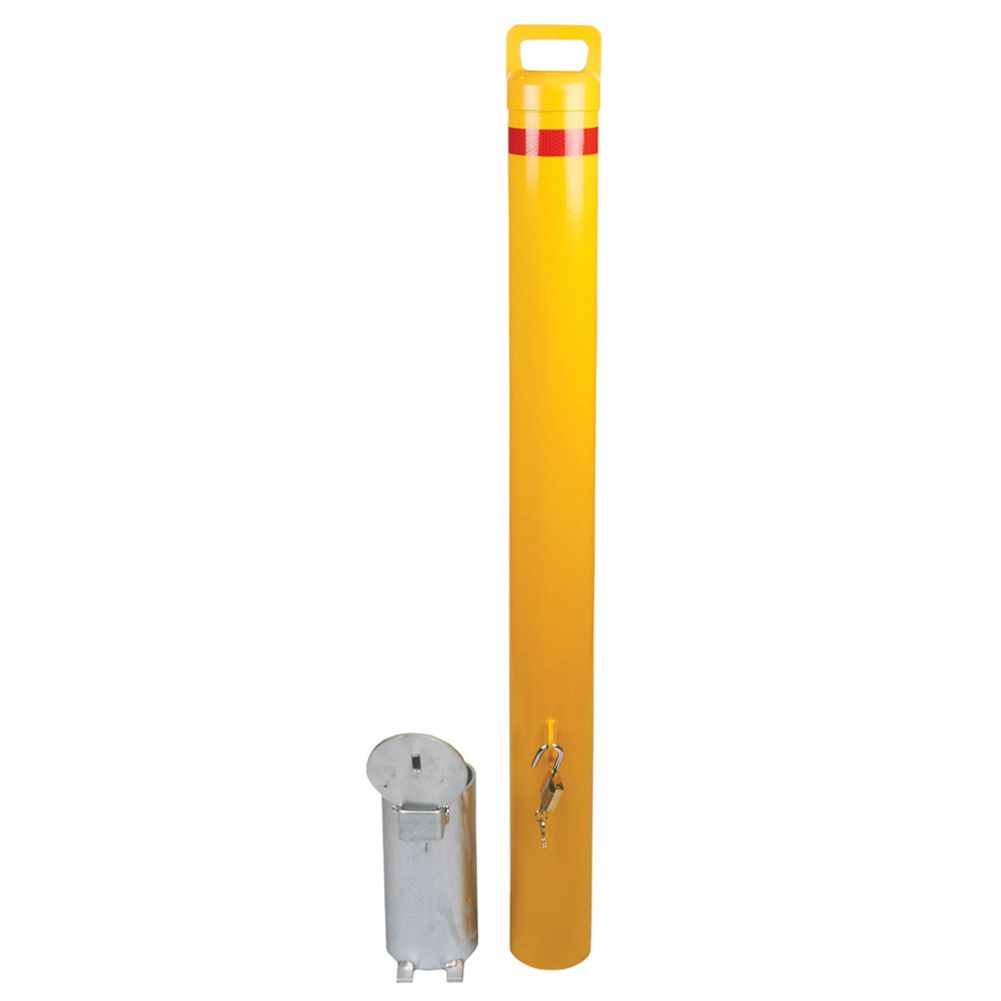
| Removable | Post slots into a ground socket, upright or lowered |
Driveways, private car parks and occasional access |
The post is lifted out and stored. Supplied with a padlock and two keys. |
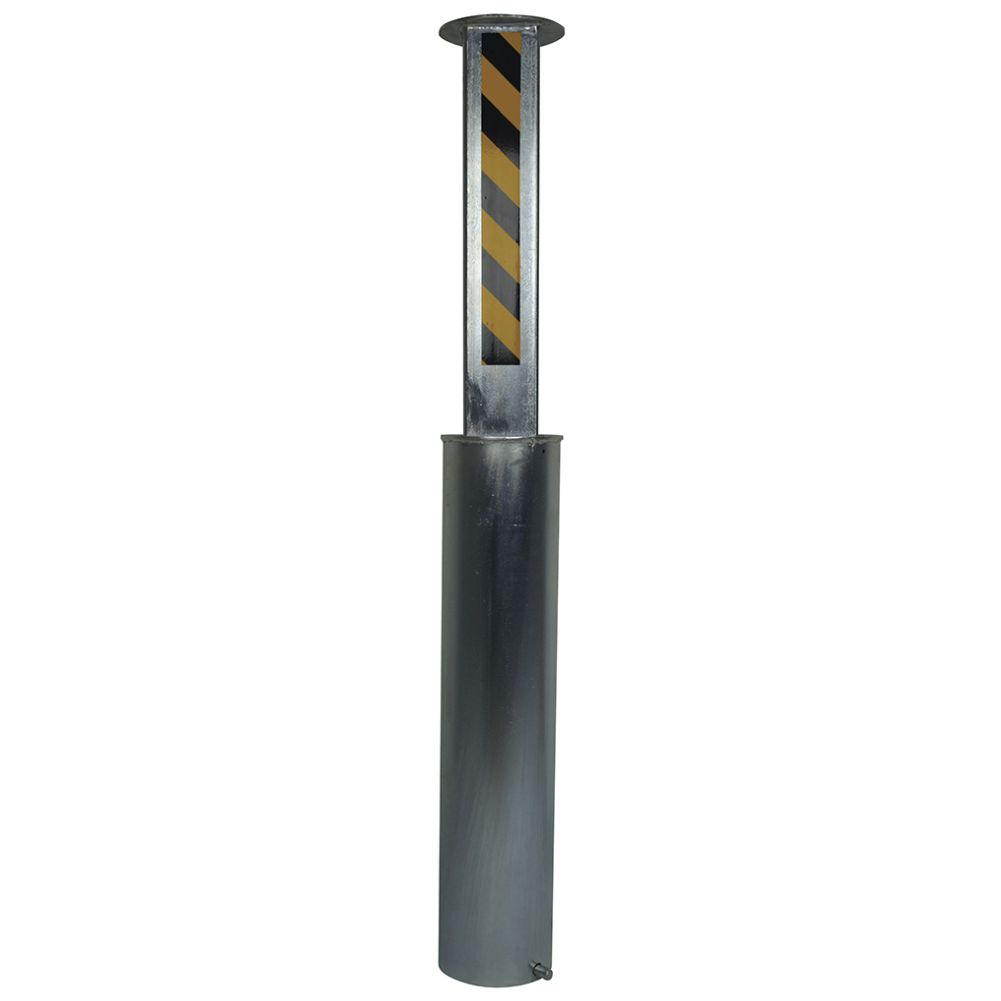
| Telescopic |
Square core slides up from a concrete-in round outer |
Regular access control where the bollard must disappear when not needed |
Supplied with a padlock. Outer section is set in concrete, so plan the foundation before ordering. |
| Fold-down |
Hinged, lowers flat to the ground |
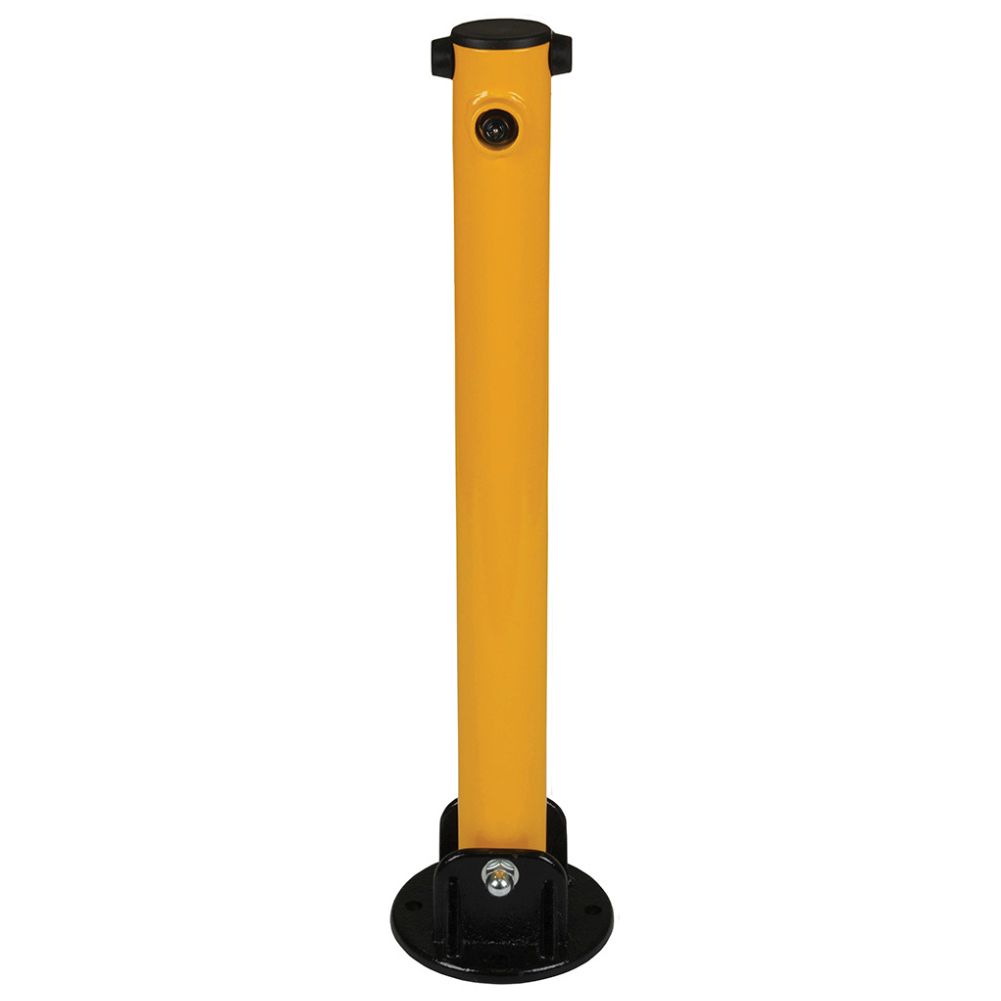
Reserved parking bays |
Keeps spaces clear when the bollard is lowered. Padlocks are available separately. |
Where can Bollards be used?
Bollards are used wherever vehicles and people, property or equipment share the same space. The most common settings include:
• Warehouses, factories and loading bays: protecting dock doors, racking ends, pipework and pedestrian walkways from forklifts and delivery vehicles.
• Retail and commercial premises: guarding shopfronts, shutters, cash machines and building corners.
• Car parks and private driveways: reserving spaces and restricting access with removable, telescopic or fold-down bollards.
• Gates, fencing and entrances: protecting gate posts, automatic gate equipment and rising-arm barriers from knocks.
• EV charging bays and utilities: shielding chargers, meters and service cabinets from low-speed impacts.
• Schools, public realm and pedestrian zones: separating people from traffic and defining safe routes.
For installers: every product is supplied with clear dimensions and fixing details. Bolt-down options can be fitted without excavation, which keeps disruption low on live sites.
For specifiers: product codes, diameters, heights, base plate sizes and finishes are listed on each product page, so you can write a precise specification and check it against drawings before you order.
Why are Bollards popular?
Simply put, demand is growing because of three main benefits:
(1) Protection: busier delivery routes, more forklift movements, and the spread of EV charging points all put more vehicles close to buildings and equipment. A bollard is a simple, visible barrier that helps prevent damage and supports employers in keeping traffic routes safe.
(2) Durability: hot-dip galvanising and powder coating protect steel from corrosion, so bollards stay serviceable outdoors with little maintenance. Heavy-duty and impact-absorbing designs are built for demanding industrial environments.
(3) Flexibility and value: one range covers fixed, removable, telescopic and fold-down options in a choice of sizes and finishes. Bolt-down bollards can be fitted without excavation, which saves time and groundworks costs.
How to buy
Now you have more insight into the types and uses of bollards, here is how to choose and order the right product:
(1) Define the hazard and level of protection
(2) Choose a fixing type
(3) Select size, height and top style
(4) Pick a finish and visibility option
(5) Add padlocks, fixings and accessories
Define the hazard. Start with what you are protecting and what could hit it: trolleys, cars, vans, forklifts or HGVs. Our steel bollards are designed for impact protection, access control and parking management. Unless a product page states a tested rating, they should not be specified as crash-rated or hostile vehicle mitigation (HVM) products. Where a project requires PAS 68 or IWA 14 certification, specify a certified system.
Choose the fixing. Bolt-down bollards suit existing concrete, concrete-in bollards suit new groundworks, and removable, telescopic and fold-down bollards manage access. Before any drilling or digging, scan for underground services in line with HSE guidance (HSG47). Bolt-down fixings need a sound, level concrete base, because paving slabs and tarmac rarely give enough anchorage. We stock concrete screws, bolts and anchors to suit.
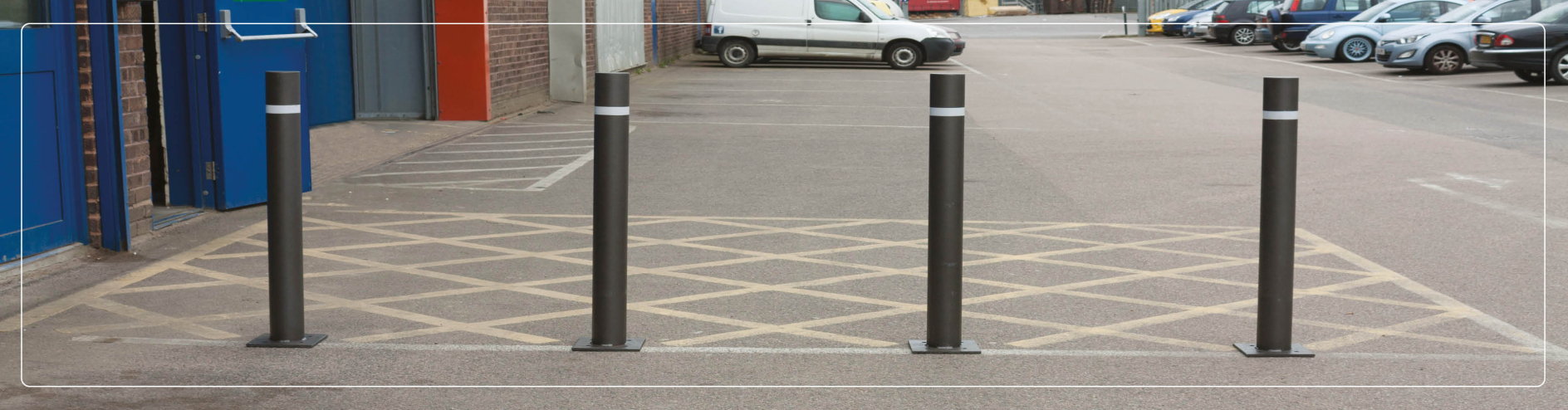
Select size, height and top style. Larger diameters generally resist more force, so choose the 219mm steel bollards where forklifts or HGVs operate, and 76mm to 114mm posts for lighter parking and pedestrian protection. Check spacing against the project: tight enough to stop vehicles, but wide enough for wheelchairs, mobility scooters and pushchairs to pass, in line with accessibility guidance such as Inclusive Mobility. Ball or sphere, round and open tops are available.
Pick a finish. Galvanised steel gives long-term corrosion protection, powder coating adds colour, and yellow and black boost visibility in busy yards and warehouses.
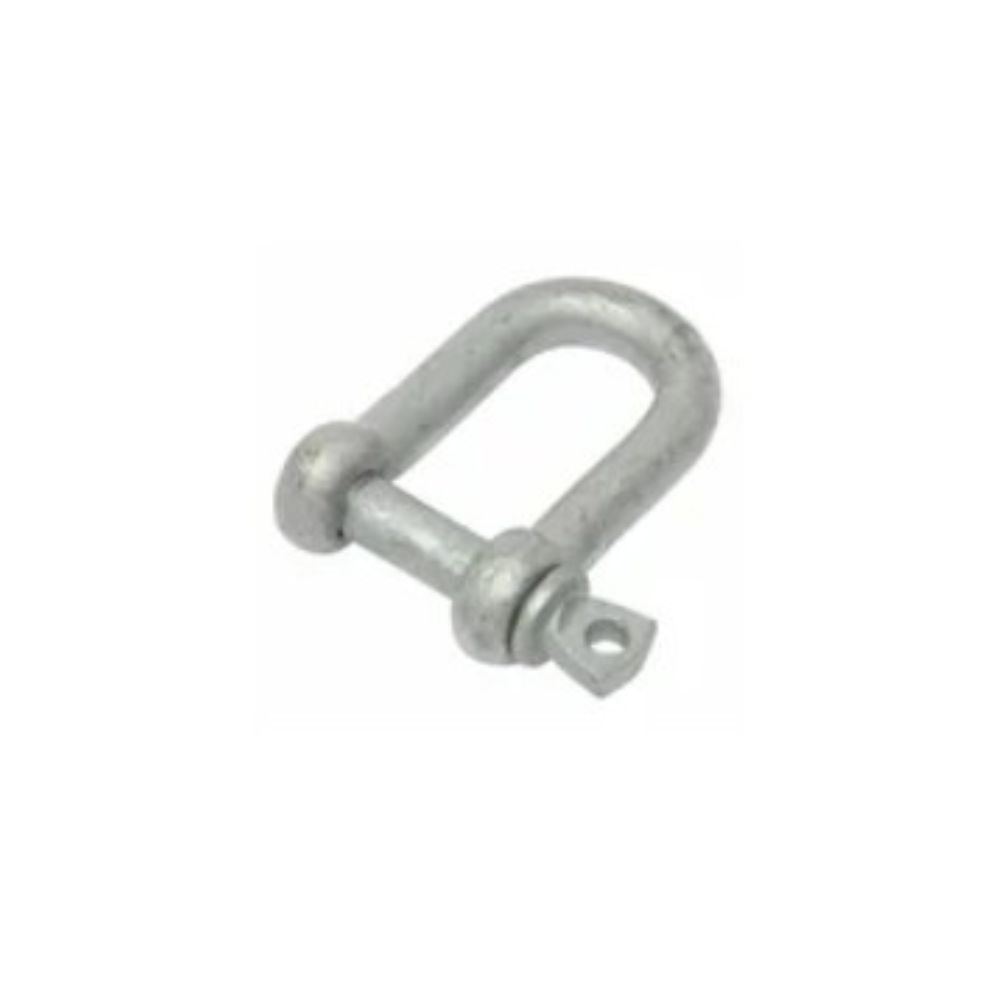
Add accessories. Order padlocks, D shackles, concrete screws and polymer visibility covers at the same time, so the job is not held up on site. Orders over £150 ex VAT qualify for free expedited delivery to mainland UK.
FAQs
A bollard is a short, sturdy post used to protect people and property from vehicle impact, guide traffic and restrict access. Typical uses include protecting shutter doors, loading bays, gates and building corners, reserving parking spaces, and controlling vehicle access to driveways and private car parks.
As a general guideline, at least a quarter of the bollard’s length should be concreted into the ground. For example, our 1,200mm-long 76mm bollard stands 900mm above ground, leaving 300mm embedded. Always follow the product’s installation instructions and allow for ground conditions.
Bolt-down bollards need a sound, level concrete base to anchor into. Paving slabs and tarmac rarely provide enough strength, so a concrete-in bollard or a new concrete pad is usually required. Check for underground services before drilling or digging.
It depends on what could hit it. Light parking and pedestrian protection often use 76mm to 114mm posts, while forklift and HGV areas call for heavier 168mm or 219mm bollards. Heights are typically around 900mm to 1,200mm so drivers can see them, and our range goes up to 1,600mm.
Removable bollards lift out of a ground socket and are stored away. Telescopic bollards slide up from a fixed outer section and lock in place. Fold-down bollards hinge flat to the ground. All can be locked upright to restrict access, and our removable and telescopic bollards are supplied with a padlock.
It depends on the site. Bollards on private land may not need planning permission, but those on or beside the public highway usually need approval from the local highway authority, and listed buildings or conservation areas may need consent. Check with your local authority before installing.


Registered in England No: 7168270 VAT No: GB 232242310