Why Choose Expanded Metal Mesh?
Durable and Versatile for Construction, Civil Engineering, Transportation & Architectural Applications
Expanded metal mesh is one of the most versatile sheet materials available, providing exceptional strength, durability and ventilation from a single piece of metal. Manufactured by simultaneously slitting and stretching a metal sheet, expanded metal creates a rigid mesh with no welds, no woven joints and minimal material waste, making it an economical and sustainable choice for countless applications.
At F.H.Brundle, we stock one of the UK’s largest ranges of expanded metal mesh in mild steel, galvanised steel, stainless steel and aluminium, available in a wide selection of mesh patterns, sheet sizes and thicknesses. Whether you’re specifying materials for infrastructure, fabricating security screens or creating striking architectural façades, our extensive stock and nationwide distribution help keep projects moving.
What Is Expanded Metal?
Expanded metal mesh is produced by cutting and stretching a solid metal sheet in a single manufacturing process. Unlike welded wire mesh or woven mesh, the finished product remains one continuous piece of metal, providing excellent structural integrity and consistent strength across the sheet.
The distinctive diamond-shaped openings offer an ideal balance between:
• High strength-to-weight ratio
• Excellent airflow and visibility
• Slip resistance
• Natural drainage
• Impact resistance
• Long service life
• Reduced material waste during manufacture
Depending on your project requirements, expanded metal is available as:
• Raised expanded metal
• Flattened expanded metal
• Mild steel
• Stainless steel
• Aluminium
• Various mesh apertures and strand widths
Why Choose Expanded Metal Mesh?
Outstanding Strength
Because expanded metal is formed from a single sheet rather than welded together, it offers excellent rigidity while remaining relatively lightweight.
Cost-Effective
The expanding process creates minimal manufacturing waste, making expanded metal an economical solution compared with many fabricated alternatives.
Excellent Ventilation & Drainage
The open mesh design allows free passage of:
• Air
• Light
• Water
• Heat
• Sound
making it suitable for flooring, screening, enclosures and façade applications.
Low Maintenance
Galvanised, stainless steel and aluminium options provide excellent corrosion resistance for demanding indoor and outdoor environments.
Easy to Fabricate
Expanded metal can be cut, welded, bent and framed to suit bespoke fabrication projects.
Expanded Metal Applications
Construction
Expanded metal mesh is widely specified throughout the construction industry because it combines structural performance with low weight.
Typical construction applications include:
• Safety barriers
• Plant enclosures
• Machine guarding
• Brickwork reinforcement
• Ceiling panels
• Partition screens
• Walkways
• Catwalks
• Stair treads
• Mezzanine flooring
• Ventilation panels
• Security doors
Its high strength and open area make it particularly suitable where visibility and airflow are required without compromising durability.
Civil Engineering & Transportation
Infrastructure projects demand materials capable of performing in challenging environments.
Expanded metal mesh is commonly used for:
• Bridge screening
• Highway fencing
• Rail infrastructure
• Noise barrier systems
• Protective enclosures
• Drainage covers
• Access platforms
• Maintenance walkways
• Equipment cages
• Ventilation grilles
• Plant protection
Galvanised and stainless steel options provide long-term corrosion resistance in exposed environments.
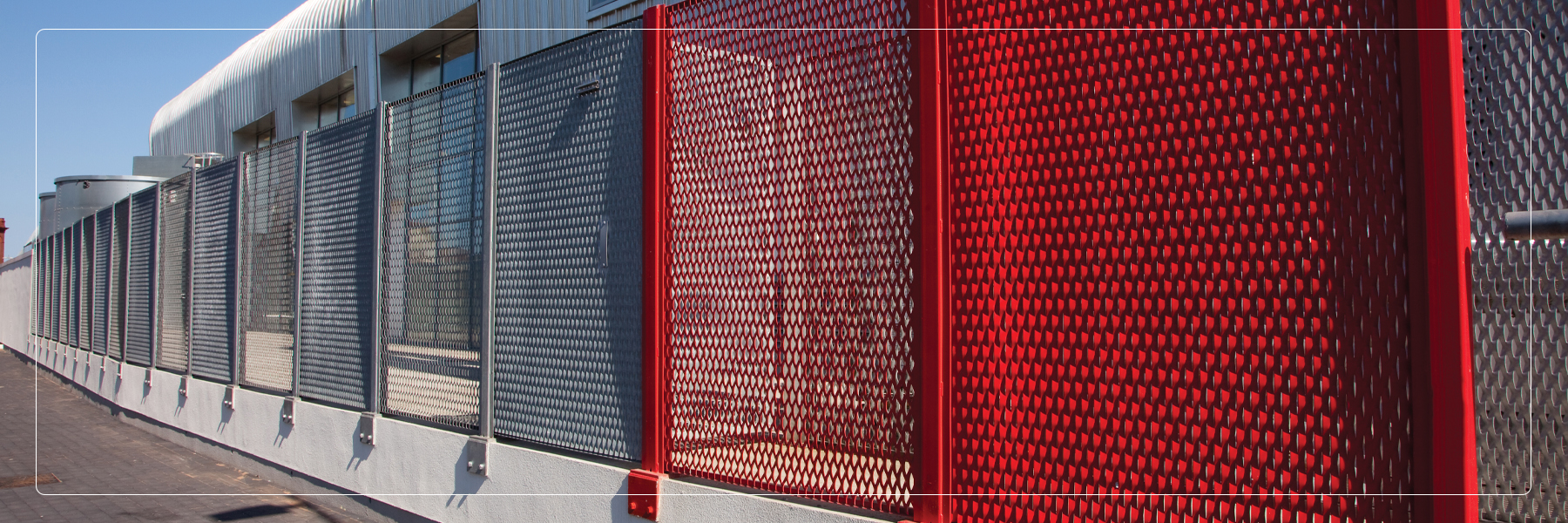
Architectural Applications
Architects increasingly specify expanded metal because it combines functionality with contemporary aesthetics.
Applications include:
• Building façades
• Feature cladding
• Solar shading
• Privacy screening
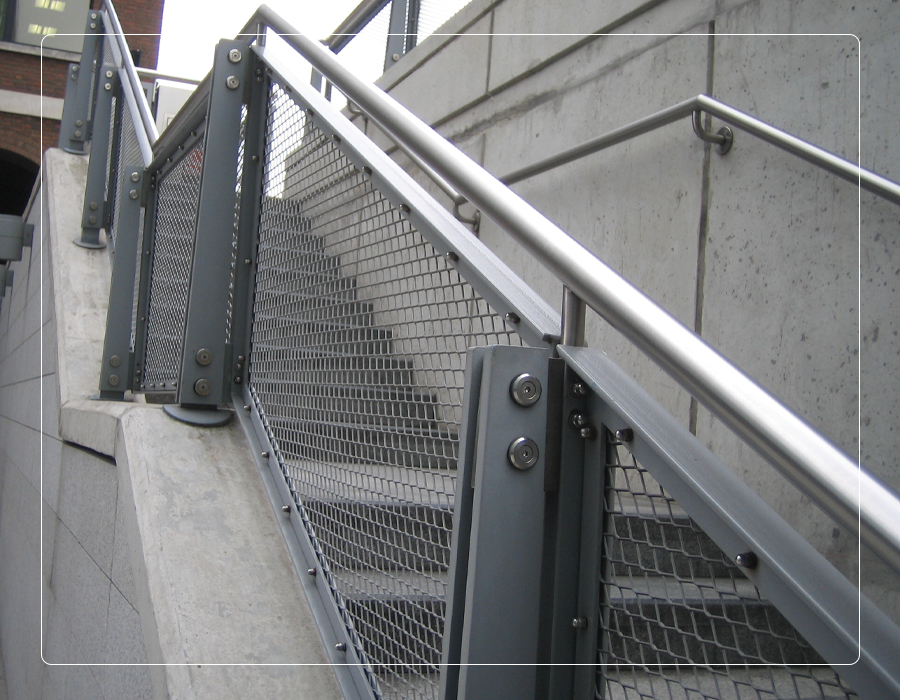
• Balustrade infill panels
• Decorative ceilings
• Interior partitions
• Parking structure screening
• Landscape features
• Public realm installations
Different mesh patterns, finishes and materials allow architects to balance transparency, light transmission and visual impact while maintaining durability.
Materials Available
Mild Steel Expanded Metal
A versatile and economical solution suitable for fabrication, industrial projects and applications where protective coatings can be applied.
Ideal for:
• Industrial fabrication
• Machine guards
• Flooring
• Security applications
Galvanised Expanded Metal
Provides additional corrosion resistance for external environments.
Suitable for:
• Infrastructure
• External walkways
• Security fencing
• Plant equipment
Stainless Steel Expanded Metal
Excellent corrosion resistance and hygiene make stainless steel suitable for demanding environments.
Common applications include:
• Food processing
• Pharmaceutical facilities
• Marine environments
• Architectural features
Aluminium Expanded Metal
Lightweight, corrosion resistant and easy to fabricate.
Popular for:
• Architectural screening
• Façades
• Ceiling panels
• Decorative applications
• Transport projects
Raised vs Flattened Expanded Metal
Raised Expanded Metal
Raised mesh retains the original three-dimensional profile created during expansion.
Benefits include:
• Superior slip resistance
• Increased rigidity
• Excellent drainage
• Ideal for industrial flooring and walkways
Flattened Expanded Metal
Flattened mesh is cold rolled after expansion to produce a smooth surface.
Advantages include:
• Cleaner appearance
• Easier fabrication
• Better for architectural projects
• Ideal for screening and infill panels
Compare Expanded Metal Options
Expanded metal is available in a range of materials, profiles and configurations to suit different performance and design requirements. The right specification depends on factors such as strength, corrosion resistance, slip resistance, weight, appearance and intended application.
Which expanded metal material should you choose?
• For economical industrial applications: Mild steel
• For external and infrastructure applications: Galvanised steel
• For corrosive or hygiene-sensitive environments: Stainless steel
• For lightweight architectural and transport applications: Aluminium
Which type of expanded metal should you choose?
Choose raised expanded metal when slip resistance, drainage and rigidity are priorities, particularly for flooring, walkways, catwalks and stair treads.
Choose flattened expanded metal when appearance, smoothness and ease of fabrication are priorities, particularly for architectural screening, façades, partitions and infill panels.
Use the comparisons below to identify the most suitable expanded metal for your project.
Expanded Metal: Materials Comparison
| Material | Key Benefits | Best Suited To | Typical Applications | Considerations |
|---|---|---|---|---|
| Mild Steel Expanded Metal | Versatile, strong and economical | Construction, industrial and fabrication projects | Machine guards, flooring, security applications, industrial fabrication | Typically requires a suitable protective finish where corrosion resistance is required |
| Galvanised Expanded Metal | Improved corrosion resistance and durability | External, infrastructure and exposed applications | Infrastructure, external walkways, security fencing, plant equipment | Particularly useful where the mesh is exposed to the elements |
| Stainless Steel Expanded Metal | Excellent corrosion resistance, durability and hygiene | Demanding, corrosive and hygiene-sensitive environments | Food processing, pharmaceutical facilities, marine environments, architectural features | Available in grades including 304 and 316 to suit different environments |
| Aluminium Expanded Metal | Lightweight, corrosion resistant and easy to fabricate | Column 3 Architectural, transport and design-led applications4 | Architectural screening, façades, ceiling panels, decorative features, transport projects | Useful where weight reduction is important |
Raised vs Flattened Expanded Metal
| Feature | Raised Expanded Metal | Flattened Expanded Metal |
|---|---|---|
| Manufacturing process | Retains the original raised profile created during expansion | Cold rolled after expansion to create a flatter, smoother surface |
| Surface | Three-dimensional, textured profile | Smooth, flatter profile |
| Slip resistance | Excellent | Lower than raised mesh |
| Rigidity | High | Good |
| Drainage | Excellent | Good |
| Appearance | Industrial, textured appearance | Clean and contemporary appearance |
| Fabrication | Suitable for general fabrication | Particularly easy to fabricate and handle |
| Best suited to | Flooring, walkways, catwalks and stair treads | Screening, infill panels and architectural applications |
| Typical applications | Industrial flooring, access platforms, maintenance walkways, stair treads | Building façades, privacy screens, balustrade infill, ceiling panels and decorative applications |
Expanded Metal Applications by Industry
| Industry | Typical Expanded Metal Applications | Key Characteristics |
|---|---|---|
| Construction | Safety barriers, plant enclosures, machine guarding, brickwork reinforcement, ceiling panels, partition screens, walkways, catwalks, stair treads, mezzanine flooring, ventilation panels, security doors | Strength, durability, visibility and airflow |
| Civil Engineering | Bridge screening, highway fencing, protective enclosures, drainage covers, access platforms, maintenance walkways, equipment cages | Durability, strength and resistance to demanding environments |
| Transportation | Rail infrastructure, noise barriers, ventilation grilles, plant protection, access platforms, maintenance walkways, equipment cages | Lightweight construction, airflow, visibility and durability |
| Architecture | Building façades, feature cladding, solar shading, privacy screening, balustrade infill, decorative ceilings, interior partitions | Aesthetics, transparency, light transmission and visual impact |
| Industrial | Machine guarding, plant enclosures, flooring, equipment cages, security applications | Strength, ventilation and visibility |
| Marine | Protective screening, platforms, enclosures and architectural features | Corrosion resistance and durability |
| Food & Pharmaceutical | Equipment guarding, partitions, screening and fabricated components | Hygiene, durability and corrosion resistance |
What Does the Open Area Percentage Mean?
The open area percentage indicates the proportion of an expanded metal sheet that consists of open space. A higher open area generally provides greater airflow, light transmission and visibility, while a lower open area provides greater screening and a more enclosed appearance. The correct open area depends on the requirements of the application, alongside mesh size, strand width, strand thickness, material and sheet profile. F.H.Brundle offers expanded metal in a wide range of patterns and open-area percentages to suit applications including security screens, balustrades, walkways, façades, guards and enclosures.
For example, an expanded metal sheet with 60% open area has approximately 60% voids and 40% metal. F.H.Brundle offers expanded metal with a wide range of open-area percentages, depending on the mesh pattern, strand dimensions and material.
• One of the UK’s largest expanded metal ranges
• Mild steel, stainless steel, galvanised and aluminium options
• Raised and flattened mesh
• Extensive stock availability
• Nationwide delivery
• Technical product support
• Trusted supply for commercial and industrial projects
| Open area | Main benefits | Typical considerations |
|---|---|---|
| Low open area | Greater visual screening, reduced airflow and a more enclosed appearance | Less light and ventilation; potentially higher wind loading |
| Medium open area | Good balance between screening, strength, airflow and visibility | Versatile option for general-purpose applications |
| High open area | Excellent airflow, light transmission and visibility; reduced material content and weight | Provides less visual screening and may offer less obstruction |
1. Airflow and ventilation
A higher open-area percentage allows more air to pass through the expanded metal. This can be useful for applications such as:
• Ventilation panels
• Plant and equipment enclosures
• Machine guarding
• HVAC screens
• Walkways and platforms
• Architectural façades
For example, F.H.Brundle’s mild steel 2091 raised mesh has a specified open area of 76% nominal, up to 81% maximum, providing a relatively open structure where airflow is important.
2. Light transmission
Higher open areas also allow more natural or artificial light through the panel. This can be particularly useful for architectural screens, façades, balustrades and enclosures, where the intention is to provide separation without creating a completely solid barrier.
F.H.Brundle’s range includes products with considerably different open areas — for example, the stainless steel 228SF has 19% open area, while the stainless steel 197SF has 57%.
3. Visibility and visual screening
Open area can be used to control the level of visibility through a panel.
• Lower open area: more screening and privacy
• Medium open area: partial screening while maintaining visibility
• Higher open area: greater visibility through the mesh
This makes open-area percentage particularly relevant when selecting expanded metal for security screens, fencing, balustrades and architectural applications.
4. Weight and material efficiency
A higher percentage of open area generally means less metal per unit of surface area, which can contribute to a lighter panel. This can be advantageous where the overall weight of a fabricated panel or structure needs to be considered.
However, open area should not be used on its own to determine strength. Strand width, strand thickness, mesh dimensions, material and whether the mesh is raised or flattened all affect the finished product’s performance. F.H.Brundle specifies these characteristics alongside open area on its product listings.
5. Wind loading
For external applications, a higher open area can allow more air to pass through a panel rather than presenting a predominantly solid surface to the wind. This can be an important consideration for fencing, balustrades, screens and façades.
The actual structural/wind-load performance still needs to be assessed as part of the complete installation — particularly the panel dimensions, support arrangement, fixings, location and prevailing wind conditions.
Why Buy Expanded Metal Mesh from F.H.Brundle?
Choosing the right supplier is just as important as selecting the right mesh specification.
With decades of experience supplying the UK construction and fabrication industries, F.H.Brundle offers:
• One of the UK’s largest expanded metal ranges
• Mild steel, stainless steel, galvanised and aluminium options
• Raised and flattened mesh
• Extensive stock availability
• Nationwide delivery
• Technical product support
• Trusted supply for commercial and industrial projects