Mild Steel Sections, Bars and Hollow Sections
What Are Mild Steel Sections?
Mild steel sections (also known as carbon steel profiles) are structural steel components manufactured in a variety of shapes and sizes for load-bearing and fabrication purposes.
These materials offer excellent weldability, machinability, and ductility, making them ideal for both industrial and domestic applications.
Our comprehensive range of mild steel sections, mild steel profiles, and structural steel products provides the perfect solution for construction, fabrication, engineering, and architectural projects.
As one of the UK’s leading steel wholesalers, F.H.Brundle offers an extensive selection of mild steel bars, hollow sections, angles, and channels all available from stock for fast nationwide delivery.
What Common Mild Steel Profiles Do We Supply?
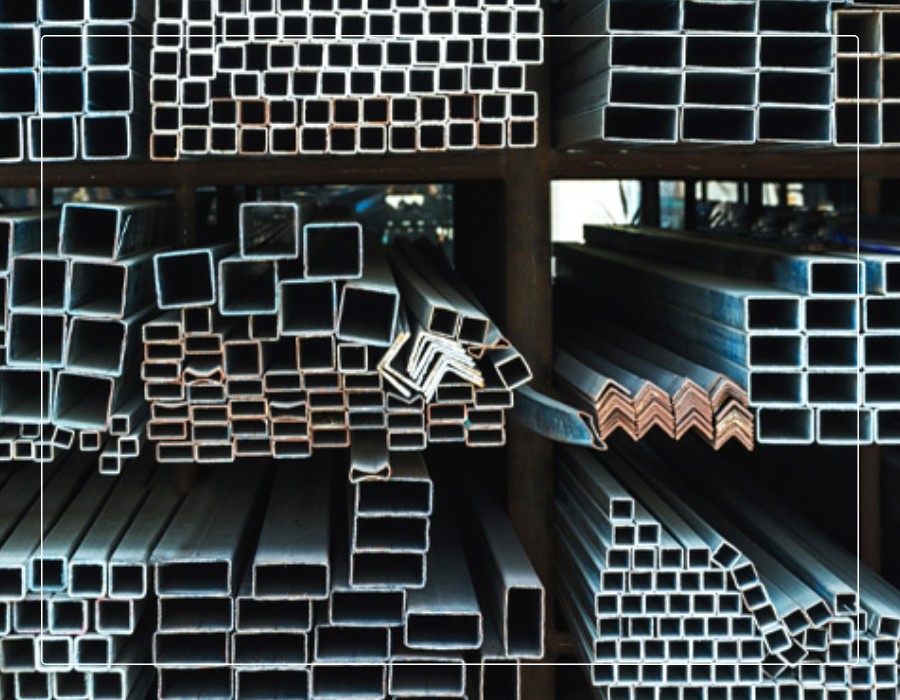
As a leading stockist and distributor of mild steel sections, we stock and supply 100s of specs of mild steel profiles for light structural and fabrication applications. The range is available in lengths ranging from 1m to 7.5m (and up to 14m for columns and beams).
Mild Steel Flat Bars – Grade S275
• Ideal for fabrication, brackets, frames, and general steelwork
• Available in multiple widths and thicknesses
Mild Steel Round Bars – Grade S275
• Suitable for engineering, machining, and structural supports
• Available in diameters from small to heavy-duty
Mild Steel Square Bars – Grade S275
• Suitable for fabrication of railings, banisters and gates
• Available in thicknesses from 6mm up to 40mm
Mild Steel Square & Rectangular Hollow Sections – Grade S235
• Widely used in structural frameworks, fencing, and construction
• Starting at 12mm square with 1.2mm wall, through to 50 x 25mm (2mm wall) RHS.
Mild Steel Circular Hollow Sections -Grade S235
• Widely used in manufacturing of handrailing and structural installations
• From 20mm diameter tube, up to 168.3mm tube
Rolled Steel Angles (Equal & Unequal) – S275 (Angle Iron)
• Perfect for frameworks, supports, and reinforcements
• Commonly used in fabrication and structural builds
Steel Channels & Universal Beams – Grade S355
• Designed for load-bearing structural applications
• Used in construction, mezzanine floors, and steel frames
Bright Steel Bars – EN3B Mild Steel
• Typically used in the manufacture of gates and railings due to enhanced ‘straightness’. Will also be used in engineering applications.
• Available from 4mm – 25mm ⌀ round bar and 20mm – 40mm flat bar.

Flat Bar

Round Bar

Square Bar

Circular Hollow Section

Square Hollow Section

Rectangular Hollow Section

Angle

Channel

T-Section

Universal Beam

Universal Column
Bright Bar
How Does Mild Steel Compare vs. Alternative Metals?
| Property / Material | Mild Steel (S235/S275) | Stainless Steel | Aluminium | Cast Iron | High Carbon Steel |
|---|---|---|---|---|---|
| Strength | High tensile strength, ideal for structural use | Very high strength | Moderate strength | High compressive strength, brittle | Very high strength |
| Weight | Heavy | Heavy | Lightweight (≈1/3 of steel) | Very heavy | Heavy |
| Corrosion Resistance | Low (requires coating/galvanising) | Excellent (naturally resistant) | Excellent (forms oxide layer) | Moderate | Low |
| Weldability | Excellent, easy to weld | Good but more complex | Good but requires skill | Poor | Poor |
| Machinability | Very good | Moderate | Good | Moderate | Difficult |
| Ductility / Flexibility | High (easy to bend/form) | Moderate | High | Low (brittle) | Low |
| Cost | Low cost, highly economical | High cost | Moderate to high | Moderate | Moderate |
| Durability | High with treatment | Very high | High | High but brittle | High but prone to cracking |
| Maintenance | Requires protective finish | Low maintenance | Low maintenance | Moderate | Moderate |
| Typical Uses | Structural steelwork, fabrication, construction, frames | Food-grade, marine, architectural | Aerospace, transport, lightweight structures | Pipes, engine blocks, heavy-duty bases | Cutting tools, springs, blades |
| Steel grade | Typical form | Minimum yield strength | Key characteristics | Best suited to | Important considerations |
|---|---|---|---|---|---|
| S235 | Hollow sections, box section, tube, plate and structural profiles | 235 MPa | Low-carbon structural steel with good weldability, formability and value. | General fabrication, gates, railings, frames, supports and light structural work. | Requires painting, galvanising or another protective finish where corrosion is a concern. |
| S275 | Flat bar, round bar, square bar, angles, channels and structural profiles | 275 MPa | Stronger than S235 while retaining good weldability and machinability. | Fabrication, brackets, frames, reinforcement, general engineering and steelwork. | A strong all-round choice where more load capacity is needed than S235 provides. |
| S355 | Beams, columns, channels, angles, plate and heavy structural sections | 355 MPa | Higher-strength structural steel for more demanding load-bearing applications. | Structural frames, mezzanines, commercial builds, heavier supports and engineering projects. | Confirm the required grade, section size and certification against the structural design. |
| EN3B bright steel | Bright round bar, flat bar and square bar | Varies by product, size and delivery condition | Low-carbon bright-drawn steel with a smoother finish, improved straightness and closer dimensional tolerance. | Gates, railings, machining, pins, components, general engineering and decorative fabrication. | Bright steel describes the finished form as well as the specification. It is not normally the first choice for large structural sections. |
| EN8 / 080M40 | Bright round bar, flat bar and engineering bar | Varies by product and condition | Medium-carbon engineering steel with better strength and wear resistance than mild steel. | Shafts, pins, axles, bolts, machine parts and higher-stress components. | Less forgiving to weld than S235, S275 or EN3B. Check whether heat treatment is required. |
| EN1A / 230M07 | Bright bar and free-cutting engineering bar | Varies by product and condition | Free-cutting steel designed for efficient machining and repeatable component manufacture. | Turned parts, fittings, fasteners, small machined components and production engineering. | Not generally suitable for welding or structural applications. |
| Stainless steel 304 | Bar, tube, sheet and fabricated components | Varies by form and condition | Good corrosion resistance, hygienic surface and attractive finish. | External architectural work, food environments, handrails and general corrosion-resistant applications. | Costs more than mild steel and requires different fabrication practices. |
| Stainless steel 316 | Bar, tube, sheet and fabricated components | Varies by form and condition | Enhanced corrosion resistance, particularly in coastal, marine and chemical environments. | Coastal installations, marine applications, food processing and high-corrosion environments. | Usually unnecessary where standard painted or galvanised mild steel meets the project requirement. |
Which steel grade should I choose?
• Choose S235 for cost-effective general fabrication, hollow sections, fencing, gates and lighter structural work.
• Choose S275 when you need a stronger general-purpose steel for bars, angles, channels and fabricated supports.
• Choose S355 for heavier structural applications where higher yield strength is specified by the design engineer.
• Choose EN3B bright steel where straightness, surface finish and machining performance matter, particularly for railings, gates and engineering components.
• Choose 304 or 316 stainless steel where corrosion resistance is more important than the lower upfront cost of mild steel.
Key Benefits of Mild Steel Sections
Mild steel provides excellent load-bearing capacity, making it ideal for structural steelwork and fabrication projects.
Versatility; Available in a wide range of profiles, sizes, and grades, mild steel sections can be adapted to almost any application.
Excellent Weldability; Perfect for welding, cutting, drilling, and machining, reducing fabrication time and cost.
Cost-Effective; Compared to other metals, mild steel offers a strong price-to-performance ratio, making it a popular choice across industries.
Readily Available; With thousands of products in stock and rapid delivery capabilities, availability is rarely an issue.
Hot-Rolled vs Cold-Rolled Mild Steel
Mild steel sections are typically produced using either hot-rolled or cold-rolled processes, each offering distinct advantages depending on the application. Hot-rolled steel is manufactured at high temperatures, making it easier to shape into larger structural sections such as beams, channels, and hollow sections. It is generally more cost-effective and suitable for construction and heavy fabrication, where tight tolerances and surface finish are less critical. In contrast, cold-rolled steel is processed at room temperature, resulting in a smoother surface finish, tighter dimensional tolerances, and improved strength through strain hardening. This makes it ideal for precision engineering, machining, and applications where appearance and accuracy matter. Choosing between hot-rolled and cold-rolled mild steel ultimately depends on whether your priority is structural performance and cost efficiency or precision and finish quality.
Corrosion Protection for Mild Steel
Given its composition, mild steel (all grades) is highly susceptible to oxidisation and corrosion, so how can you prevent it from rusting? The following summarising the most common options available to mild steel users.
|
Protection method |
How it works |
Best environment |
DIY / on-site? |
Typical lifespan |
Relative Cost |
|---|---|---|---|---|---|
|
Barrier and inhibitor pigments |
General outdoor use |
Yes |
5 to 10 years with maintenance |
££ | |
|
Active passivation + barrier |
Outdoor, exposed |
Yes |
8 to 15 years |
££ | |
|
Epoxy primer + PU topcoat |
High-build barrier system |
Demanding environments |
Specialist recommended |
10 to 20 years |
£££ |
|
Polyester powder coating |
Tough electrostatic film |
Architectural, external |
Workshop process |
15 to 25 years |
£££ |
|
Hot-dip galvanising |
Metallurgical zinc bond + cathodic protection |
Aggressive outdoor, coastal |
Specialist processor |
25 to 70 years |
££££ |
|
Duplex (galvanising + powder coat) |
Combined barrier and cathodic protection |
Coastal, industrial |
Workshop process |
40+ years |
££££ |
|
Zinc-rich paint, cathodic action |
Repair and maintenance |
Yes |
5 to 10 years |
£ | |
|
Wax / oil treatment |
Temporary moisture barrier |
Indoor / sheltered only |
Yes |
1 to 3 years |
£ |
FAQs
Mill certificates provide traceability and confirm the material’s chemical composition and mechanical properties, including the relevant steel grade. They are particularly important for structural, commercial and safety-critical applications where compliance with a project specification is required.
Certificate availability can vary by product, grade and batch. If your project requires material certification, confirm this before ordering so the correct documentation can be supplied or verified for the specific mild steel section required. Our mild steel mill certificates are available upon request – please contact your local branch if these are required.
Our mild steel sections are supplied in a range of standard lengths depending on the profile and product type. Many bars, hollow sections, angles and channels are available in lengths in standard lengths of 6m to 7.5 metres, while larger universal beams and columns may be available in lengths of up to 14 metres. We do offer some special cut lengths in certain profiles, ranging from 1m to 3m.
Available lengths vary by section, grade and stock availability. Check the individual product page for the exact length and dimensions, particularly if your project needs a specific cut length or delivery arrangement. Cut lengths can be specified when adding your profiles to your basket.
Yes. Mild steel sections can be protected with both galvanising and paint systems. Hot-dip galvanising coats the steel with zinc, creating a durable barrier against moisture and offering sacrificial protection if the surface is scratched. It is particularly suitable for external steelwork, gates, fencing and exposed structural components.
Mild steel can also be painted, provided the surface is prepared correctly. Remove rust, mill scale, grease and moisture before applying a suitable primer, such as red oxide or zinc phosphate primer, followed by an exterior-grade topcoat. Polyester powder coating is another durable option for fabricated gates, railings and architectural steelwork.
The best mild steel section depends on the design, span and intended finish. Square bar, flat bar, round bar and equal angles are commonly used for decorative gates and railings, while square hollow section (SHS) and rectangular hollow section (RHS) are popular choices for stronger frames and posts.
For components where straightness and a smoother finish are important, EN3B bright steel is often a good option for railings, balusters and decorative features. For external gates and railings, the chosen steel should be protected against corrosion with galvanising, powder coating or a suitable primer and paint system.
S235 and S275 are both commonly used structural mild steel grades. The main difference is their minimum yield strength: S235 has a minimum yield strength of 235 MPa, while S275 has a minimum yield strength of 275 MPa. This means S275 can withstand a greater load before permanently deforming.
Both grades offer good weldability, machinability and value for general fabrication. S235 is often used for hollow sections and general structural applications, while S275 is commonly specified for flat bar, round bar, square bar, angles and channels where additional strength is beneficial. Always check the required material grade against the project’s structural specification.
Mild steel sections are available in a wide range of profiles, including flat bars, round bars, square bars, rectangular and square hollow sections (RHS/SHS), steel angles, channels, and beams. This variety makes them suitable for structural, architectural, and general fabrication projects.
The most common grades include S235 and S275, both of which are widely used in construction and fabrication. These grades offer a strong balance of strength, flexibility, and workability, with S275 providing slightly higher strength than S235. Other options, such as bright mild steel, are also available for applications requiring a smoother finish – typically used for engineering.
Mild steel is one of the easiest metals to weld, cut, and machine, making it a preferred choice for fabricators and engineers. Its low carbon content allows for smooth welding without cracking, and it can be easily shaped or drilled to suit a wide range of applications.
Mild steel is a type of low-carbon steel, typically used for its ease of fabrication, weldability, and cost-effectiveness. Structural steel refers more broadly to steel grades specifically designed for load-bearing applications, such as S235, S275, and S355. In most cases, mild steel sections used in construction fall under the category of structural steel.
Mild steel sections are widely used in construction, fabrication, and engineering projects. Common applications include structural frameworks, supports, fencing, gates, railings, and general metalwork. Thanks to their strength and versatility, they are suitable for everything from lightweight brackets to heavy-duty structural steelwork.