

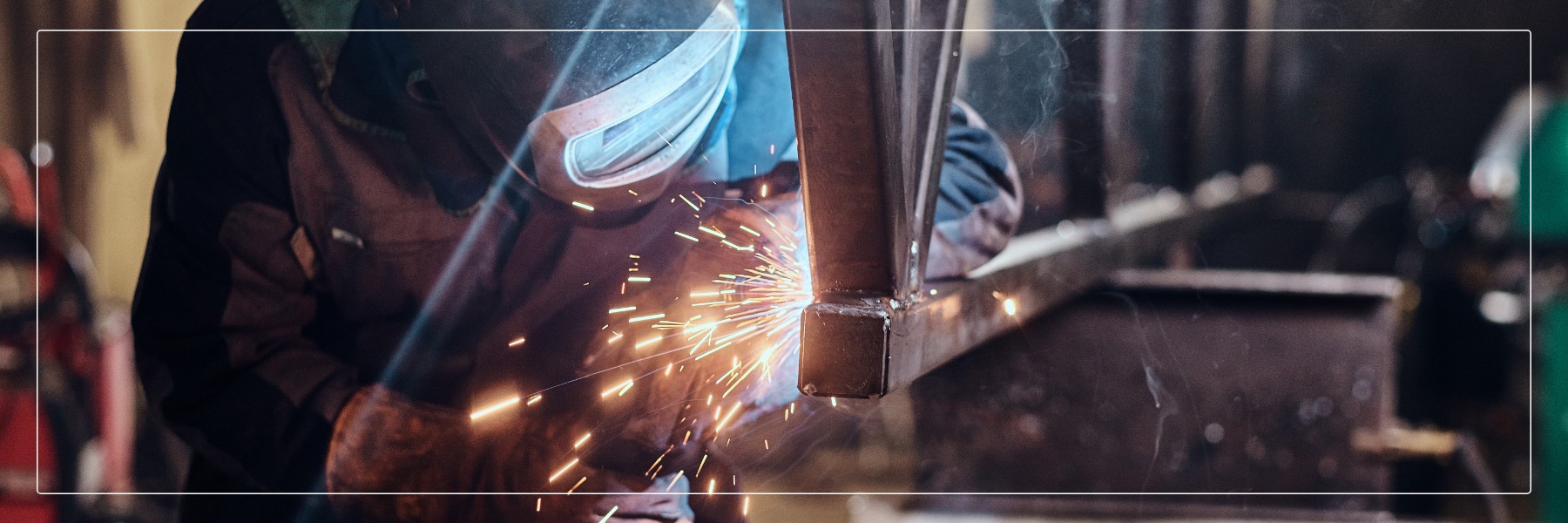
Endless Possibility with Mild Steel Sections
What Are Mild Steel Sections?
Mild steel sections (also known as carbon steel profiles) are structural steel components manufactured in a variety of shapes and sizes for load-bearing and fabrication purposes.
These materials offer excellent weldability, machinability, and ductility, making them ideal for both industrial and domestic applications.
Our comprehensive range of mild steel sections, mild steel profiles, and structural steel products provides the perfect solution for construction, fabrication, engineering, and architectural projects.
As one of the UK’s leading steel wholesalers, F.H.Brundle offers an extensive selection of mild steel bars, hollow sections, angles, and channels all available from stock for fast nationwide delivery.
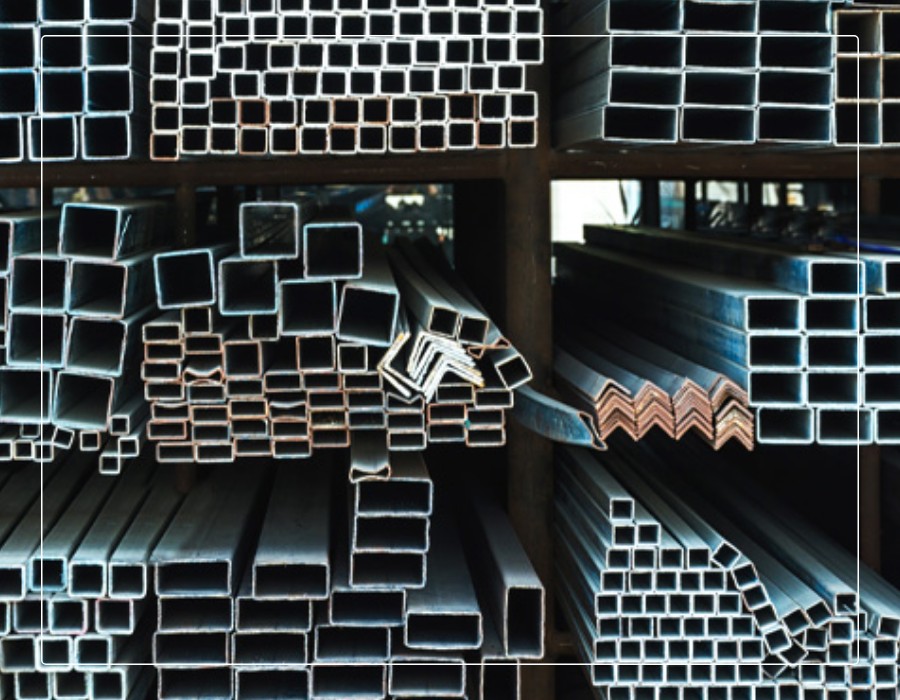
What Common Mild Steel Profiles Do We Supply?
As a leading stockist and distributor of mild steel sections, we stock and supply 100s of specs of mild steel profiles for light structural and fabrication applications. The range is available in lengths ranging from 1m to 7.5m (and up to 14m for columns and beams).
Flat Bars – S275 Mild Steel
• Ideal for fabrication, brackets, frames, and general steelwork
• Available in multiple widths and thicknesses
Round Bars – S275 Mild Steel
• Suitable for engineering, machining, and structural supports
• Available in diameters from small to heavy-duty
Square Bars – S275 Mild Steel
• Suitable for fabrication of railings, banisters and gates
• Available in thicknesses from 6mm up to 40mm
Square & Rectangular Hollow Sections – S235
• Widely used in structural frameworks, fencing, and construction
• Starting at 12mm square with 1.2mm wall, through to 50 x 25mm (2mm wall) RHS.
Circular Hollow Sections – S235
• Widely used in manufacturing of handrailing and structural installations
• From 21.2mm diameter tube, up to 168.3mm tube
Steel Angles (Equal & Unequal) – S275
• Perfect for frameworks, supports, and reinforcements
• Commonly used in fabrication and structural builds
Steel Channels & Universal Beams
• Designed for load-bearing structural applications
• Used in construction, mezzanine floors, and steel frames
Bright Steel Bars – EN3B Mild Steel
• Typically used in the manufacture of gates and railings due to enhanced ‘straightness’. Will also be used in engineering applications.
• Available from 4mm – 25mm ⌀ round bar and 20mm – 40mm flat bar.
How Does Mild Steel Compare vs. Alternative Metals?
| Property // Material | Mild Steel (S235/S275) | Stainless Steel | Aluminium | Cast Iron | High Carbon Steel |
|---|---|---|---|---|---|
| Strength | High tensile strength, ideal for structural use | Very high strength | Moderate strength | High compressive strength, brittle | Very high strength |
| Weight | Heavy | Heavy | Lightweight (≈1/3 of steel) | Very heavy | Heavy |
| Corrosion Resistance | Low (requires coating/galvanising) | Excellent (naturally resistant) | Excellent (forms oxide layer) | Moderate | Low |
| Weldability | Excellent, easy to weld | Good but more complex | Good but requires skill | Poor | Poor |
| Machinability | Very good | Moderate | Good | Moderate | Difficult |
| Ductility / Flexibility | High (easy to bend/form) | Moderate | High | Low (brittle) | Low |
| Cost | Low cost, highly economical | High cost | Moderate to high | Moderate | Moderate |
| Durability | High with treatment | Very high | High | High but brittle | High but prone to cracking |
| Maintenance | Requires protective finish | Low maintenance | Low maintenance | Moderate | Moderate |
| Typical Uses | Structural steelwork, fabrication, construction, frames | Food-grade, marine, architectural | Aerospace, transport, lightweight structures | Pipes, engine blocks, heavy-duty bases | Cutting tools, springs, blades |
Key Benefits of Mild Steel Sections
Mild steel provides excellent load-bearing capacity, making it ideal for structural steelwork and fabrication projects.
Versatility; Available in a wide range of profiles, sizes, and grades, mild steel sections can be adapted to almost any application.
Excellent Weldability; Perfect for welding, cutting, drilling, and machining, reducing fabrication time and cost.
Cost-Effective; Compared to other metals, mild steel offers a strong price-to-performance ratio, making it a popular choice across industries.
Readily Available; With thousands of products in stock and rapid delivery capabilities, availability is rarely an issue.
Hot-Rolled vs Cold-Rolled Mild Steel
Mild steel sections are typically produced using either hot-rolled or cold-rolled processes, each offering distinct advantages depending on the application. Hot-rolled steel is manufactured at high temperatures, making it easier to shape into larger structural sections such as beams, channels, and hollow sections. It is generally more cost-effective and suitable for construction and heavy fabrication, where tight tolerances and surface finish are less critical. In contrast, cold-rolled steel is processed at room temperature, resulting in a smoother surface finish, tighter dimensional tolerances, and improved strength through strain hardening. This makes it ideal for precision engineering, machining, and applications where appearance and accuracy matter. Choosing between hot-rolled and cold-rolled mild steel ultimately depends on whether your priority is structural performance and cost efficiency or precision and finish quality.

Flat Bar

Round Bar

Square Bar

Circular Hollow Section

Square Hollow Section

Rectangular Hollow Section

Angle

Channel

T-Section

Universal Beam

Universal Column

Bright Bar
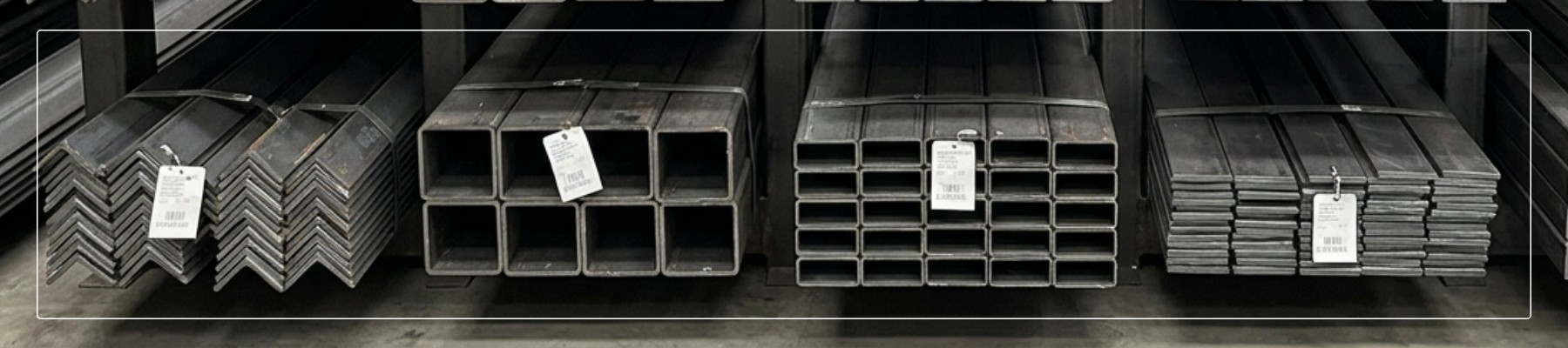
FAQs
Mild steel sections are available in a wide range of profiles, including flat bars, round bars, square bars, rectangular and square hollow sections (RHS/SHS), steel angles, channels, and beams. This variety makes them suitable for structural, architectural, and general fabrication projects.
The most common grades include S235 and S275, both of which are widely used in construction and fabrication. These grades offer a strong balance of strength, flexibility, and workability, with S275 providing slightly higher strength than S235. Other options, such as bright mild steel, are also available for applications requiring a smoother finish – typically used for engineering.
Mild steel is one of the easiest metals to weld, cut, and machine, making it a preferred choice for fabricators and engineers. Its low carbon content allows for smooth welding without cracking, and it can be easily shaped or drilled to suit a wide range of applications.
Mild steel is a type of low-carbon steel, typically used for its ease of fabrication, weldability, and cost-effectiveness. Structural steel refers more broadly to steel grades specifically designed for load-bearing applications, such as S235, S275, and S355. In most cases, mild steel sections used in construction fall under the category of structural steel.
Mild steel sections are widely used in construction, fabrication, and engineering projects. Common applications include structural frameworks, supports, fencing, gates, railings, and general metalwork. Thanks to their strength and versatility, they are suitable for everything from lightweight brackets to heavy-duty structural steelwork.


