Why Choose Perforated Metal Mesh?
High-Quality Perforated Metal Sheets
Perforated metal mesh combines strength, durability and functionality with modern aesthetics, making it one of the most versatile materials used across construction, infrastructure and architectural projects. Manufactured by punching precise patterns of holes into metal sheets, perforated metal provides excellent airflow, light transmission and acoustic performance while maintaining structural integrity.
At F.H.Brundle, we supply an extensive range of perforated metal mesh in mild steel, galvanised steel, stainless steel and aluminium, available in a wide variety of hole patterns, sheet sizes and thicknesses. Whether you’re designing an architectural façade, specifying screening for transport infrastructure or fabricating industrial enclosures, our comprehensive stock range ensures you can source the right solution for your project.
What is Perforated Metal Mesh?
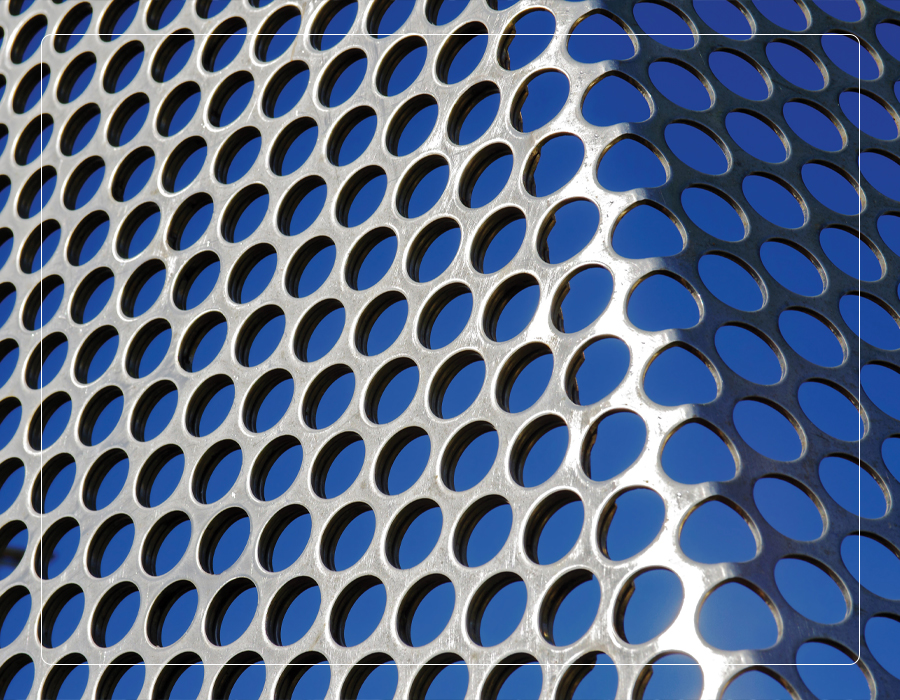
Perforated metal mesh is produced by mechanically punching or pressing holes into flat metal sheets using precision tooling. The result is a strong, lightweight material with a consistent pattern of openings that balances structural performance with ventilation, visibility and visual appeal.
Available in a range of hole shapes and open areas, perforated metal can be tailored to meet both functional and aesthetic requirements.
Common hole patterns include:
• Round hole
• Square hole
• Slotted hole
• Decorative patterns
• Custom perforations (subject to project requirements)
Perforated metal is widely specified where ventilation, filtration, screening or architectural appearance are equally important.
Benefits of Perforated Metal Mesh
Excellent Strength-to-Weight Ratio
Removing carefully calculated areas of material reduces overall weight while retaining excellent structural performance.
Improved Ventilation and Airflow
The open area allows air to circulate freely, making perforated metal ideal for ventilation panels, plant enclosures and equipment housings.
Natural Light Transmission
Perforated sheets diffuse daylight while providing varying levels of screening and privacy.
Acoustic Performance
Perforated metal is commonly paired with acoustic insulation to create sound-absorbing wall and ceiling systems in commercial and transport environments.
Attractive Architectural Appearance
The clean, uniform patterns provide a contemporary finish that complements modern building design.
Durable and Low Maintenance
Available in corrosion-resistant materials including stainless steel, aluminium and galvanised steel, perforated metal performs well in demanding indoor and outdoor environments.
Applications for Perforated Metal Mesh
Construction
Perforated metal is used extensively throughout commercial and industrial construction where durability, airflow and appearance are essential.
Typical applications include:
• Plant room screening
• Ventilation panels
• Ceiling systems
• Partition walls
• Machine guarding
• Security enclosures
• Equipment housings
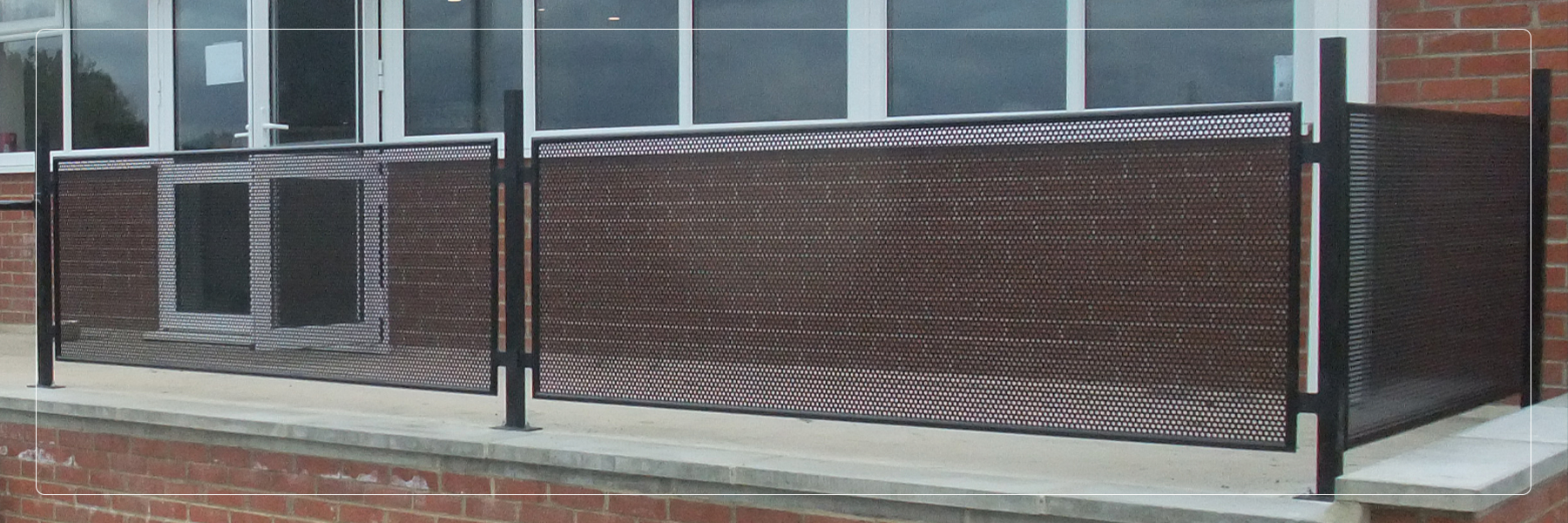
• Balustrade infill panels
• HVAC grilles
• Service riser screens
• Lift shaft screening
Its combination of strength and airflow makes perforated metal an excellent solution for modern building services.
Civil Engineering & Transportation
Infrastructure projects require materials capable of delivering long-term performance in exposed environments.
Perforated metal is commonly specified for:
• Bridge screening
• Railway infrastructure
• Station architecture
• Noise attenuation systems
• Highway barriers
• Ventilation systems
• Equipment protection
• Utility compounds
• Drainage covers
• Maintenance platforms
• Public infrastructure screening
Corrosion-resistant materials help minimise maintenance throughout the product lifecycle.
Architectural Applications
Architects value perforated metal for its ability to combine technical performance with striking visual design.
Popular architectural applications include:
• Building façades
• Rainscreen cladding
• Solar shading systems
• Privacy screens
• Decorative wall panels
• Ceiling features
• Parking structure screening
• Balustrades
• Interior feature walls
• Landscape architecture
Different perforation patterns can control light, airflow and visibility while creating distinctive building façades.
Materials Available
Mild Steel
An economical solution suitable for fabrication, industrial applications and projects where protective coatings are applied.
Ideal for:
• Internal screening
• Fabrication
• Machinery
• Commercial construction
Galvanised Steel
Provides enhanced corrosion resistance for outdoor applications.
Suitable for:
• External screening
• Infrastructure
• Utility compounds
• Plant enclosures
Stainless Steel
Offers excellent corrosion resistance together with a premium appearance.
Common applications include:
• Food production
• Pharmaceutical facilities
• Marine environments
• Commercial architecture
• Public buildings
Aluminium
Lightweight, corrosion resistant and easy to fabricate.
Popular for:
• Façades
• Ceiling systems
• Solar shading
• Decorative screening
• Transport projects
Brass
Decorative perforated metal is used in architecture applications or where there is a requirement for a decorative effect in either internal or external applications.
Why Choose Perforated Metal Mesh?
Perforated metal delivers several practical advantages over solid sheet materials.
It offers:
• Reduced overall weight
• Excellent airflow
• Effective ventilation
• Light transmission
• Modern architectural appearance
• Acoustic compatibility
• Long service life
• Easy fabrication
• Wide choice of hole patterns
• Sustainable use of raw materials
The versatility of perforated metal means it can perform structural, functional and decorative roles within a single installation.
Quick Guide to Working Out Mesh Type
Holes
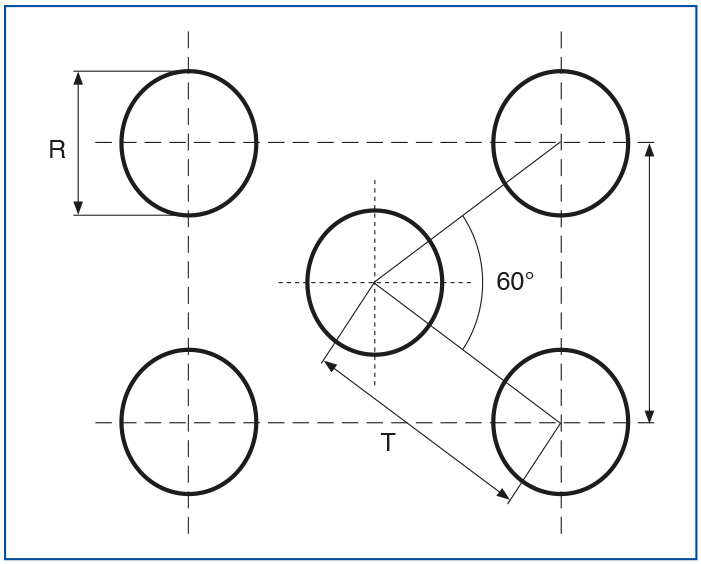
(R) Round hole – generally running in diagonal rows at 60%
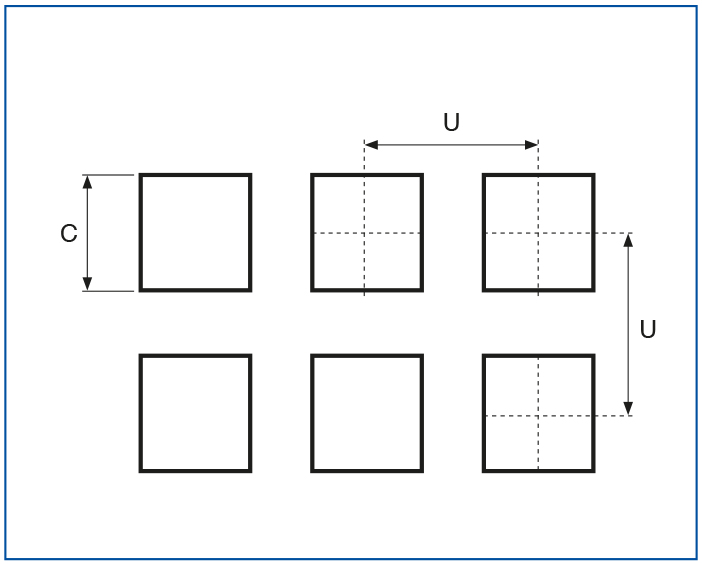
(C) Square hole
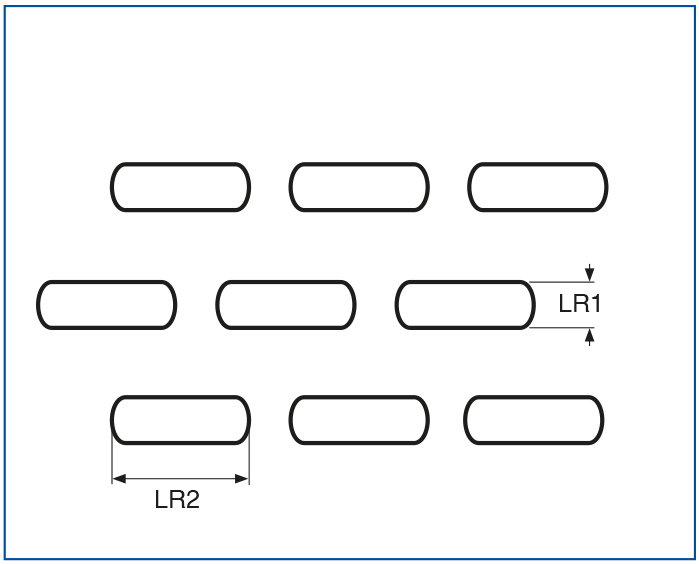
(LR) Slotted round end hole
Pitch
Distance from centre to centre of hole
(T) Diagonal pitch
(U) Square pitch
Round Holes
Staggered pitch
Square Holes
Square pitch
Slotted Holes
Round end
How to Order Perforated Mesh
Ordering Standard Sheets
(A) Select hole size and pitch if known
(B) Thickness
(C) Sheet size – normally 2 x 1m & 2.5 x 1.25m
(D) Material – mild steel, galvanised steel, stainless steel Grade 304 or 316, aluminium & brass
Ordering Specials
(A) Quantity of sheets
(B) Hole description – shape and size
(C) Type of pitch – staggered or square
(D) Thickness
(E) Material – mild steel, stainless steel & aluminium
(F) Margins – dimensions of blank margins if required
(G) If special sized sheets or shapes are required, detailed drawings must be supplied
Compare Perforated Metal Options
The best perforated metal depends on the application, environment, required durability and aesthetic requirements. Mild steel is an economical option for general fabrication and internal applications, while galvanised steel provides enhanced corrosion resistance for external use. Stainless steel is suited to demanding, corrosive and hygiene-sensitive environments, while aluminium offers a lightweight solution for architectural and transport applications. Brass is primarily selected where decorative appearance is an important design consideration.
Which perforated metal material should you choose?
• Mild steel: Choose for economical fabrication and general industrial or commercial applications.
• Galvanised steel: A good choice for external applications where enhanced corrosion resistance is required.
• Stainless steel: Suitable for demanding environments where corrosion resistance, hygiene and appearance are important.
• Aluminium: Ideal where low weight, corrosion resistance and ease of fabrication are priorities.
• Brass: Choose where the visual appearance of the metal is an important part of the design.
Perforated Metal: Material Selection Guide
| If you need… | Recommended material | Why? |
|---|---|---|
| An economical perforated sheet for general fabrication | Mild Steel | Cost-effective and versatile |
| Perforated metal for external screening | Galvanised Steel | Enhanced corrosion resistance |
| High corrosion resistance | Stainless Steel | Excellent resistance in demanding environments |
| A lightweight perforated sheet | Aluminium | Lower weight with good corrosion resistance |
| Perforated metal for architectural façades | Aluminium or Stainless Steel | Combines appearance with durability |
| Decorative perforated metal | Brass | Distinctive decorative appearance |
| Perforated metal for marine environments | Stainless Steel | Strong corrosion resistance |
| Perforated metal for food or pharmaceutical environments | Stainless Steel | Corrosion resistance and suitability for hygiene-sensitive applications |
| Solar shading | Aluminium | Lightweight and suitable for architectural applications |
| Internal commercial screening | Mild Steel or Aluminium | Practical options depending on design and performance requirements |
Perforated Metal: Material Comparison
| Material | Key Benefits | Best Suited To | Typical Applications | Environment |
|---|---|---|---|---|
| Mild Steel | Economical, strong and versatile | Fabrication, industrial and commercial construction | Internal screening, machinery, fabrication, commercial construction | Primarily internal or where a protective coating is applied |
| Galvanised Steel | Enhanced corrosion resistance and durability | External and infrastructure applications | External screening, infrastructure, utility compounds, plant enclosures | Outdoor and exposed environments |
| Stainless Steel | Excellent corrosion resistance and premium appearance | Demanding, hygiene-sensitive and architectural applications | Food production, pharmaceutical facilities, marine environments, commercial architecture, public buildings | Corrosive, hygiene-sensitive and high-specification environments |
| Aluminium | Lightweight, corrosion resistant and easy to fabricate | Architectural, transport and design-led applications | Façades, ceiling systems, solar shading, decorative screening, transport projects | Internal and external applications where low weight is beneficial |
| Brass | Decorative appearance and distinctive finish | Architectural and decorative applications | Feature panels, decorative screening, interior architecture, external architectural features | Internal and selected external applications |
Perforated Metal Applications by Industry
| Industry | Common Applications | Key Benefits |
|---|---|---|
| Construction | Plant room screening, ventilation panels, ceiling systems, partition walls, machine guarding, security enclosures, equipment housings, balustrade infill, HVAC grilles | Strength, airflow, durability and appearance |
| Civil Engineering | Bridge screening, highway barriers, equipment protection, utility compounds, drainage covers, maintenance platforms | Durability, corrosion resistance and protection |
| Transportation | Railway infrastructure, station architecture, ventilation systems, equipment protection, public infrastructure screening | Airflow, durability, low maintenance and design flexibility |
| Architecture | Building façades, rainscreen cladding, solar shading, privacy screens, decorative wall panels, ceilings, balustrades | Aesthetics, light control, airflow and visual screening |
| Industrial | Machinery screening, plant enclosures, equipment housings, machine guarding | Strength, ventilation and equipment protection |
| Commercial | Building services screening, HVAC grilles, lift shaft screening, partitions and feature walls | Functionality, appearance and airflow |
| Marine | Equipment protection, screening and architectural applications | Corrosion resistance and durability |
| Public Buildings | Façades, balustrades, screening, ceilings and feature walls | Visual appeal, durability and controlled visibility |
What Does the Open Area Percentage of Perforated Mesh Mean?
The open area percentage of perforated metal indicates how much of the sheet is made up of open holes rather than solid metal. A higher open area provides greater airflow, ventilation, light transmission and visibility, while a lower open area creates a more enclosed appearance and provides greater screening.
The right open area depends on the intended application. Lower percentages can be suitable where screening and a more solid appearance are required, while medium and higher percentages can provide a balance of visibility, airflow and light transmission for applications such as balustrades, architectural screens, façades, ventilation grilles and equipment enclosures.
Open area should be considered alongside hole size, pitch, hole pattern, material and sheet thickness. F.H.Brundle offers perforated metal with a wide range of hole shapes, sizes, pitches, materials, thicknesses and open-area percentages to suit different architectural, industrial and construction applications.
For example:
• 23% open area = approximately 23% of the sheet is perforated and 77% is metal
• 40% open area = approximately 40% is open
• 53% open area = approximately 53% is open
Benefits of different open-area percentages
| Open area | Key benefits | Applications where it can be useful |
|---|---|---|
| Lower open area | Greater visual screening, more solid surface and reduced direct passage of air and light | Security screens, privacy screening, architectural panels and some balustrade applications |
| Medium open area | Balance between screening, visibility, airflow and light transmission | Balustrades, railing infill, architectural screens, ceilings and general fabrication |
| Higher open area | Greater airflow, ventilation, light transmission and visibility | Ventilation grilles, louvres, HVAC applications, equipment screens and architectural façades |
1. Ventilation and airflow
One of the clearest benefits of a higher open area is increased airflow. This makes perforated metal particularly suitable for air-conditioning grilles, ventilation panels, louvres and equipment enclosures.
For example, F.H.Brundle lists its R10 T13 perforated mild steel at 53% open area and specifically identifies applications including air-conditioning grilles.
A lower open area can provide some airflow while creating a more enclosed appearance.
2. Light transmission
Increasing the open area allows more light to pass through the sheet. This can be beneficial for:
• Architectural façades
• Internal screens
• Suspended ceilings
• Balustrade infill
• Exhibition and shop fittings
• Lighting applications
F.H.Brundle identifies perforated metal as suitable for interior design, suspended ceilings, lighting, exhibition and shop fittings, as well as internal and external architectural cladding.
3. Visibility and screening
Open area can also be used to control how much can be seen through a perforated panel.
A lower percentage generally gives a more solid and screening-oriented appearance, while a higher percentage creates a more open visual effect.
This is useful for architects and specifiers who want to balance privacy, screening and aesthetics without using a completely solid panel.
4. Acoustic applications
Perforated metal can be used in acoustic and soundproofing applications, which F.H.Brundle lists among its applications.
Here, the open area is one of several design considerations. The performance of an acoustic panel depends on the complete system, including the perforated sheet, backing material, cavity and installation, rather than open area alone.
5. Appearance and architectural design
Changing the open area changes the visual character of the sheet. Combined with different:
• Hole shapes
• Hole diameters
• Pitch
• Patterns
• Materials
• Sheet thicknesses
it provides considerable scope for architectural design.
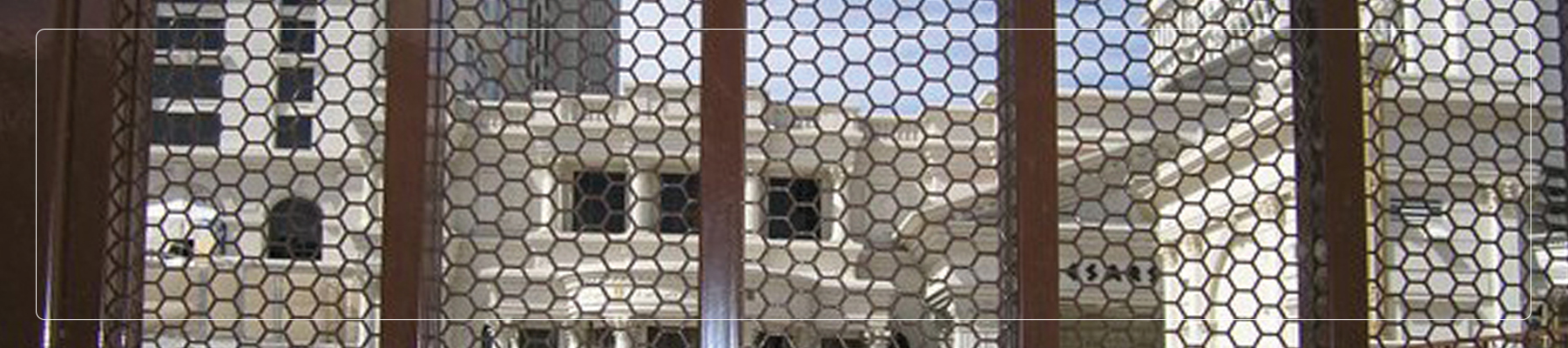
F.H.Brundle offers round, square, slotted and hexagonal hole patterns, along with different pitches, sizes and sheet thicknesses.
6. Material versus open space
A higher open area means there is proportionally less solid metal in the sheet. This can affect the weight of a panel, but it is important not to assume that a higher open area automatically means a weaker product.
The overall performance also depends on material, sheet thickness, hole size, pitch and pattern. For example, F.H.Brundle supplies a 20 mm hole/28 mm pitch sheet with 46% open area in 3 mm mild steel, while its 6 mm hole/12 mm pitch sheet has 23% open area in 5 mm mild steel.
So, for specification purposes, open area should be considered alongside the other technical properties rather than used as a standalone measure of strength.
Why Buy Perforated Metal Mesh from F.H.Brundle?
As one of the UK’s leading suppliers of architectural and industrial metal products, F.H. Brundle offers:
• One of the UK’s largest stock ranges
• Mild steel, galvanised, stainless steel and aluminium options
• Multiple hole patterns and open areas
• Various sheet sizes and thicknesses
• Nationwide delivery
• Technical support for specification and product selection
• Reliable stock availability for commercial projects
Whether you’re an architect, contractor, fabricator or engineer, our experienced team can help you specify the most suitable perforated metal solution for your application.