When and Where to Use Site & Vehicle Gates?
What are Site & Vehicle Gates?
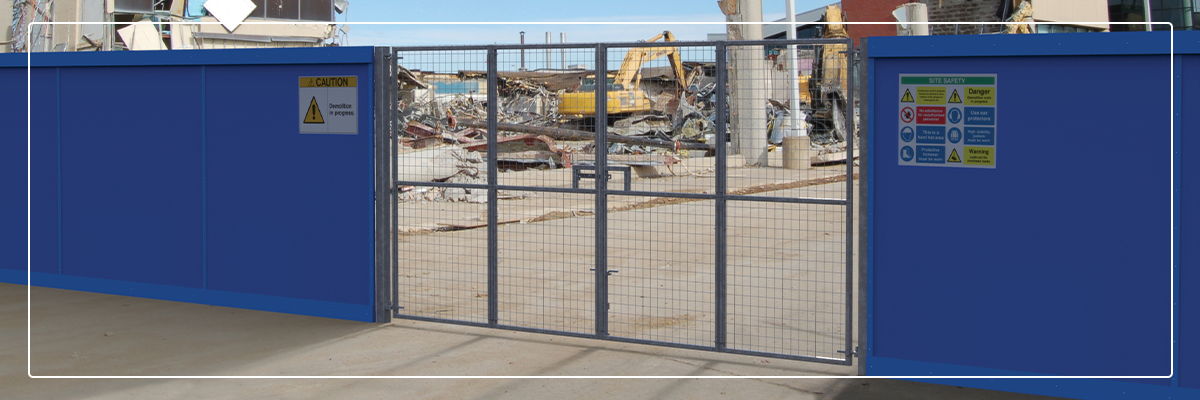
Site & Vehicle Gates are heavy-duty, highly secure perimeter access solutions engineered specifically to safeguard building and construction environments while managing incoming traffic. Designed as a functional, temporary and cost-effective alternative to expensive bespoke security entrances, these robust structures seamlessly integrate alongside timber hoarding or steel panel setups to establish a protected boundary.
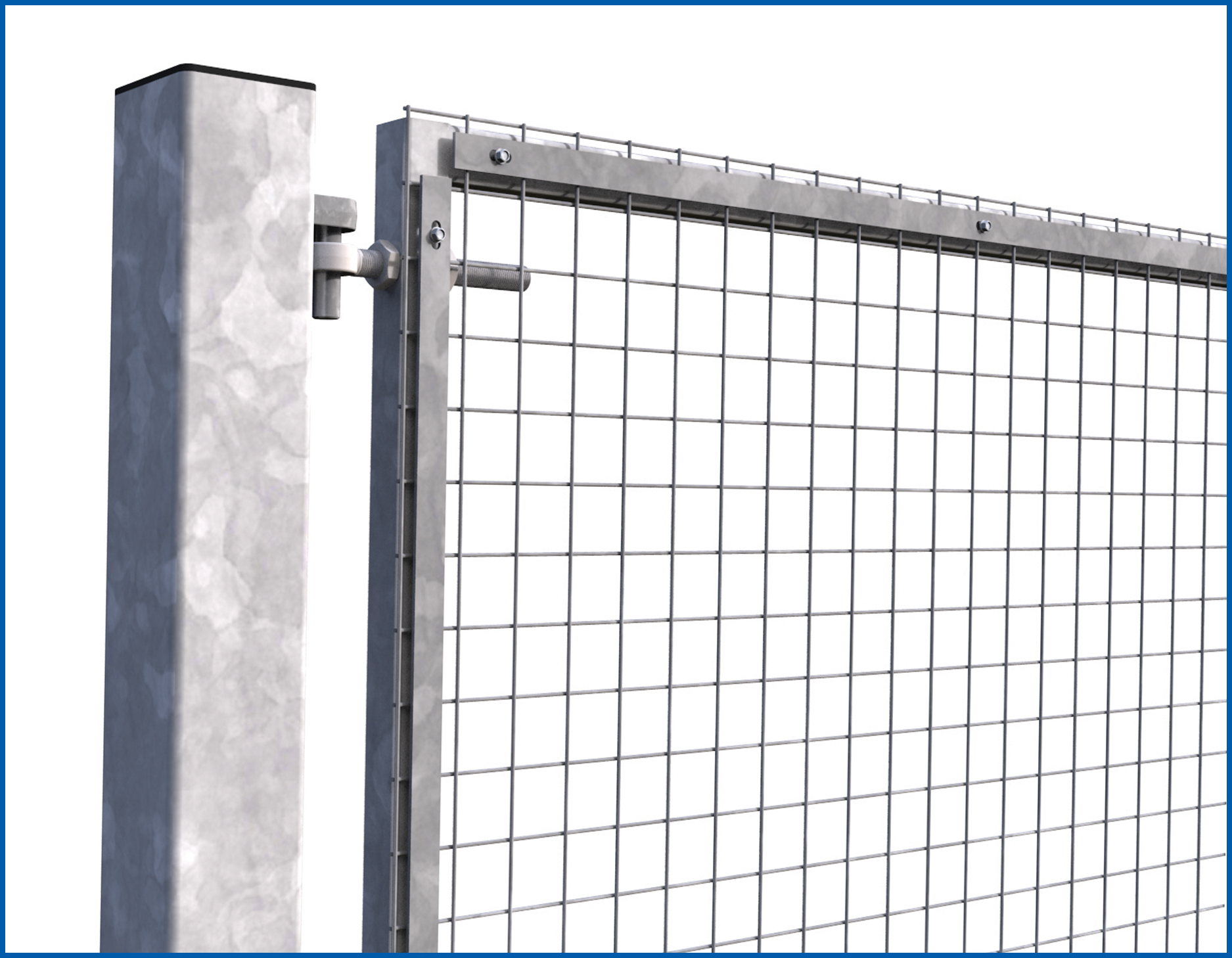
Manufactured from corrosion-resistant galvanised steel, they are supplied as complete, ready-to-assemble kits—featuring concrete-in posts, heavy-duty frames, drop bars, and welded mesh infills. Available in both single and double-leaf configurations, 2.4m in height, these modular gate systems offer contractors a durable, high-protection security point that can easily be deconstructed and adapted for re-use across multiple projects.
What are the choices when it comes to Site & Vehicle Gates?
At F.H.Brundle, our primary choices revolve around configuration size and leaf type. All options are supplied as galvanised, concrete-in kits standing at a standard height of 2.4m.
| Feature Category | Key Benefit | Detail |
|---|---|---|
| Functional Design | High-level protection at an affordable price point | Maximises perimeter security for construction environments while consciously keeping material costs low. |
| Corrosion Protection | Long-lasting durability in harsh outdoor environments | All gate components are fully hot-dip galvanised to prevent rust and weather degradation. |
| Cladding Versatility | Adaptable to match various perimeter systems | Supplied as a kit including welded mesh panels, but frames are engineered so they can alternatively be clad with hoarding timber. |
| Modular & Reusable | Lowers long-term equipment expenses across projects | Designed to be easily assembled, flat-packed, deconstructed, and transported to be re-used on multiple sites. |
| System Compatibility | Blends seamlessly into pre-existing site boundaries | Built with structural profiles that neatly align and fit right alongside standard timber or steel hoarding configurations. |
| Dimensional Options | Blends seamlessly into pre-existing site boundaries | Available in standard 2.4m heights with flexible single leaf (1.22m wide) or double leaf (2.46 or 4.90m wide) options. |
| All-in-One Kits | Accommodates both pedestrians and large vehicles | Kits come complete with gate posts, hinges, frames with drop bars, stretcher bars, welded mesh panels, clamp bars, and fixing Tek screws. |
Where can Site & Vehicle Gates be used?
Site & Vehicle Gates are highly adaptable security solutions designed for use in the following applications and environments:
• Building and construction sites
• Perimeter boundaries
• Timber or steel hoarding setup
• Pedestrian & traffic control points
• Multi-project sites
Why are Site & Vehicle Gates so popular?
Site & Vehicle Gates are highly popular because they solve the core security, budget, and logistical challenges faced on busy working sites.
(1) Exceptional Cost-Effectiveness: They provide high-level protection and a robust perimeter security point at an affordable price point, keeping material costs low.
(2) Ultimate Reusability: Unlike permanent, bespoke security setups, these gates are modular. They can be easily deconstructed, flat-packed, and transported to be used again and again across multiple different projects, maximising the return on investment.
(3) Convenient All-in-One Kits: They are supplied as a complete, flat-pack kit with absolutely everything included—from the concrete-in posts, frames, mesh infill panels and drop bars down to the fixing Tek screws and stretcher bars. This simplifies site logistics and eliminates the need to source individual hardware pieces.
(4) High Durability & Weather Resistance: Because all components are fully hot-dip galvanised, they are highly corrosion-resistant and completely maintenance-free, capable of withstanding harsh outdoor elements and rugged site conditions without rusting.
(5) Seamless Integration & Versatility: They fit right alongside pre-existing timber hoarding or steel panel boundary setups. They also give installers cladding choices, arriving with welded mesh panels that can easily be swapped out for timber hoarding sheets if a completely solid boundary is preferred.
FAQs
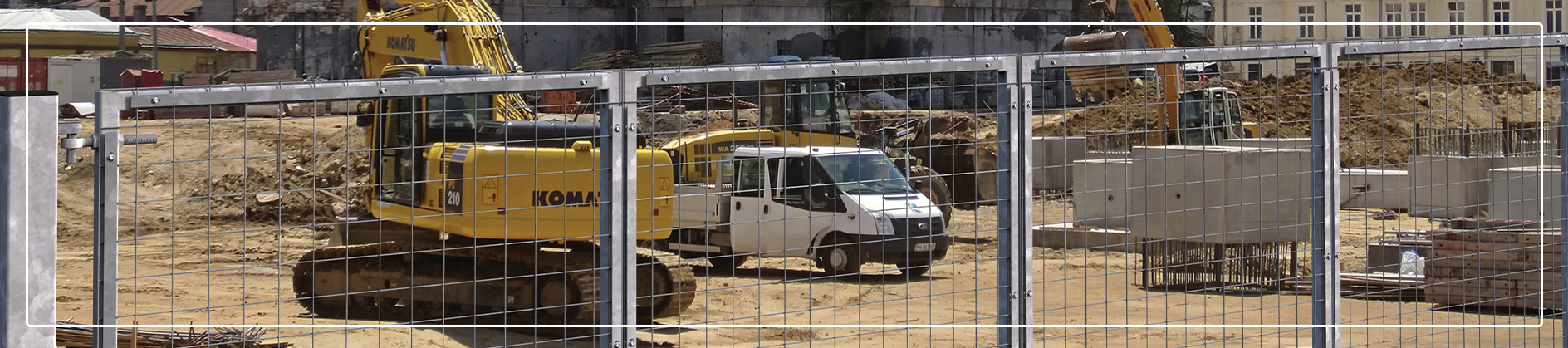
Yes, these kits are highly adaptable. While they are supplied with standard steel mesh panels, the frame can easily be clad with hoarding timber or alternative sheet materials depending on your privacy and security requirements.
They are highly versatile. While designed to be a cost-effective, secure solution for construction sites (temporary), their hot-dipped galvanised finish and robust steel construction make them durable enough for long-term industrial use. They can also be deconstructed and reused across multiple projects.
No, the site and vehicle access gates do not come pre-assembled. Our site gates require assembling and are supplied as frame, posts, sheets, mesh, stretcher bars, hinges, drop bars and Tek screws to fix bars and mesh to gate frames.
Our site & vehicle access gate kits are supplied with gate posts, hinges, gates with drop bar, stretcher bars, welded mesh panels, clamp bars, and mesh Tek screws to fix bars or mesh to your gate.