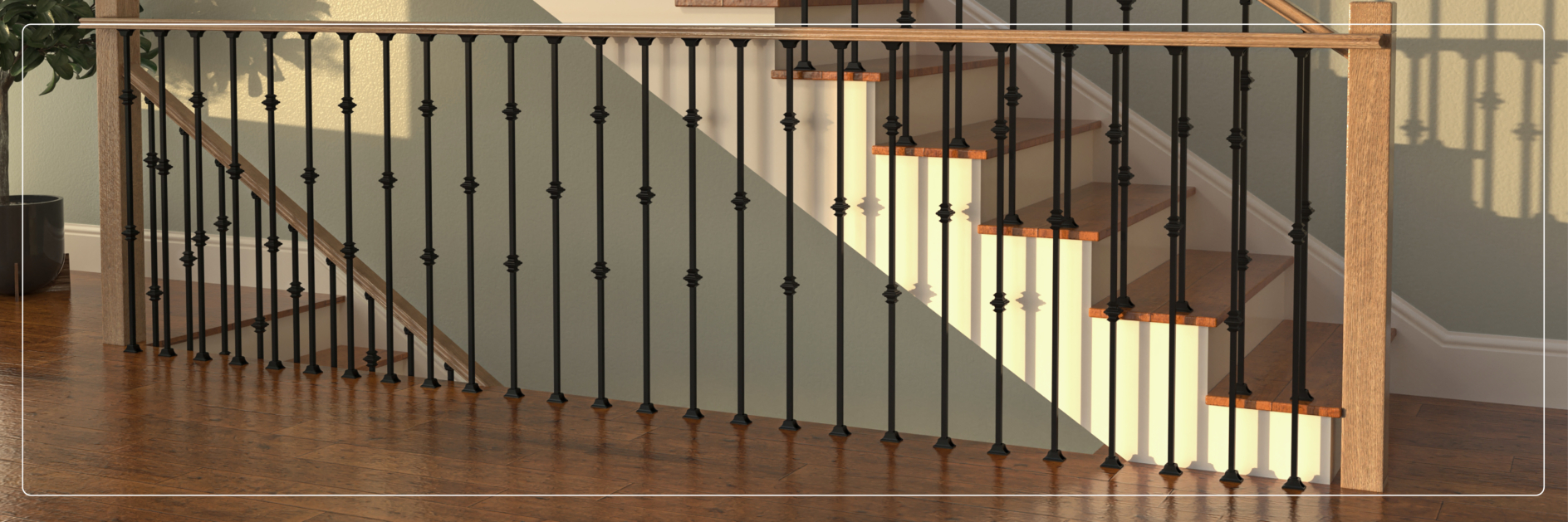
Why choose Staircase Spindles and Accessories?
Staircase Spindles: Secure, Stylish, and Compliant
Whether you are a homeowner seeking to enhance/renovate a traditional home, fitting out a contemporary new build, or upgrading a commercial space, our staircase spindles/baluster collection offers the perfect solution. Every component has been carefully engineered to work seamlessly together, giving you the flexibility to mix and match styles, finishes, and profiles to create a staircase that is truly your own.
Wrought iron spindles are produced in a range of profiles to suit everything from period restoration work to contemporary residential staircases. The style you choose affects not just appearance but also how the spindle is fixed, what bracket type it requires, and whether it can be cut to length on site.
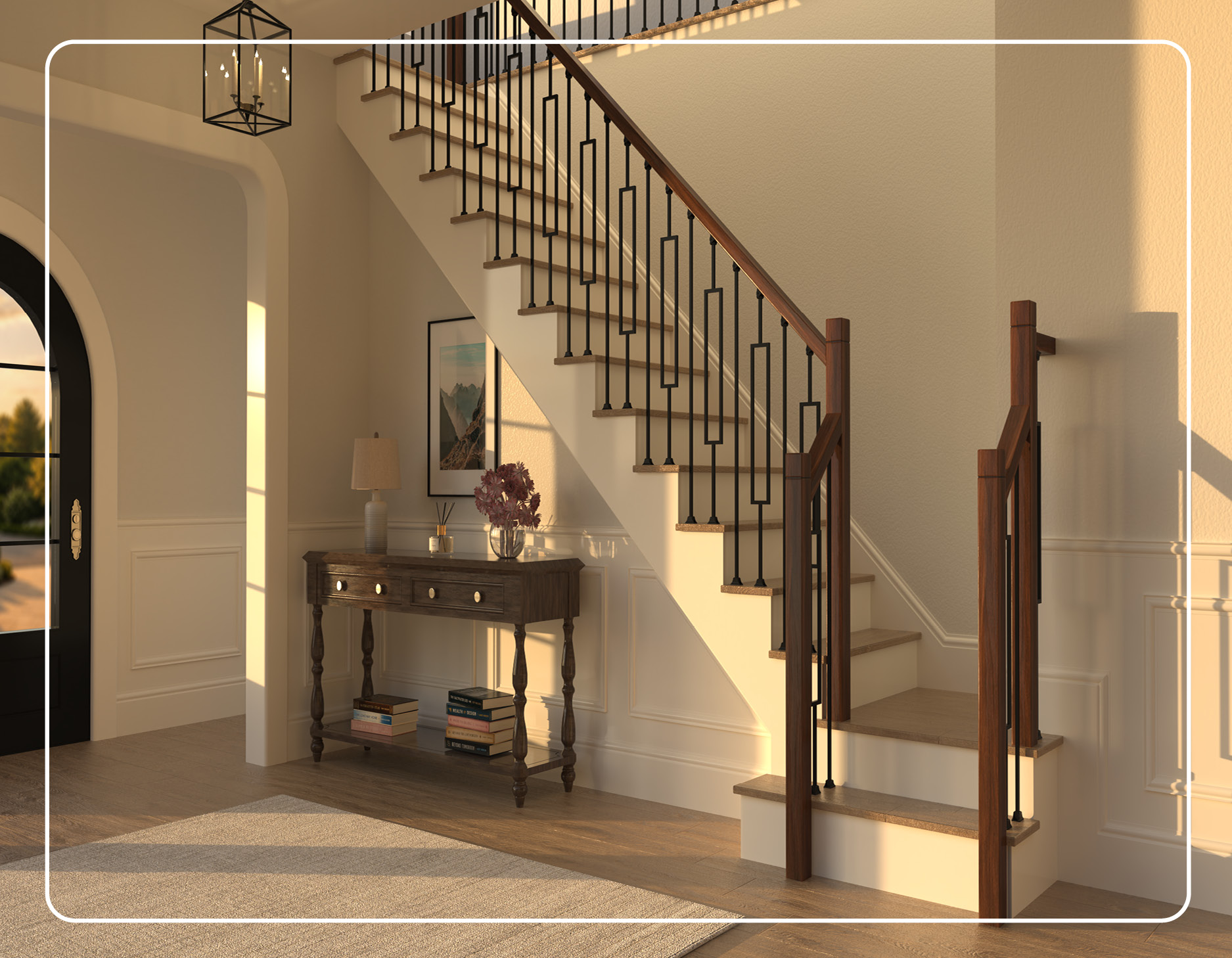
Consistent Quality for Fabrication
All spindles are produced to consistent dimensional tolerances, which matters when cutting to length on site or welding into a fabricated balustrade frame.
As a result, inconsistent bar dimensions create alignment problems that add time to every installation. F.H.Brundle’s 12mm square hollow section spindles are supplied to a standard that cleanly sit true in their bracket systems without adjustment.
What Trade Buyers Need to Know
Wrought iron staircase spindles are the vertical infill bars that form the balustrade between a handrail and a base rail or stair string. In trade contexts they are also called balusters, though spindle is the term most commonly used in UK. They serve two purposes: structural safety (preventing falls) and visual character (defining the aesthetic of the entire staircase).
For fabricators, joiners, and staircase installers, getting the specification right matters before a single component is ordered. Furthermore, the wrong spindle profile, the wrong bracket type, or an incorrect spacing calculation can mean a failed building inspection and a costly return visit.
F.H.Brundle stocks one of the UK’s largest ranges of wrought iron staircase spindles and accessories, held in stock across nationwide branches and available for same-day dispatch or click-and-collect. This guide covers the complete product range, UK compliance requirements, and how to calculate quantities accurately for any project.
What are the choices when it comes to our staircase spindles/baluster bars?
F.H.Brundle’s matt black Wrought Iron Staircase Spindles are produced in a range of profiles to suit everything from period restoration work to contemporary residential staircases. The style you choose affects not just appearance but also how the spindle is fixed, what bracket type it requires, and whether it can be cut to length on site.
Plain Bar Spindles
The simplest profile: a straight square hollow bar with no decorative feature. Plain bar spindles are the default choice for industrial, commercial, and utilitarian applications. Welding cleanly and accepting any bracket system, they are easily cut to length on site. F.H.Brundle supplies these in 12mm square hollow section.
Twist Spindles
A single or double twist along the length of the bar is the most widely used decorative profile in residential metalwork. Twist adds visual interest without significantly increasing installation complexity and are fixed using the same bracket system as plain bars.
Bush Bar Spindles: Round and Square
• Bush bar spindles are a distinctive decorative profile featuring a series of formed bulges or nodes along the length of the bar, giving a segmented, tactile appearance that sits between the simplicity of plain bar and the complexity of basket or scroll designs. F.H.Brundle supplies bush bar spindles in two profiles, both at 12mm:
• Round bush bar – cylindrical nodes along a round bar, producing a softer, more organic silhouette. Works well in both period and transitional interiors where a decorative detail is wanted without the formality of a twist or basket profile.
• Square bush bar – the same node formation on a square bar, giving a crisper, more geometric result. A strong choice for contemporary staircases where the angular profile of the bar is part of the design intent.
Basket Spindles
Basket spindles feature a formed decorative section at the centre of the bar, typically a cage or basket shape produced by forge-pressing. A traditional choice for period properties, Victorian and Edwardian restoration projects, and bespoke gate and railing work, the range spans from a simple single basket to more elaborate double-basket and scroll-basket combinations.
Panel Infills: Circle, Rectangular, and Square
Panel infills are a distinct alternative to individual bar spindles, offering a bolder visual statement and faster installation on longer balustrade runs. Rather than fixing spindles one by one, a fabricated panel drops into the balustrade frame as a single unit. F.H.Brundle supplies three panel infill types:
• Circle infill panels – repeating circular apertures within a rectangular frame, a classic wrought iron motif suited to period and heritage installations
• Rectangular infill panels – clean horizontal or vertical bar grids within a frame, works equally well in traditional and contemporary settings
• Square infill panels – grid pattern with equal apertures, a versatile choice for both residential staircases and commercial balustrade runs
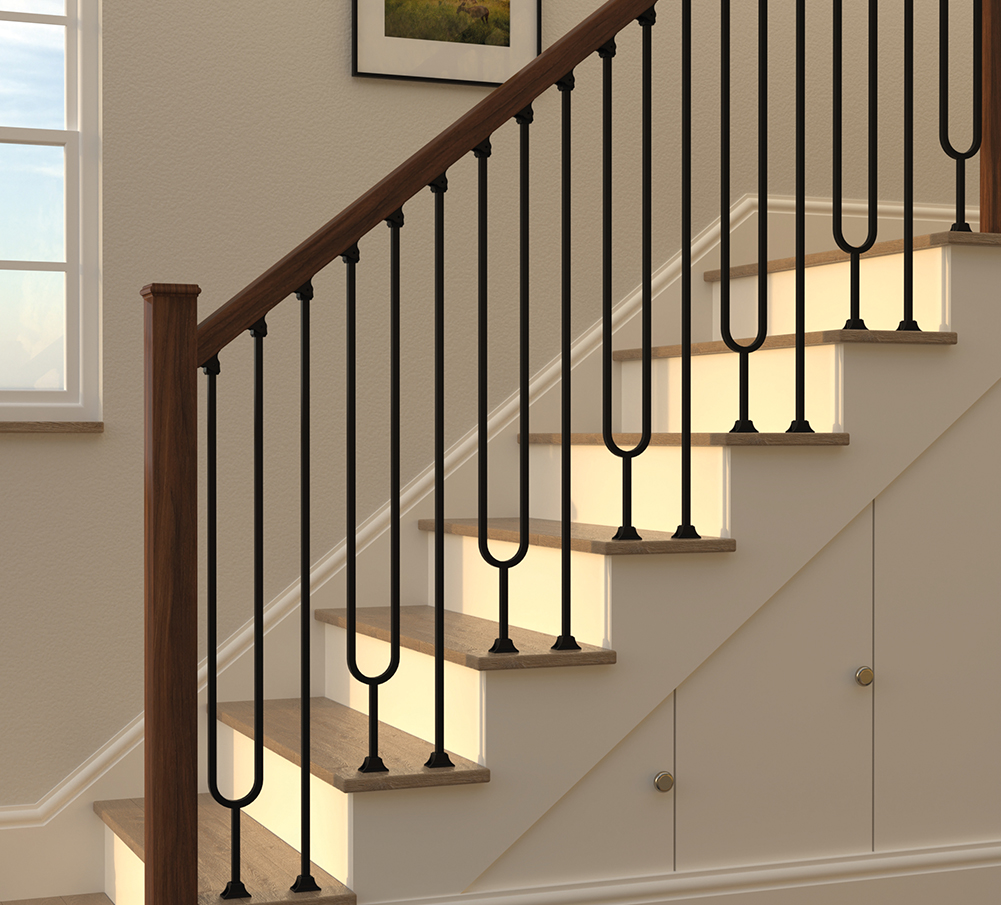
• Rectangular Radiussed Edged panel units – similar to the round edged variant but with a more pronounced radius on all four corners, giving a refined, furniture-grade finish suited to high-end residential staircases
• Rectangular Round Edged panel units (Open One End) – the same round-edged profile but open at one end, allowing the panel to slide into a closed channel or be fitted against a newel post without a visible cut edge
• Rectangular Round Edged panel units – a rectangular grid panel with rounded outer edges, softening the profile for transitional interiors where a sharper frame edge would look too industrial
Baluster bards with panel units are particularly effective where a consistent, repeating pattern is needed across a long flight or landing. They also reduce the number of individual bracket fixings required, which can cut installation time on larger projects. As with individual spindles, panel infills must meet the 99mm sphere rule; the aperture size must be specified accordingly.
Decorative Newel Starter Post
The newel starter post is the structural anchor at the base of a balustrade run, providing the fixed point from which the handrail and spindle infill span. F.H. Brundle supplies a decorative newel starter post (SKU: 05QY303) in hollow 30mm diameter round steel, 1118mm long, finished in matt black powder coat.
Key specifications:
• Profile: 30mm round hollow section
• Length: 1118mm (suits standard balustrade heights)
• Design: Decorative bush detail along the bar, matching the bush bar spindle aesthetic
• Finish: Matt black powder coat
• Base plate: Not included; specify separately to suit the substrate
Two dedicated accessories complete the installation:
• Bottom cover (05QY303BC) – a matt black cover that conceals the base fixing point, giving a clean finish at floor or step level
• Top bracket (05QY303TB) – a matt black bracket that connects the post to the underside of the handrail
The decorative bush detail on the post ties visually to the single and double square bush bar spindles in the same range, making it the natural choice when specifying a coordinated balustrade system. Because the base plate is not included, confirm the substrate fixing method before ordering: surface-mounted base plates, core-drilled sockets, and weld-on plates are the three most common approaches for steel newel posts on timber, concrete, and steel stair structures respectively.
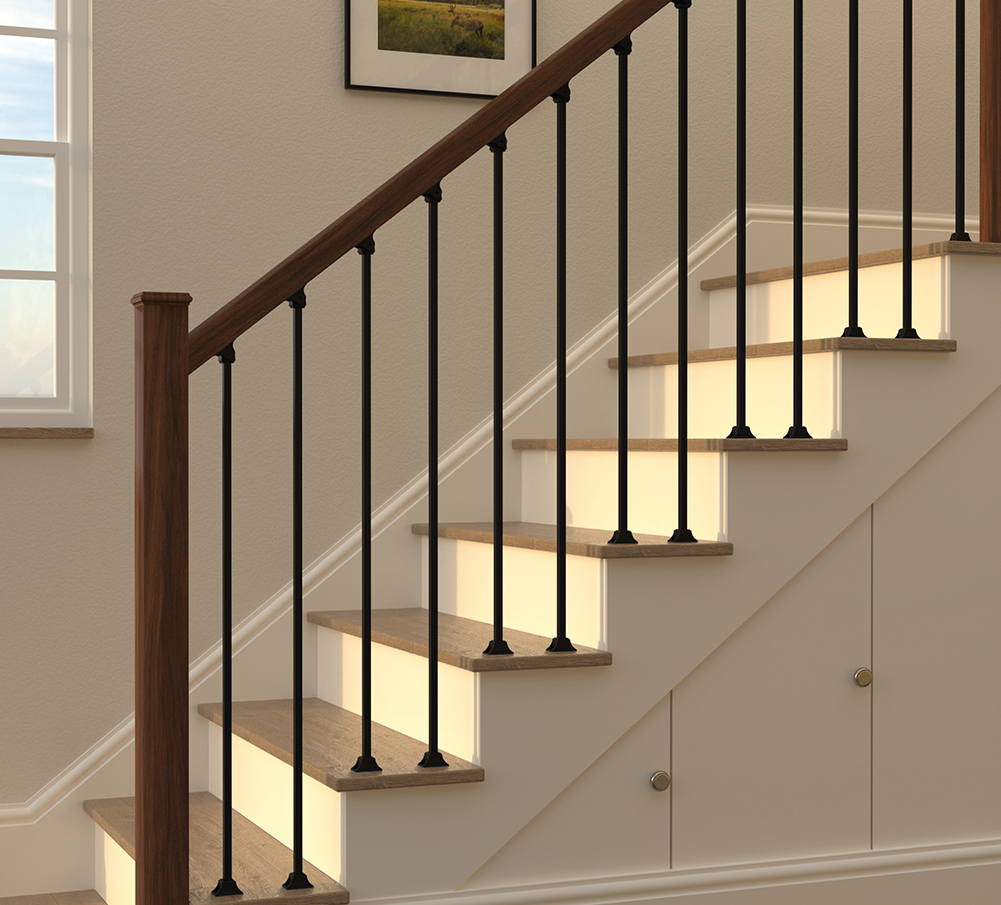
Plain Bar
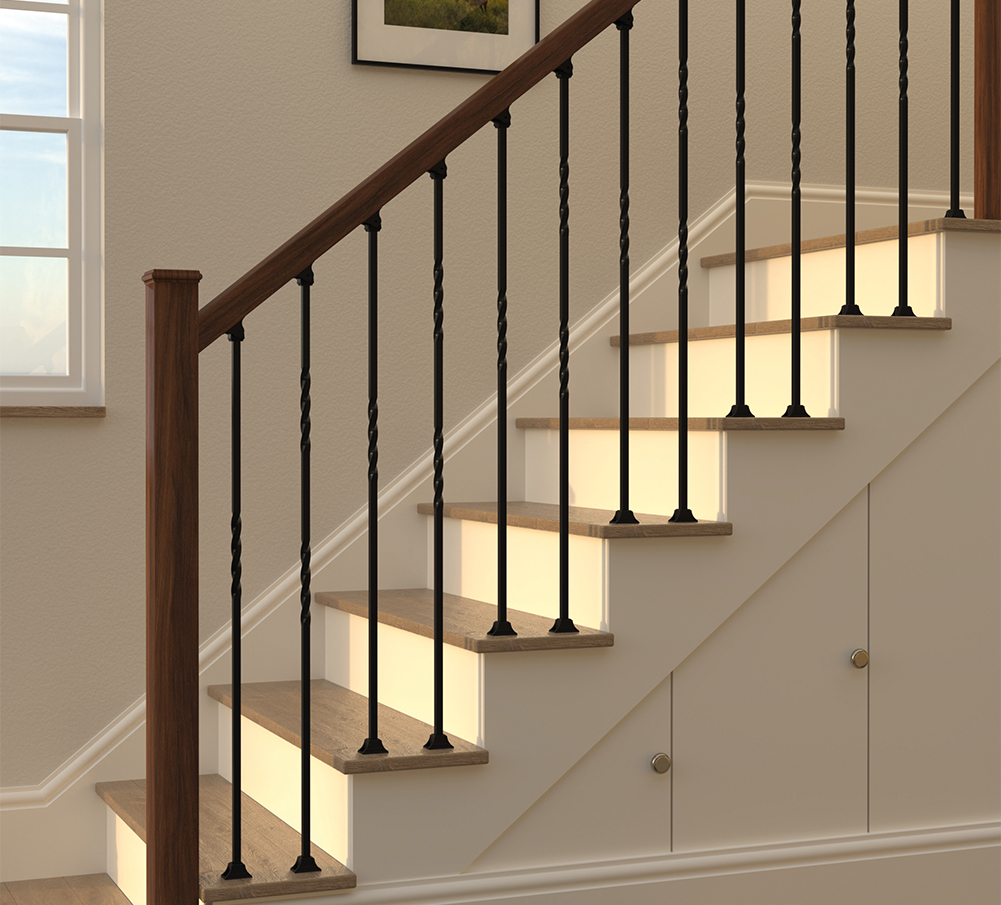
Twist Bar
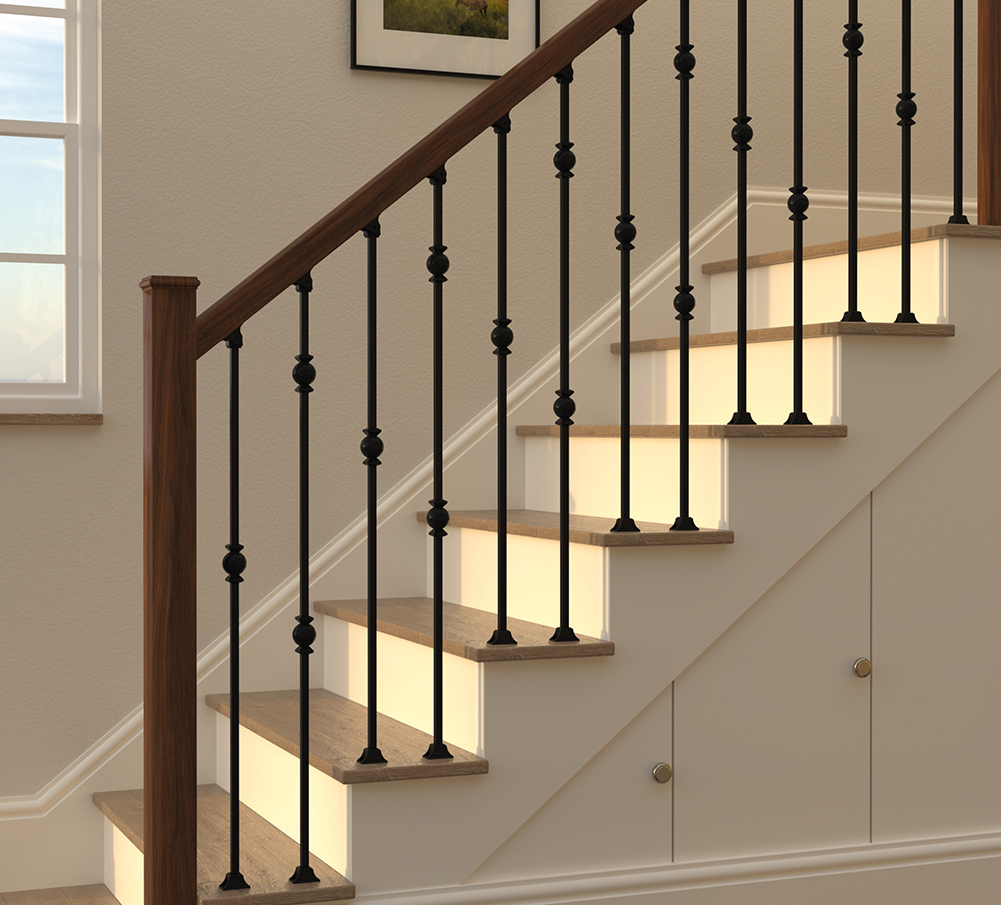
Single/Double Round Bush Bar
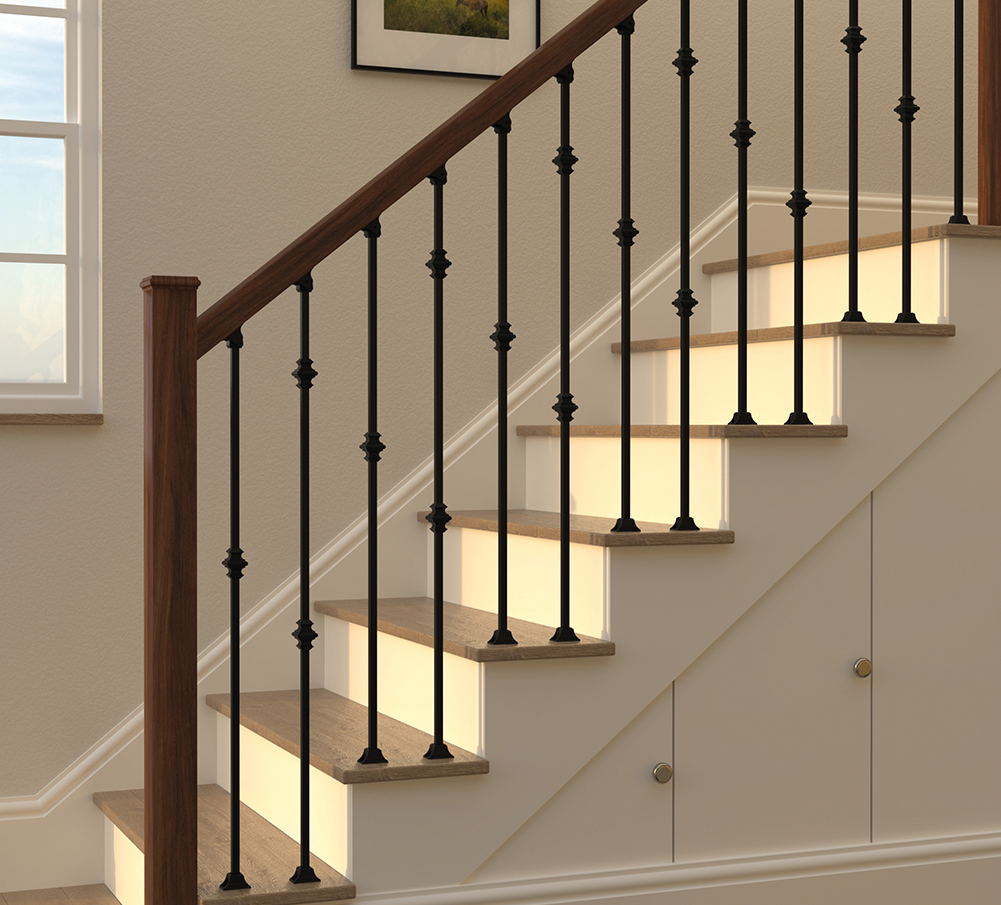
Single/Double Square Bush Bar
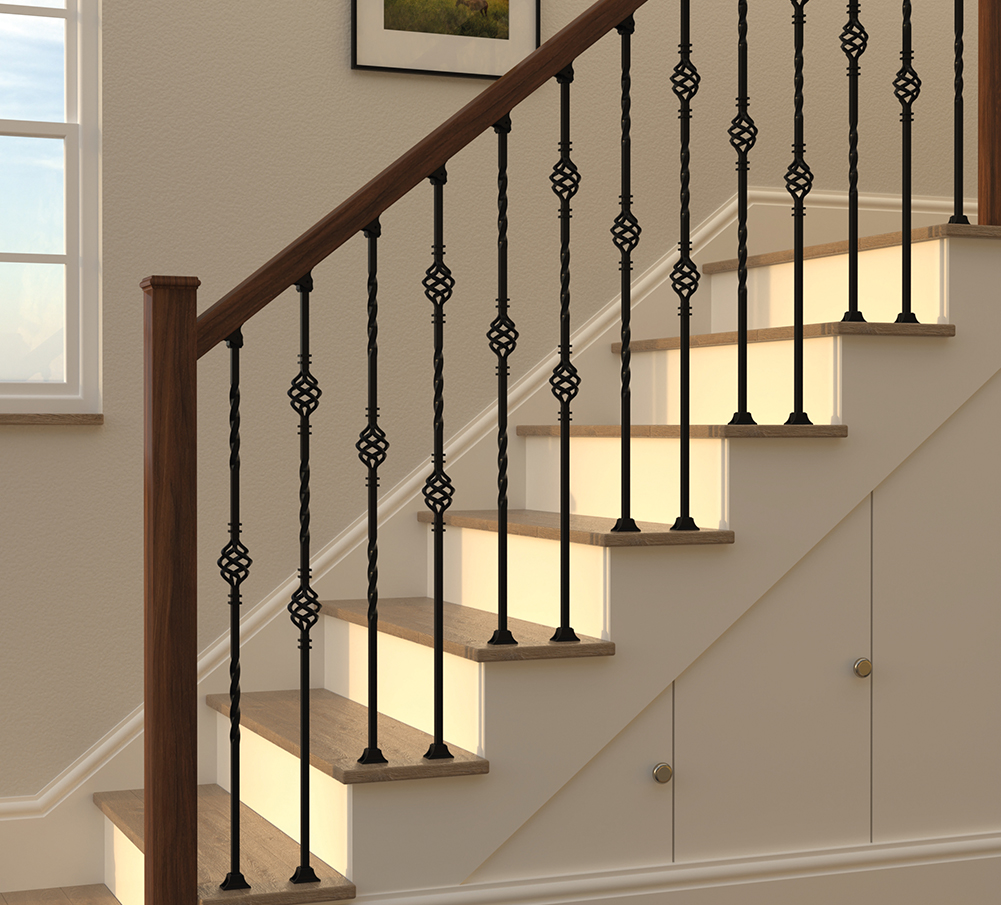
Twist & Single/Double Basket Bar
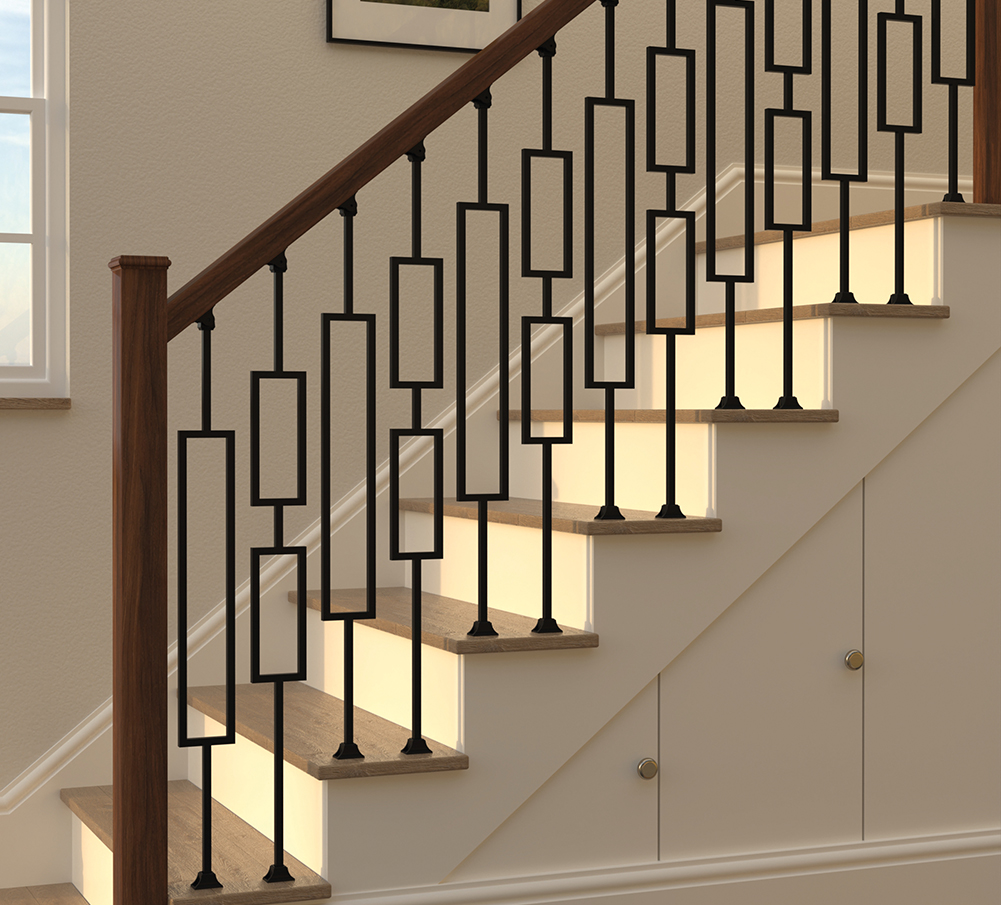
Single/Double Rectangular Panel Unit
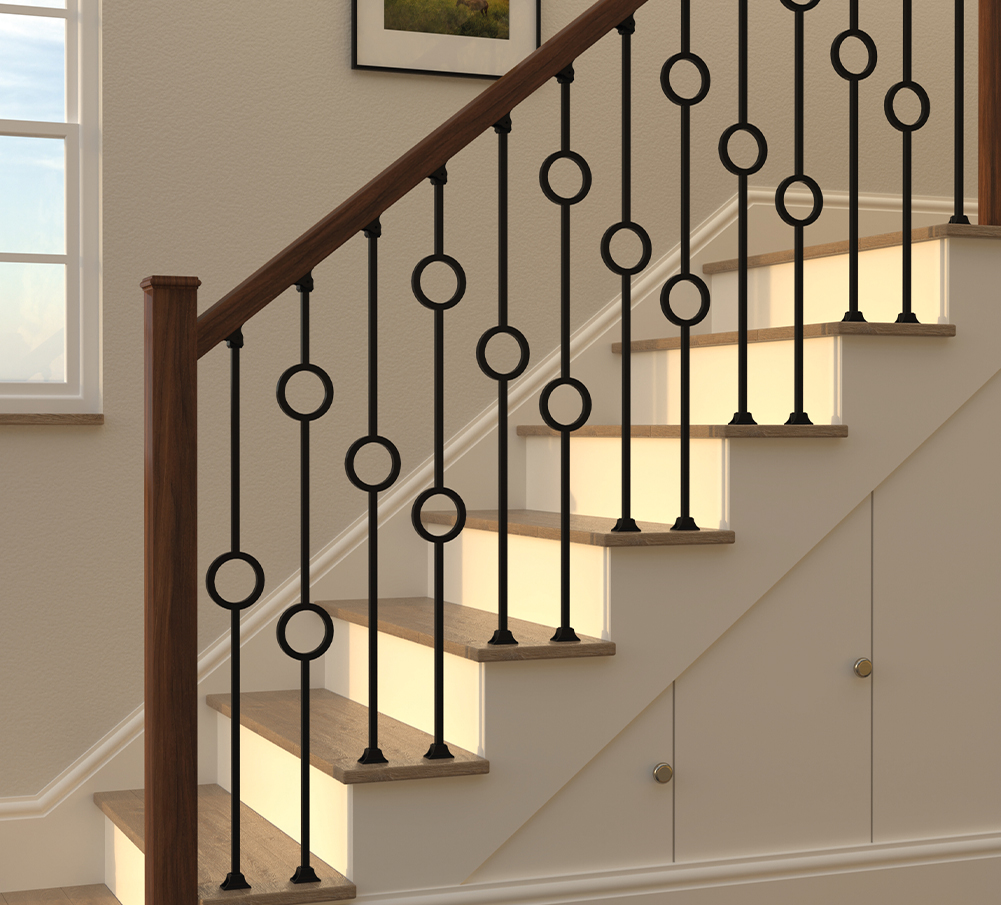
Single/Double Cirlce Panel Unit
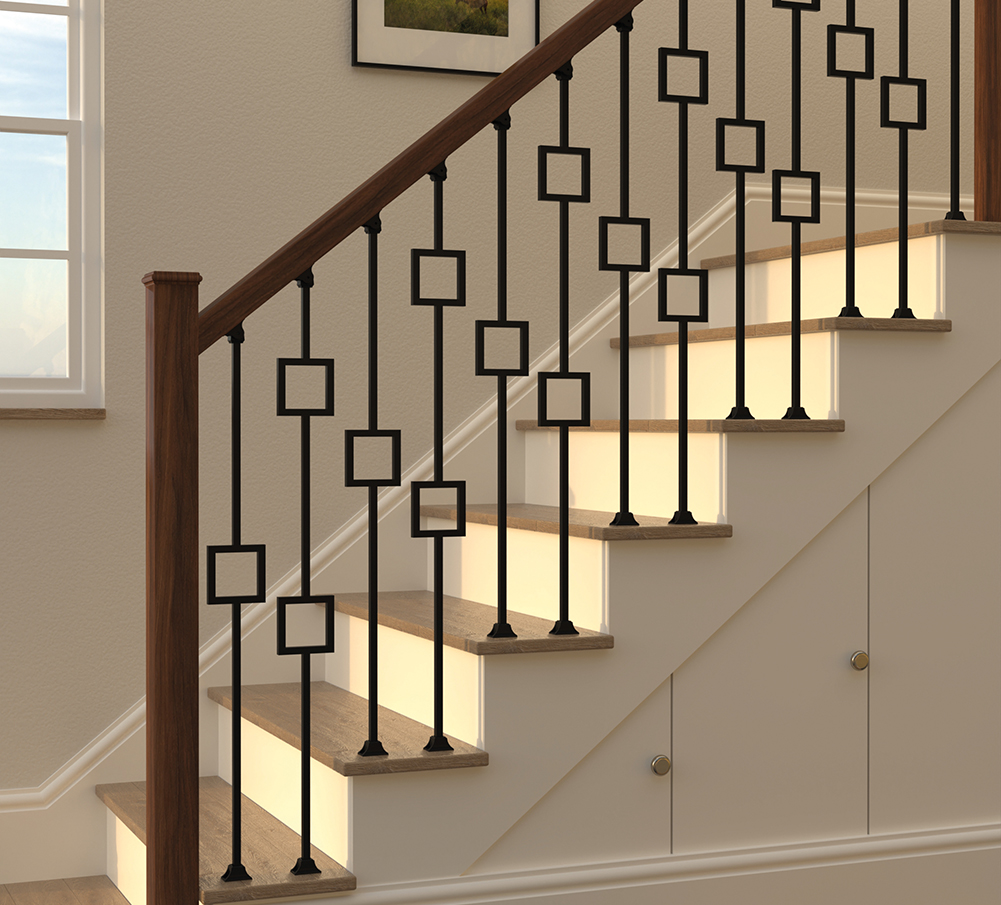
Single/Double Square Panel Unit
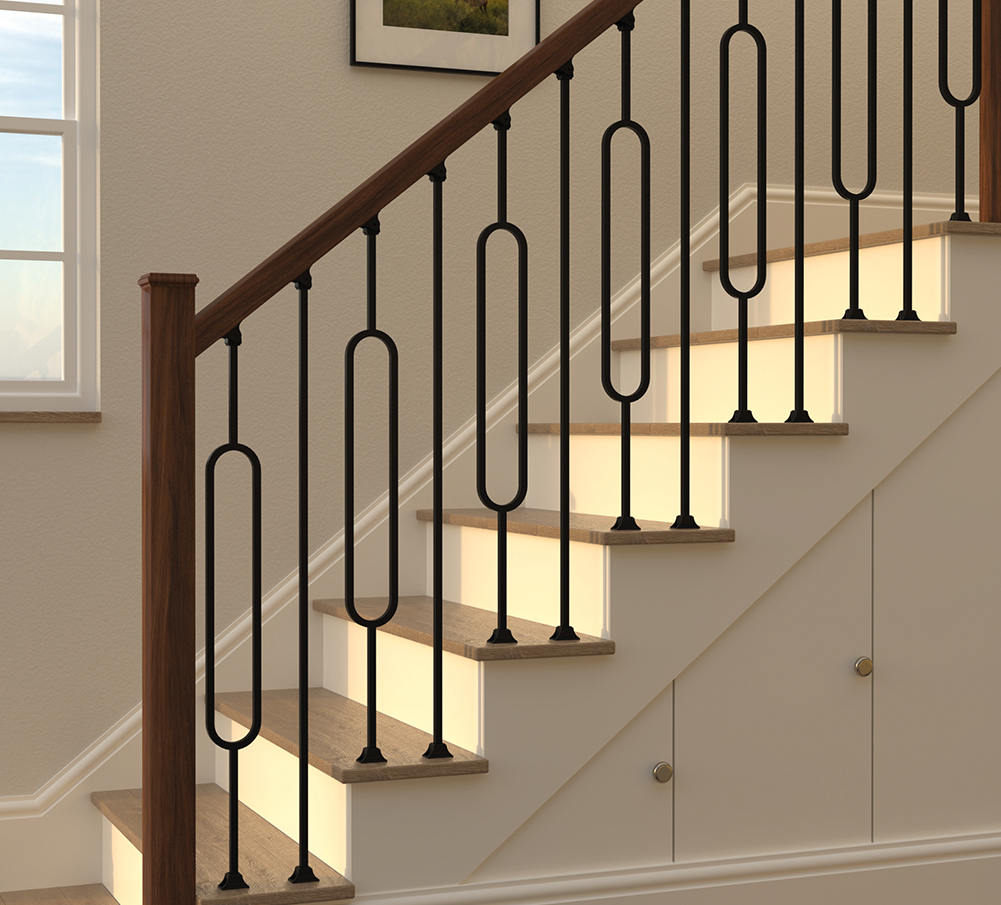
Rectangular Round Edged Panel Unit
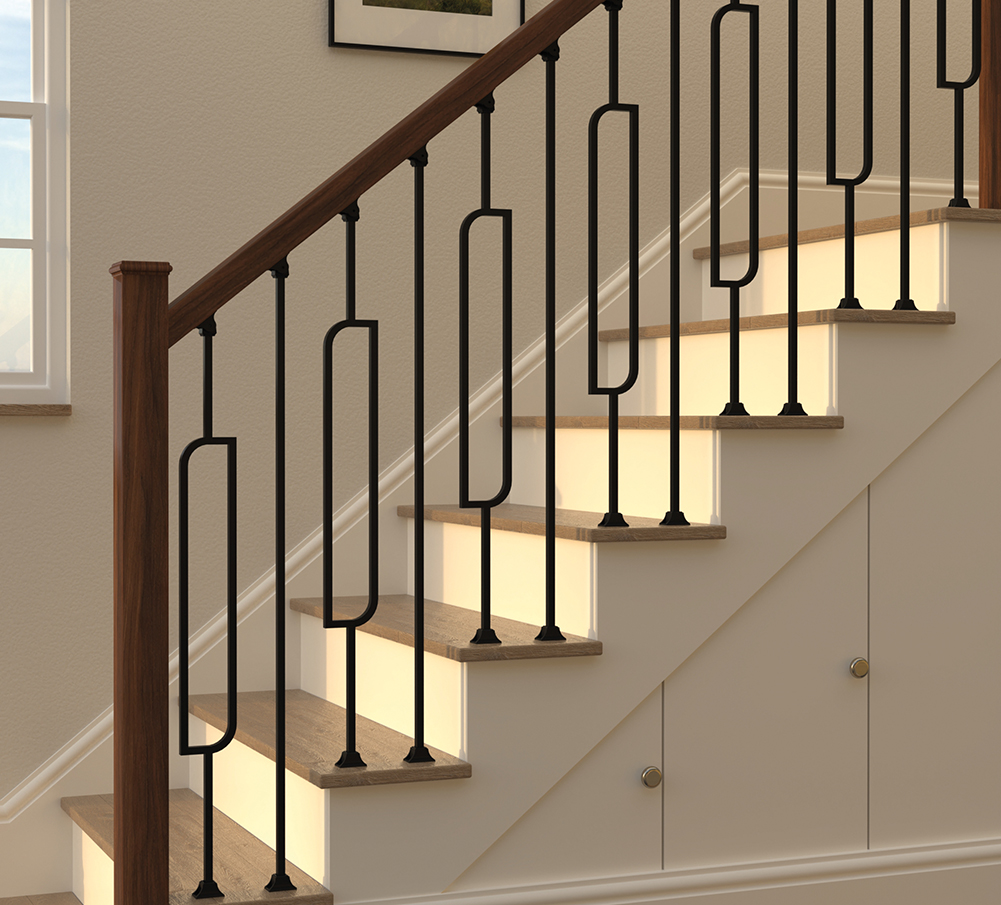
Rectangular Radiussed Edged Panel Unit
Rectangular Round Edged Panel Unit Open One End
UK Building Regulations for Staircase Spindles
Any balustrade installed as part of a building in England and Wales must comply with Approved Document K (Protection from Falling, Collision and Impact) under the Building Regulations 2010. Scotland and Northern Ireland have equivalent standards under their own building regulations, but the core requirements for spindle spacing and handrail height are broadly consistent across all UK jurisdictions.
The 100mm Sphere Rule
Single most important compliance requirement: spindles must be spaced so that a 100mm sphere cannot pass between them. In practice, this means the clear gap between adjacent spindles must not exceed 99mm. Rules exists specifically to prevent young children from becoming trapped or falling through the balustrade.
The 99mm maximum gap applies to both:
• Raking sections (along the staircase flight)
• Level sections (on landings and balconies)
Handrail Height Requirements
Approved Document K specifies that handrail height on a staircase should be between 900mm and 1,000mm measured from the pitch line (the notional line connecting the front edge of each stair nosing). On a level landing, the minimum height increases to 1,100mm from the finished floor level.
Balustrade Strength Requirements
Balustrade as a whole must be capable of resisting the loads likely to be imposed on it. Domestic staircases, this means the structure must withstand a horizontal point load of at least 0.36 kN/m applied at handrail height and for commercial or public buildings, the requirement is higher. Wrought iron spindles, properly welded or bracketed into a rigid handrail and base rail system, typically exceed these requirements comfortable.
|
Requirement |
Domestic Staircase |
Landing / Level Section |
|---|---|---|
| Max Spindle Gap | 99mm | 99mm |
| Handrail Height |
900-1,000mm from pitch line |
Min 1,100mm from FFL (Finished Floor Level) |
| Balustrade load (domestic) |
0.36 kN/m horizontal |
0.36 kN/m horizontal |
How to buy
How to Calculate Spindle Quantities
Ordering the right quantity of spindles before starting a job avoids delays and unnecessary return deliveries. The calculation is straightforward once you have accurate measurements, but it must be done per section (raking flight and level landing separately) because spindle spacing is measured horizontally on a landing and along the pitch line on a staircase.
Now you have more insight into the benefits and use cases of our staircase spindles, you’ll need to know how to buy this product.
The Basic Formula
Work in millimetres throughout. For each section of balustrade:
1. Measure the total run (horizontal distance of the balustrade section in mm)
2. Note your spindle width (F.H. Brundle supplies 12mm square hollow section)
3. Set your target gap (maximum 99mm; many installers use 90-95mm to allow a margin)
4. Calculate the pitch (spindle width + gap) = the centre-to-centre spacing
Example: A landing run of 2,400mm with 12mm square spindles and a 95mm target gap.
• Pitch = 12 + 95 = 107mm
• Number of spaces = 2,400 / 107 = 22.4 (round down to 22 spaces)
• Number of spindles = 22 + 1 = 23 spindles
Always order 2-3 extra spindles per section as a contingency. Spindles that arrive uncut can be returned; spindles that have been cut to length cannot.
Staircase Raking vs Level Landings
On a raking staircase flight, the spacing calculation is based on the horizontal projection of the flight, not the sloped length. This is because the 100mm sphere test is applied horizontally. Consequently, if you measure along the rake, you will under-order.
Quick Reference: Spindles per Metre
The table below gives approximate spindle counts per linear metre of balustrade for common spindle widths and a 95mm gap:
Once measured and plotted out, you will need to consider fixing – we supply variants designed to suit the substrate you’re fixing into, ensuring structural stability whether installed into firm ground, concrete, or via bolt-down options over existing hard surfaces.
Finally – you should consider the styling and finish of your bow top railing installation. Available options include standard bow top, interlaced bow top, and our RoSPA-approved range, with various heights and finishes such as galvanised steel or durable powder-coated options to suit your exact aesthetic requirements.
|
Spindle Width |
Pitch (spindle + 95mm gap) |
Spindles per metre |
|---|---|---|
|
12mm square hollow section |
107mm |
~10 |
Important: These are approximations. Always calculate from your actual measurements rather than using a per-metre rate as the sole basis for ordering.
FAQs
A decorative newel starter post provides a strong visual and structural starting point at the bottom of a staircase balustrade. F.H. Brundle’s 30mm diameter, 1118mm matt black post includes a decorative bush detail and can be paired with a matching bottom cover and top handrail bracket.
The staircase spindle range is supplied in a matt black powder-coated finish. This provides a consistent decorative finish for internal staircases, landings and balconies. If you expect to cut, weld or grind components during fabrication, protect and touch up the coating after installation as required.
Measure each balustrade section separately, then divide the run by your chosen centre-to-centre spacing. Allow for the spindle width plus a maximum 99mm clear gap. Add one spindle to account for the final space, and order a few extras for cutting or site changes.
The clear gap between adjacent staircase spindles must not allow a 100mm sphere to pass through. In practice, keep every gap at 99mm or less. Check the measurement at the widest point of decorative spindle profiles and across any panel apertures.